By Catie George, Manager, Communications and Storytelling

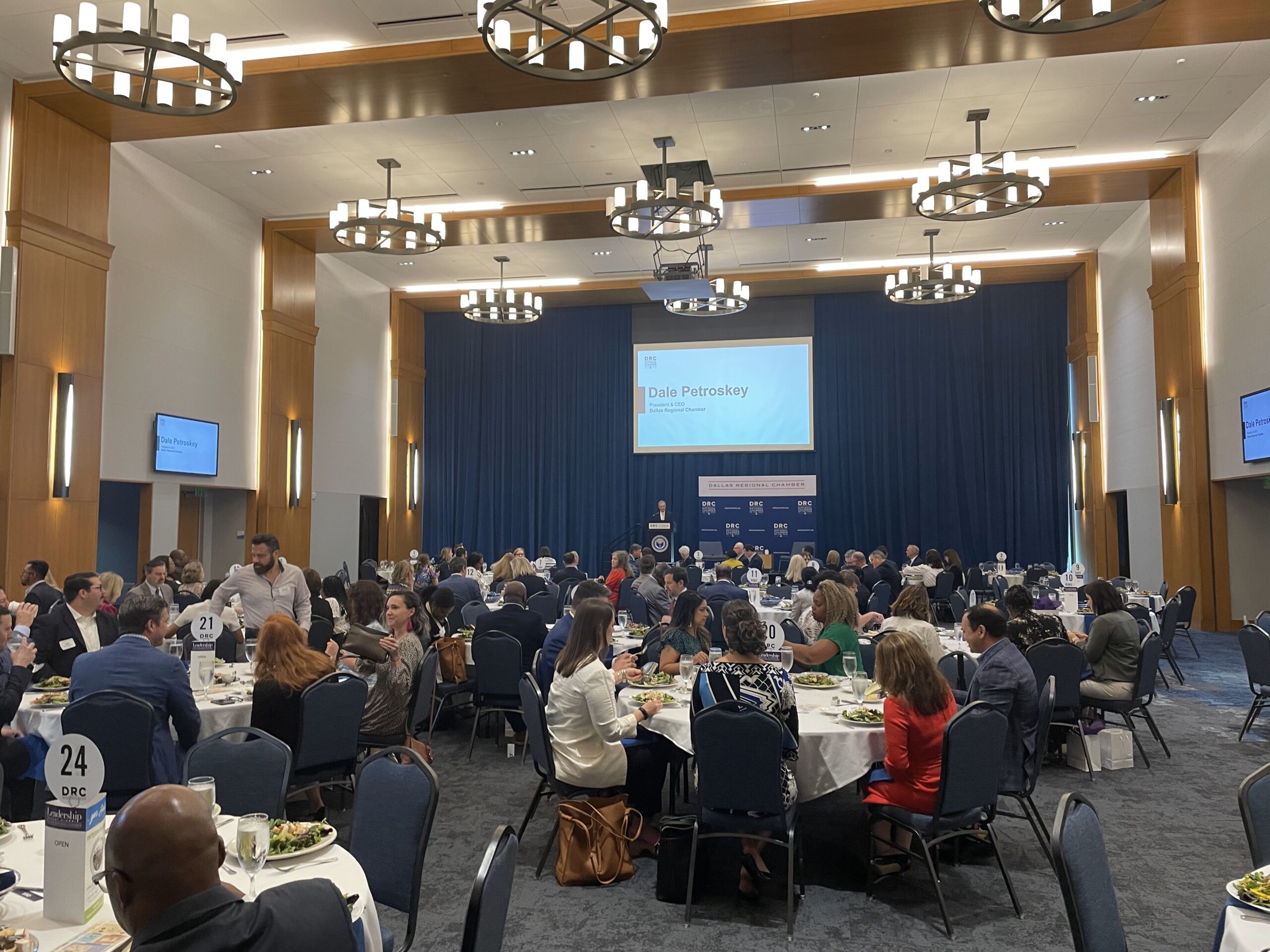
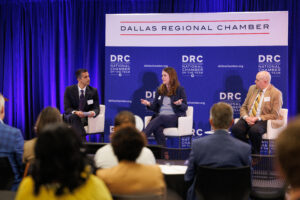
The Dallas Regional Chamber (DRC) hosted its 18th annual Congressional Forum, presented by Ryan LLC, Tuesday, Aug. 8, at The Fairmont Dallas, in front of a sold-out crowd of more than 300 of the Dallas Region’s business leaders. During the hour-long program, Rep. Marc Veasey (D-Fort Worth), Rep. Colin Allred (D-Dallas), Rep. Beth Van Duyne (R-Irving), and Rep. Keith Self (R-McKinney) discussed a wide array of top issues impacting the Dallas Region, including energy, inflation, aviation, technology, and health care. The panel was led in discussion by Jack Fink, an award-winning reporter at CBS News Texas.
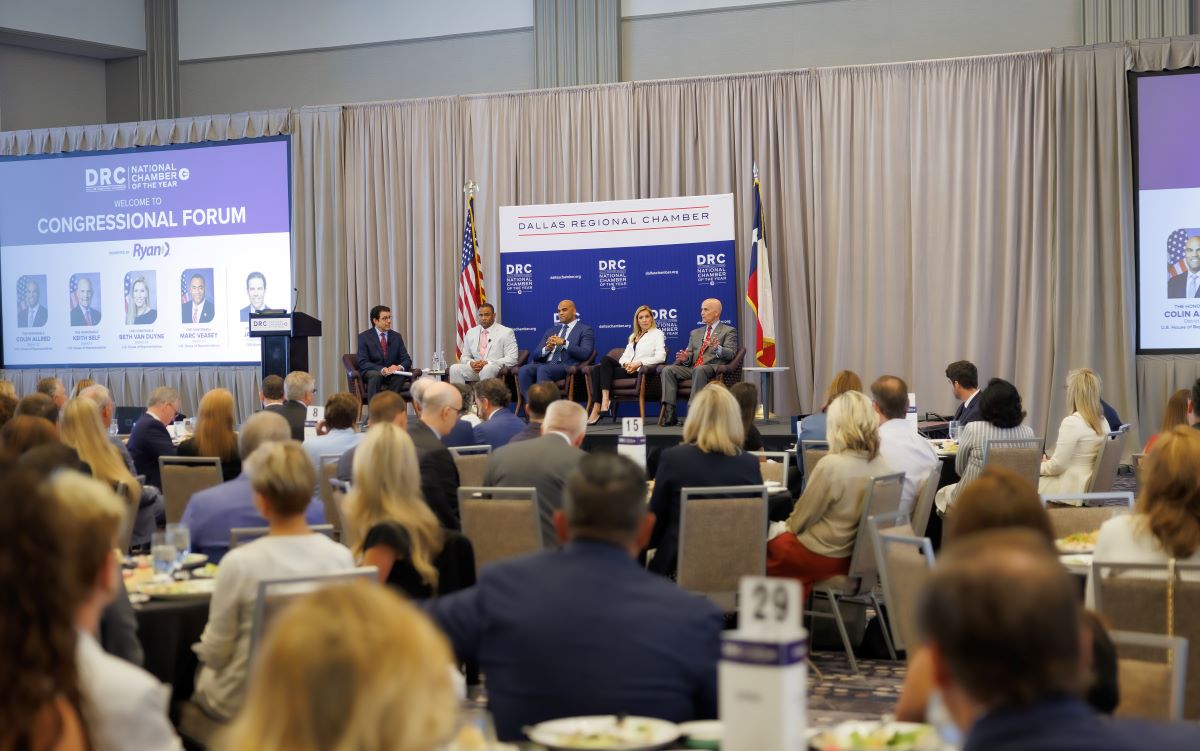
“This region benefits from all the great work each of you in this room do, whether you are a lawmaker, a representative, or a business leader,” Dale Petroskey, President and CEO of the DRC, told gathered attendees. “This is a wonderful place to hear from these important members of Congress who have been elected by the people to represent us and our businesses in Washington.”

The conversation centered on how federal policy decisions impact the Dallas Region’s exceptional growth and diversified economy.

“We are in an area that is growing so rapidly because our economy is attracting folks who want to come here, who want to raise their kids here, and get a good job here,” said Rep. Allred. He went on to say that although the inflation rate is down and unemployment is low, living costs are still high for low- and middle-income families.

Rep. Veasey added that high living costs are a substantial issue that needs to be urgently addressed.

“Unless you do something to address people’s income in this country, not keeping up with the growth and the productivity that we’ve had in this country, I think it’s going to be an issue that continues to last,” said Veasey.

“Wages, for the first time in the spring, in the last couple of years, finally outpaced inflation,” Rep. Allred noted. “So, we’ll see if folks are going to start to feel better about [their costs of living and] some of these things.”

Fink brought up the recent House passage of the Federal Aviation Administration (FAA) Reauthorization Bill and the future of aviation in the Dallas Region. The new bill authorizes fiscal appropriations for the FAA through 2028, but still needs to be negotiated with the Senate.

“It’s really exciting where we’re going with aviation,” said Rep. Allred. “And I’m excited about where we can go with this if we can get it right.”

When it comes to energy, Rep. Van Duyne said she wants to see Texas produce more and import less.

“I agree that we need to look at nuclear [power], but water and solar are never going to be base powers,” said Van Duyne. “We incentivize them so much at the federal level, at the expense of things like natural gas and coal.”

Rep. Van Duyne went on to say the government needs to fund research and development in all forms of energy to meet demand.

“We don’t need to subsidize one at the expense of the other,” Rep. Self added. He believes that Texas should produce all the energy it can, use it, and then export the rest to become a more profitable energy-producing state.

The lively discussion made one thing clear: these four congressional delegates are all fighting for the best for their constituents in Texas.

“Beyond sharing your time and knowledge with us, we are really grateful for all you do to advocate for the Dallas Region and to work with the business community on issues that matter for our future growth and prosperity,” Matt Garcia, Senior Vice President of Public Policy at the DRC, said to the panelists.

The DRC’s Congressional Forum was presented by Ryan LLC. We also thank our Gold Sponsors, Amazon, American Airlines, and West Coast University – Texas, and Silver Sponsor, Hillwood Development Company, LLC.

Visit the Public Policy page on our website to get more engaged with our work and join us for another upcoming DRC event.

One year after the Dallas Regional Chamber (DRC) was named National Chamber of the Year by the Association of Chamber of Commerce Executives (ACCE), staff from the DRC traveled to Salt Lake City to ACCE’s 2023 Convention to share unique expertise with chamber peers.

Mission-Aligned Leadership Programs

Megan Miers and Olympia Newman, each a Director of Leadership Programs at the DRC, hosted an engaging session about the DRC’s mission-aligned leadership programs, how other chambers can utilize the model, and the advantages that come with mission alignment.

“We’re talking about a concept, a way of thinking about your leadership programs to maximize what they do for your chamber and your chamber’s mission,” Miers told the room.

Miers and Newman defined mission-aligned leadership programs as “intentionally structured initiatives that incorporate and advance an organization’s mission to create ambassadors who champion the organization’s cause with a deep understanding of its vision.”

The pair talked through how the DRC’s mission has been incorporated into programs like Leadership Dallas and LEAD Young Professionals, or LEAD YP, through tactics such as basing class days around a singular element of the DRC’s mission and even having the class members themselves plan the class day in collaboration with DRC topic area experts to foster understanding.

“Many of the participants in your program show up as emerging or established leaders, so these types of programs are not solely focused on growing leaders,” Newman said. “The focus then is to leverage the skills and expertise participants bring to the table to create ambassadors who walk—or even run—beside you in the work your chamber is doing.”

Before they walked session attendees through a hands-on activity designed to help them apply the mission-alignment framework to their own programs, Miers and Newman shared data that evidences the positive impact of the DRC’s approach, including that 18% of the DRC’s 125 Board members are Leadership Program alumni.

“The strategic direction of our organization is being shaped by those who are knowledgeable and passionate about our work,” Newman said.

“We want our leaders to find their place in our mission,” Miers added. “So as soon as they’re done with a leadership program, we find ways to connect them to our work. The story here is that alignment builds engagement that contributes to a greater impact on the communities we serve.”

Business and Public Safety

Also at the convention, the DRC’s Matt Garcia, Senior Vice President of Public Policy, and Latosha Herron Bruff, Senior Vice President of Inclusion and Community Engagement, hosted a roundtable-style conversation about how the DRC approached public safety as an important piece of its Diversity, Equity & Inclusion (DEI) body of work.

“Public safety is so critical to the growth of our cities, our region,” Herron Bruff said. “So, there should be a natural relationship between the work we’re doing in economic development, education and workforce, and, of course, DEI. At the onset, public safety didn’t seem like a natural fit because we didn’t have the [in-house] expertise. Now, I don’t think we’d have a comprehensive program without it.”

As public safety conversations can often be packed with differing opinions and tumultuous dynamics, the DRC, beginning in 2020, focused on bringing the business community’s voice together with Dallas Region officials and other stakeholder groups to discuss how the groups could work together and support one another.

In response to a question about navigating the differing opinions and interest groups, Garcia recounted how the DRC’s engagement in public safety was initially met with skepticism.

“We had to show people we weren’t coming to the table to ask for anything,” Garcia said. “Our police departments are under a lot of scrutiny; everyone wants to tell them what they could be doing better, but we showed we understood our job is to support them and that we just wanted to have an open, honest dialogue.”

Garcia added that the DRC’s work has led to a strong sense of trust with the Dallas Police Department (DPD).

“They’ve seen the results we’ve been able to drive and come to us to ask for help in specific areas,” Garcia said, detailing how the expertise of the business community has supported DPD’s budgeting, human resources, and evidence storage.

“We’re not on any side; we’re on the side of the region,” Herron Bruff said. “The DRC’s role as a convener is to bring together these groups that may not otherwise talk and make sure all voices are represented. We’ve found an opportunity for the business community to have a listening ear into ongoing work instead of just what’s reported out. Now, our members see a direct benefit in access to public safety officials.”

While at the convention, Garcia announced to all attendees in a keynote session that the ACCE Convention will come to Dallas in 2024.

“The DRC looks forward to the ACCE Convention each year,” Garcia shared. “It’s great to connect and share ideas with people who understand the unique, important work we do. I know I speak on behalf of the entire team when I say we cannot wait to showcase our city and all our region has to offer when we gather next year.”

By Catie George, Manager, Communications and Storytelling

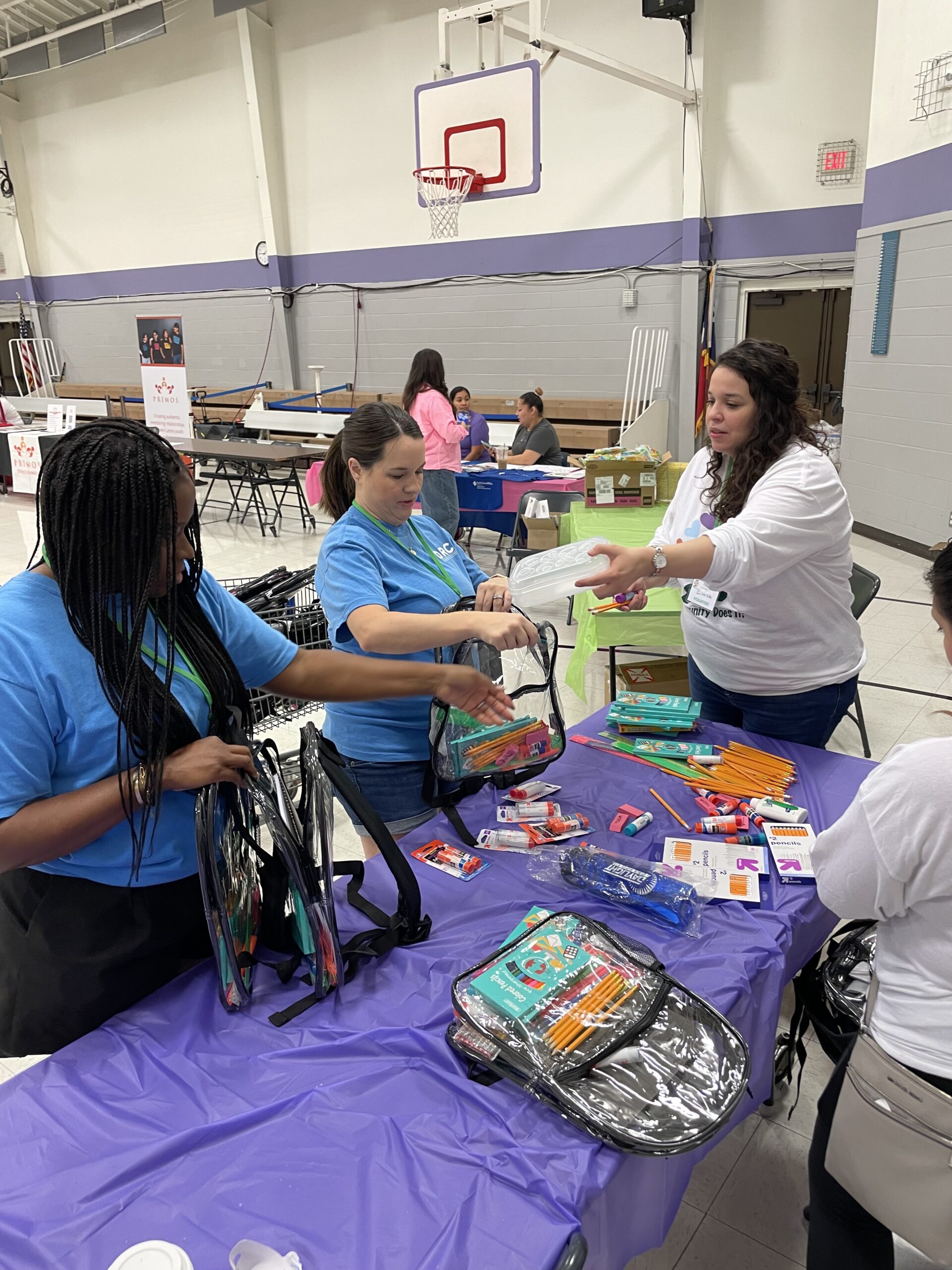
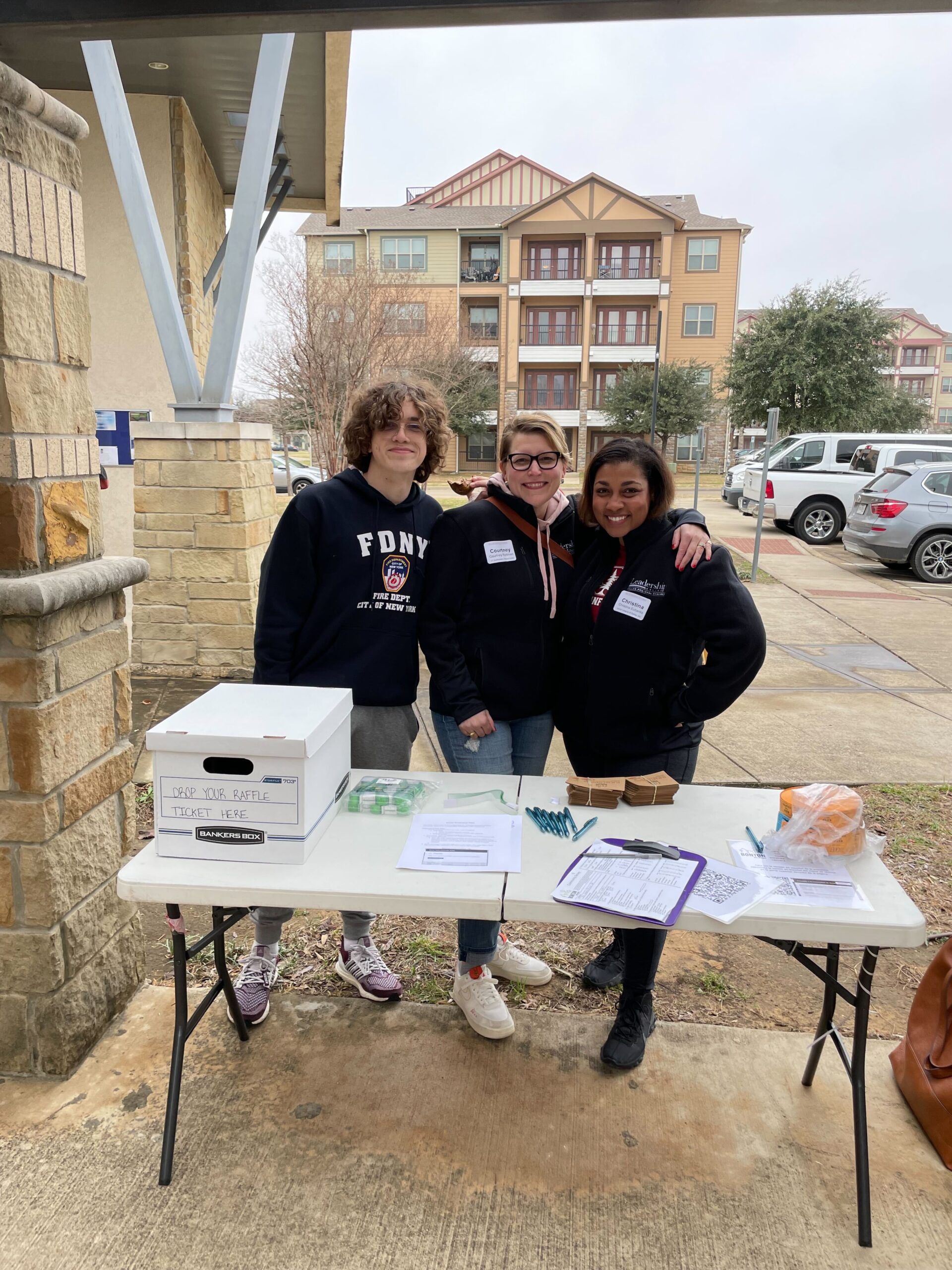
Dallas Regional Chamber (DRC) employees served at Community Does It’s Back to School Festival on Saturday, Aug. 5. DRC employees distributed backpacks and other school supplies at the St. Phillip Catholic Church in Pleasant Grove, a neighborhood in Southern Dallas.

“As an organization, we’re called to give – not only through money but our time,” said Latosha Herron Bruff, the DRC’s Senior Vice President of Inclusion & Community Engagement. “We want to encourage growth in Pleasant Grove.”

The DRC connected with Community Does It through several of the chamber’s Southern Dallas County Vision Tours, which are opportunities to show business leaders the opportunities for meaningful, inclusive economic development in Southern Dallas County.

“The DRC supports our community in as many ways as we can, as often as we can,” said Dale Petroskey, President and CEO of the DRC. “Our region benefits from organizations like Community Does It because they help people lead fulfilling lives, and I am proud of the DRC team for investing their energy into the mission of Community Does It.”

Community Does It is a nonprofit organization that seeks to engage and empower members of marginalized populations in Dallas to co-lead initiatives to bring equitable access to quality public health in their own communities. They provide affordable counseling, free educational workshops, support groups, and offer families a rich network of resources to meet foundational needs.

“As our organization grows, so does the commitment we have to our community to make these resources available and accessible to them at no cost. In this, we find many challenges,” said Maria Magdalena Aguirre, Community Resource Officer at Community Does It. “This year, the DRC played a key role in the delivery of essential resources to our community.  Our event had a great impact in the community, providing free haircuts, backpacks, school supplies, sports physicals, immunizations, and other resources to more than 400 students and their families.”

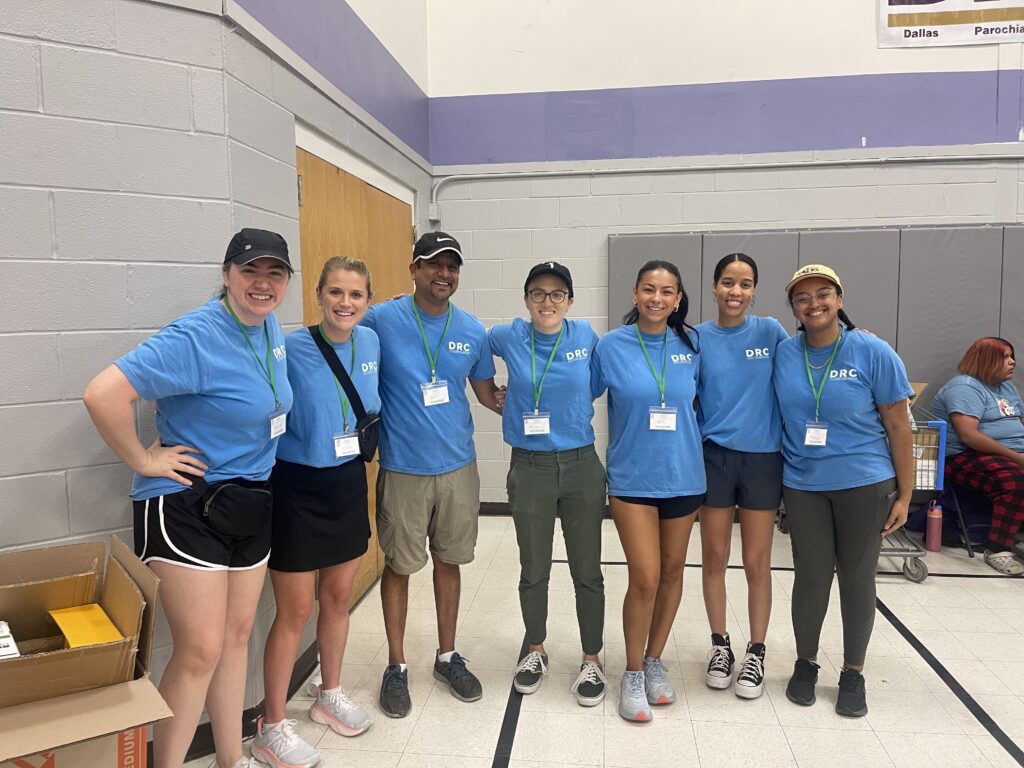
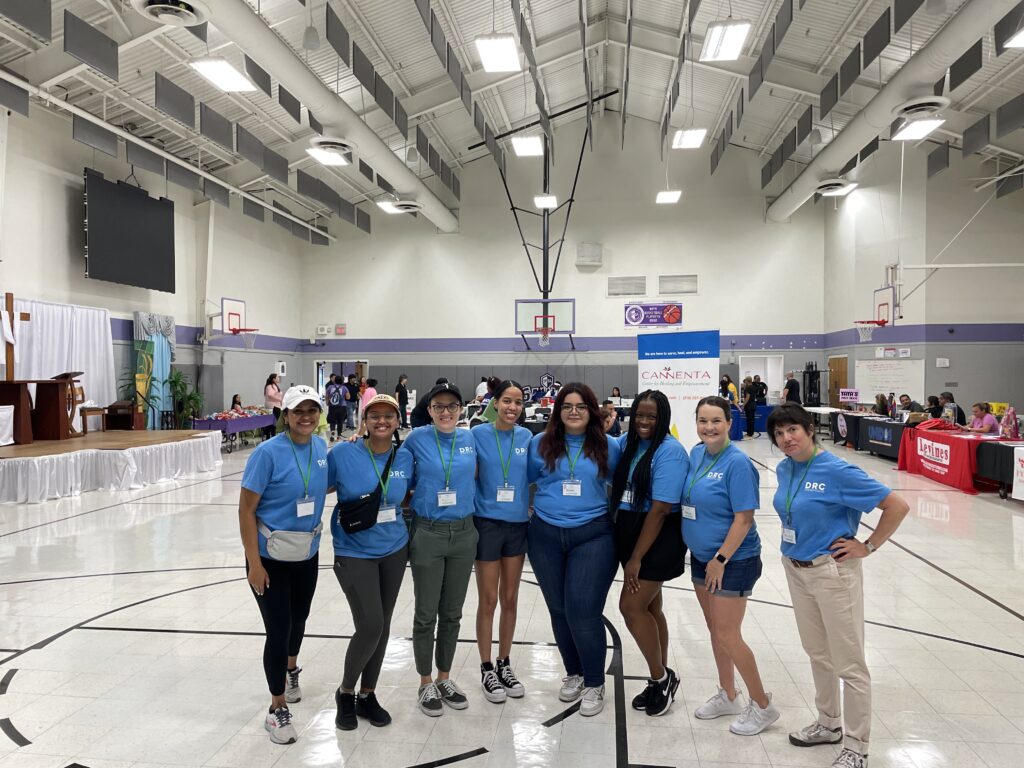
Fourteen DRC staff members served at the Saturday event, collectively contributing nearly 30 volunteer hours throughout the day. In addition to volunteering in person, the DRC staff helped contribute to buying and providing school supplies off the organization’s wish list for the event. The impact on the kids, as well as the volunteers, was undeniable.

“The average family spends almost $900 on back-to-school supplies every year. We were able to hand out 355 fully stuffed backpacks to kids, which is a big relief to these families,” said Herron Bruff.

“The DRC staff volunteered to assist the Community Does It team during the event,” said Aguirre. “Their kind gestures and support made part of this event possible. I am forever grateful for their commitment to our community and for their endless support. Community Does It is proud to be partnered to such a great team and institution. We look forward to the future and what our partnership will bring to our community.”

Commemorate, learn about, and engage with upcoming diverse and cultural holidays through the resources and local events below.

Sept.-Oct.: Hispanic Heritage Month

Spanning Sept. 15 to Oct. 15, Hispanic Heritage Month highlights the contributions and culture of the Hispanic community. Celebratory activities kick off Sept. 15 as the date coincides with the Independence Day celebrations of five Latin American countries: Costa Rica, El Salvador, Guatemala, Honduras, and Nicaragua. Mexico and Chile celebrate their independence days on Sept. 16 and Sept. 18, respectively. The United States Congress passed “Hispanic Heritage Week” on Sept. 17, 1968, and the commemoration was made a month-long 21 years later.

The 2023 National Hispanic Heritage Month Theme is “Todos Somos, Somos Uno: We Are All, We Are One.” Hispanics are the ethnic majority in Texas since 2023. Dallas County has the third-largest Hispanic population in Texas at 41% and gained 8,774 new Hispanic residents from July 2021 to July 2022.

To celebrate Hispanic Heritage Month, you can attend festivals, invite guest speakers to your workplace, or support local Hispanic-owned businesses.

Read and Watch:

Events:

October: National Disability Employment Awareness Month

National Disability Employment Awareness Month (NDEAM) celebrates the historic and current contributions of America’s workers with disabilities and showcases supportive, inclusive policies and practices that benefit employees and employers alike. NDEAM began as “National Employ the Physically Handicapped Week” in 1945.Since then, several strides have been made to promote equal opportunity for and prohibit discrimination against those with disabilities, including the Rehabilitation Act of 1973 and the Americans with Disabilities Act of 1990. This year, the theme of National Disability Employment Awareness Month is Advancing Access and Equity.

Employers can raise awareness and inclusion by creating dedicated employee resource groups, educating employees, and certifying workplace policies contribute to an office culture that includes people regardless of their disability status.

Read and Watch:

Events:

Texas Central Partners and Amtrak announced Wednesday, Aug. 9, they are seeking opportunities to advance planning and analysis work associated with the proposed Dallas-Houston 205-mph high-speed rail project to further determine its viability.

Dale Petroskey, President and CEO of the Dallas Regional Chamber, said the following:

“For nearly a decade, the Dallas Regional Chamber has worked in support of a high-speed passenger rail connecting Dallas and Houston, and we are excited by the possibility that the new partnership between Texas Central and Amtrak will bring this vision closer to fruition.

Dallas and Houston are two of our country’s fastest-growing cities and two of the major economic engines for our state. Connecting the two cities’ business centers would effectively double the market size for businesses in the Dallas Region while providing a safe, dependable transportation option to millions of Texans and reducing congestion on our highways.

The Dallas Regional Chamber stands at the ready to work with our partners across the state in the hopes of delivering this next economic engine to Texans.”

The Dallas Regional Chamber first came out in support of a high-speed rail line in 2014 and was actively involved through January 2022, culminating with the filing of an Amicus Brief with the Texas Supreme Court in support of Texas Central.

The Dallas Regional Chamber (DRC) has announced the 49th class of Leadership Dallas (LD), the Dallas Region’s premier leadership program and flagship program of the DRC. The 56 members of the LD Class of 2024 represent a diverse group of companies and industries and were selected through a rigorous, competitive application process based on their proven leadership potential within their organization and community.

Since 1975, LD has provided one-of-a-kind professional development to up-and-coming leaders in the Dallas Region. The intense nine-month curriculum positions class members to address the challenges and opportunities facing the region with the goal of improving the quality of life for all people.

“The Dallas Region is in the midst of an unprecedented period of economic prosperity, and the business community – including our emerging leaders – has a golden opportunity to use this sweet moment in time to drive positive change that makes tomorrow better than today,” said Dale Petroskey, DRC President and CEO. “The Leadership Dallas Class of 2024 is filled with lots of highly motivated leaders who will learn skills and what they need to know about our community to join the DRC in making the Dallas Region the best place for all people to live, work, and do business.”

LD curriculum is designed to help class members foster a greater understanding of issues most important to the Dallas Region through class days focused on education and workforce, public policy, economic mobility, health care, criminal justice, and regionalism.

Each LD class undertakes a service-oriented project. The LD Class of 2023 piloted a new approach to the class project by leveraging their skills and expertise to create a sustainable positive impact for Bonton Farms’ Food Desert Action Plan. The DRC plans to continue the new model with the LD Class of 2024 and beyond.

The LD Class of 2024 will select a community organization to partner with for the class project. Class project applications are open through Friday, Aug. 11.

“We have seen time and again the impact members of Leadership Dallas have on our community while in the program and as alumni,” said Megan Miers, Director of Leadership Programs at the DRC. “The Class of 2024 is joining an impressive legacy, and we are excited to welcome them on this journey and see what they accomplish in serving our region over the next nine months and beyond.”

The Leadership Dallas Alumni network includes over 2,300 individuals, including police chiefs, revered business leaders, U.S. Ambassadors, and elected officials at the city, state, and national levels.

The members of the LD Class of 2024 are:

First Name Last Name Company/Organization:
Ambika Cheruvu GS Dallas LP
Ashley McConkey Texas Instruments
Brett Jackson Comerica Bank
Brian Kenjarski, MD Methodist Health System
Chase Proctor Haynes and Boone, LLP
Christie Newkirk Carrington Coleman
Christina Goodman Baylor Scott & White Health
Christopher P. Bacala Bare Roots Landscape Solutions
Claudia B. Coleman Thomson Reuters
Crystal Cantu Lerman The Beck Group
Dallas Stark American Airlines Center
DeVon Lang Truist
Emily Redfield BCG
Herschel Acosta Jacobs
Hiral Shah Grant Thornton
Hussain Manjee DHD Films
James Brownson McKesson
James George Toyota Motor North America
Jamika Doakes AT&T Inc.
Jani Lotz Locke Lord LLP
Jay Kadi FORVIS
Jennifer Federici YMCA of Metropolitan Dallas
Jennifer Stimpson Hattie Hill Enterprises
Jessica Watts Axxess
John Lawrence Baker Botts L.L.P.
John Sidorek The Boeing Company
Kay Shelton Dallas Area Rapid Transit (DART)
Kayla Welsch Hillwood, a Perot Company
Kelly Biegler Atmos Energy Corporation
Kim Cummings Children’s Health
LaKia Ross BGSF
Lamont Hill Oncor
Laura Klempay Health Care Service Corporation
Linda Braddy American Red Cross
Liz Schaab JPMorgan Chase
Maricarmen Tamez Turner Construction Company
Mario Perez Dolan Jackson Walker LLP
Marissa Eddings 7-Eleven, Inc.
Marjorie Murat Dallas Afterschool
Mary Perrotta PwC
Melody Bell UT Southwestern Medical Center
Michelle Alden Dallas Volunteer Attorney Program
Nicole Fox Southwest Airlines
Perla Molina Dallas College
Prashant Karanam Ernst & Young LLP
Renee Castillo CBRE
Ryan Schutt HKS, Inc.
Stephen Tigh Regions
Steven Schulman Akin, Gump, Strauss, Hauer & Feld LLP
Tandra Allen Junior League of Dallas
Taylor Vaught Frost
TianEn Stephenson Accenture
Tiffany Northern Texas Health Resources Presbyterian Dallas Hospital
Todd Westerburg Bank of America
Tyler Kleinert Hunt Realty Investments, Inc.
Yolanda Bevill The University of Texas at Arlington

For more information on LD, visit www.dallaschamber.org/ld.

by Catie George, Manager, Communications and Storytelling

Each year, members of the Dallas Regional Chamber’s (DRC) Leadership Dallas (LD) class undertake a project to address a challenge in the Dallas Region. In June, the DRC celebrated the graduation of the LD Class of 2023 (LD ’23) and the impact of a new approach to the class project they piloted.

“This year, we wanted to have a project that really utilized the skills, experience, and expertise of our class members,” said Latosha Herron Bruff, DRC Senior Vice President of Inclusion & Community Engagement, who helped the DRC’s Leadership Programs team devise a project approach that would help LD ’23 create long-term, positive impacts in Southern Dallas County.

With this new goal in mind, members of LD ’23 partnered with Bonton Farms to develop and advance the organization’s Food Desert Action Plan (FDAP). Bonton Farms works to create transformational and scalable solutions to address inequity in communities, including a focus on food insecurity as 40 communities across Dallas County suffer from these challenges.

“Bonton Farms already provides several great resources to the Bonton community; of this work came a concept to leverage grocery delivery services to meet food-access needs,” said Dr. Tiffani Wise, Regional Dean of the Texas Tech University Health Sciences Center School of Nursing in Dallas and LD ’23 class member. “This [FDAP] concept has the potential to massively change food deserts across the city, state, and nation. Our team worked to help Bonton Farms move this plan from concept to reality.”

While advancements in grocery ordering and delivery have removed food access barriers related to transportation, distance, and time, many barriers remain in food desert communities, including access to and understanding of the necessary technology and limited funds for fees or subscriptions.

“Communities can’t succeed if they’re worrying about how they’re going to get food or how it’s inaccessible to them,” said Herron Bruff. “So we must make sure that we are dismantling those barriers a lot of us are oblivious to and working together with the community to find solutions. We can tout the prosperity of the Dallas Region, but we aren’t realizing our full potential if all our communities aren’t growing and thriving.”

Submit class project applications by Friday, Aug. 11.

The goal of the FDAP is threefold: overcome mobility issues in food access by using grocery delivery at an accessible location; improve the technology infrastructure in the Bonton community through the provision of computers and technology training; and identify community centers to serve as delivery locations.

Following an initial assessment, members of LD ’23 felt confident they could create momentum for the FDAP by leveraging their expertise into five key actions: developing opportunities to listen to and learn from the community, collecting and analyzing data, preparing tools and procedures for selecting FDAP sites, developing operational procedures, and fundraising to support these and ongoing initiatives.

To support the needs-based approach to the project, LD ’23 facilitated five community outreach opportunities to assess community needs and conducted more than 260 needs assessment surveys.

“Being personally out in the community gathering these survey responses and meeting the people that would directly be impacted by this effort was amazing and extremely eye-opening,” said Manuel Calderon, Community Relations and Engagement Lead at Jacobs and LD ’23 class member.

LD ’23 members developed a site evaluation tool to assess 10 potential food access sites as part of the FDAP before selecting two final sites in Bonton and developing high-level renovation proposals to optimize them.

“The biggest inhibitor to nutritious food in food deserts is transportation and distance,” said Wise. “Through the development of food access sites, Bonton Farms will assist community members in using grocery delivery services, obtaining technological assistance and education, and accessing food benefit program resources.”

LD ’23 also created key operational resources to support the food access sites and contribute to the scalability and replicability of Bonton Farms’ FDAP. Class members developed a service site concierge job description, FDAP community qualifications criteria and application, and food benefits guide and application instructions.

“We were able to greatly accelerate the work of the Food Desert Action Plan and provide expertise that would’ve been challenging to obtain or fund without the help of the LD ‘23 class project,” said Wise. “When considering the potential impact of the work we did and the impact it will have on not only the Dallas community but communities beyond, I am so proud of what we were able to accomplish.”

LD ‘23’s work on the FDAP helped Bonton Farms secure two major partners for the FDAP. Share Our Strength, a national hunger solution organization, will accelerate the implementation of the FDAP through financial support and securing a grocery partner. The Dallas Innovation Alliance, through its Connected Dallas program, will help secure the necessary technology for the FDAP and educate community members on how to use it. The national and local partners help to ensure the positive impacts of LD ‘23’s class project continue and translate to other communities.

“Ultimately, the project impacted the Dallas community by developing an opportunity to cure food access issues. This not only brings nutritional food resources to communities, but it strengthens the community by providing technological education and training,” said Wise. “So much of what we do today requires technology, and without technology literacy, individuals are held back from reaching their full potential and accessing life-changing resources.”

All told, the 54 LD ’23 class members invested over 5,000 hours into their class project. Throughout the project, class members were separated into teams, so every member was uniquely contributing to the mission in meaningful ways.

“It was so great to see what everyone could do and was a testament to the fact that we are all needed and bring a unique value to the project,” said Wise. “Without each of us using our unique skills and expertise, we would not have been able to cover the scope of work we did.”

DRC staff are equally proud of the LD ’23 class project.

“The LD ’23 class project was a massive success, which is especially impressive given how different it was from past class projects,” said Megan Miers, Director of Leadership Programs at the DRC. “We are so excited to continue this new model with future LD classes.”

For one class member, a personal connection to the project’s impact provided an additional point of pride.

“I am proud to say that the project will benefit the community that I grew up in as a child,” said Tameji Berry, Assistant Fire Chief for the City of Dallas and LD ’23 class member. “The project shed light on the depth of resources that are available to positively impact communities and what can be done.”

Learn more and submit your application by Friday, Aug. 11.

By Catie George, Manager, Communications and Storytelling

The inaugural cohort of the Community Developers Roundtable (CDR) hosted their Bus Tour and Cohort 1 Celebration on Thursday, June 1. The moment marked the end of a massively successful pilot year for the CDR and a cause for celebration for the Dallas Regional Chamber (DRC), whose team leveraged connections to contribute to the program’s success.

CDR was created by Maggie Parker, Founder and Managing Partner of Innovan Neighborhoods. She founded CDR in 2022 to help real estate developers of color succeed in Dallas.

“Seeing more developers of color have an impact and build wealth for their own businesses and communities in the DFW area, that was really the goal,” said Parker.

Parker is a member of the DRC’s Southern Dallas Task Force and approached the DRC with this project in 2022, looking for partners.

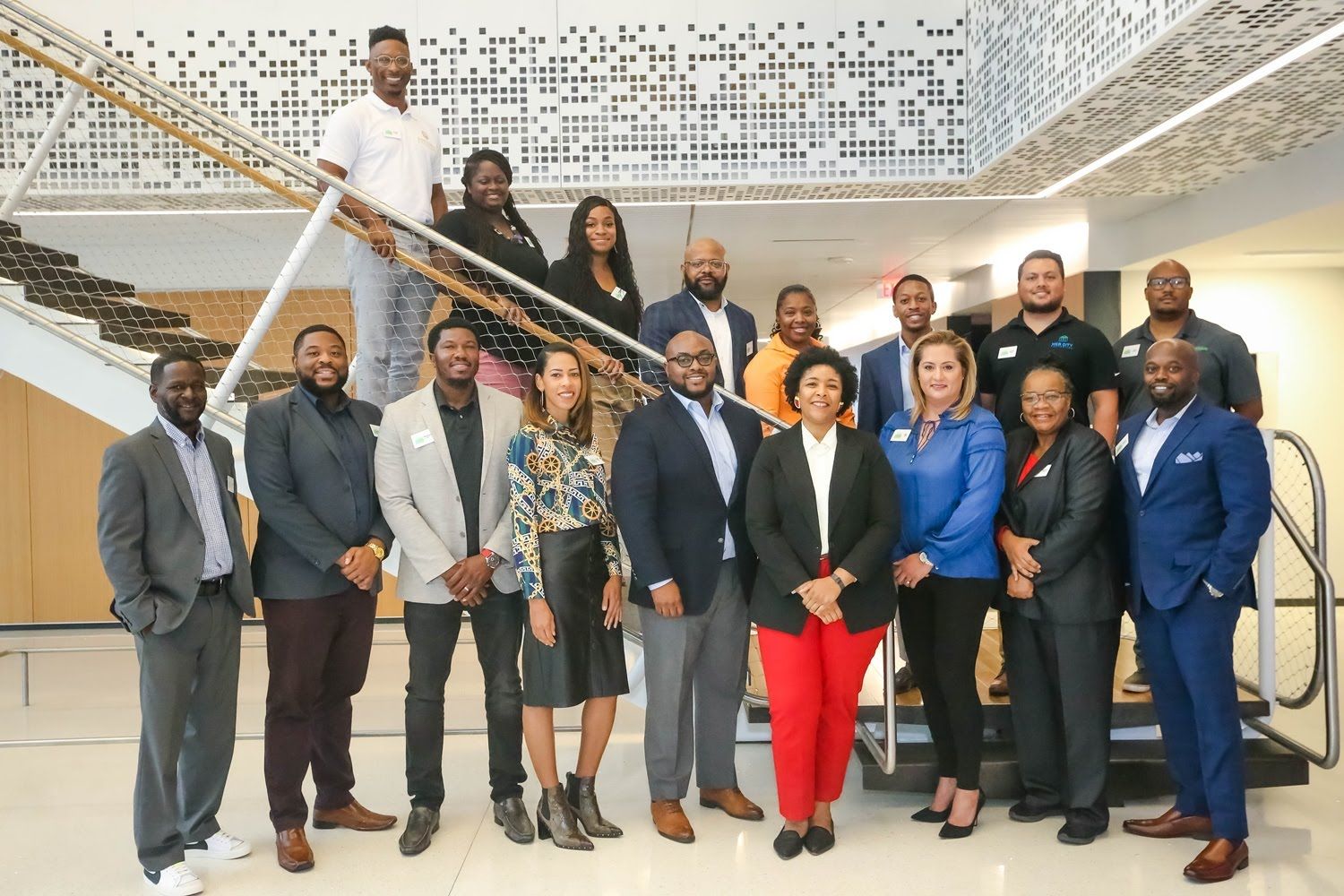
Members of the inaugural Community Developers Roundtable cohort.

“Part of the DRC’s job is to help make connections,” said Latosha Herron Bruff, Senior Vice President of Inclusion & Community Engagement at the DRC. “When we heard what Maggie was doing, we recognized this as a great opportunity to leverage our influence and connect her to the business community.”

The Roundtable consists of 15 real estate professionals focused on community-oriented and innovative real estate solutions that increase housing affordability and community-based amenities in historically distressed communities throughout Dallas.

Throughout the program, developers received peer support, guidance for their projects, and unique networking opportunities. The roundtable featured guest speakers and advisors, development deal feedback and work sessions, and real estate market referrals to provide support to the developers to fuel their continued development of under-championed areas around Dallas.

“These developers have actual, viable projects on the ground. Some have done anywhere between five and 300 units in some places. We can help them to continue their success,” said Herron Bruff.

To empower the success of the CDR cohort members, Herron Bruff connected Parker to Brian Ruby at EY, a DRC member company, with the vision he would be able to teach the Roundtable members more about relevant tax and financial information.

“The CDR members were incredibly engaged, asking all sorts of questions. It was quite interactive, and you could see that there was a kind of camaraderie amongst the participants,” said Ruby, Partner of the Tax Services division of EY. “One would have a question, and another would say, ‘Oh, I did that last year; let me share my experience.’ There was a lot of learning going on just in the conversations.”

Ruby hopes EY’s involvement continues past the CDR’s pilot year.

“We were honored to be the tax advisor sponsor for the group,” said Ruby. “We would love to continue to be involved as the program grows and develops. It’s rewarding to be involved in the community and give back.”

According to Parker, the DRC’s ability to serve as a connector helped ensure CDR’s participants had access to the Dallas Region’s best resources.

“I think the chamber has made a huge difference by making some of these one-on-one connections,” said Parker. “We’ve gotten really great feedback from the cohort about the community that was built, some of the sessions, and the different connections and partnerships that were made.”

Applications will open for the next cohort of the CDR this August.

All 15 developers of the CDR’s first class were highlighted in Dallas Innovates.

“The Chamber is really in a position to highlight a lot of these developers, which helps shine some more light on potential partnerships,” said Parker.

Interested developers can apply to the CDR beginning on Tuesday, Aug. 1. Read more about the success of the first cohort and their projects on Dallas Innovates or on the Community Developers Roundtable website.

By Catie George, Manager, Communications and Storytelling

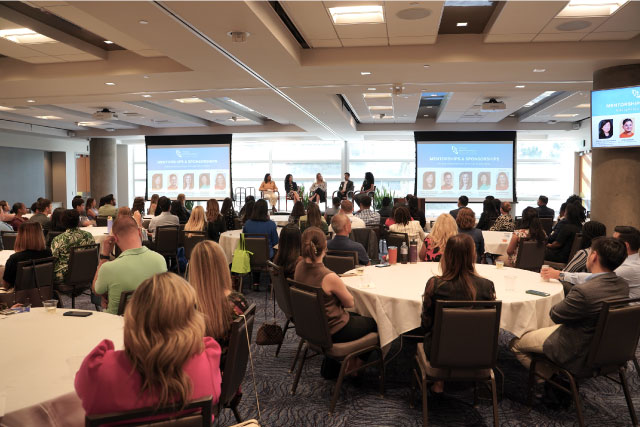
Emerging leaders from around the Dallas Region gathered at the Federal Reserve Bank of Dallas Tuesday, June 20, for a diversity, equity, and inclusion-focused event hosted by the Dallas Regional Chamber’s (DRC) Young Professionals (YP).

The event was designed to help up-and-coming professionals explore mentorships, sponsorships, and building relationships through vulnerability.

“We want to encourage each one of you to strategize, to take action, to leverage your relationships and community to gain mentors and sponsors,” said Latosha Herron Bruff, the DRC’s Senior Vice President of Inclusion and Community Engagement. “And, just as importantly, we want you to build a network of peers that you can trust, that you can learn from, that you can share ideas with, and that you can connect with.”

The event’s keynote was a panel of four young practitioners leading organizations with DEI-related missions. The panelists shared advice and lived experiences to illustrate what it means to find a mentor or sponsor and lean into vulnerability in professional relationships.

Stacey Cho Hernandez, Southwest Regional Governor of the Dallas Asian Bar Association and member of the Orchid Giving Circle, introduced the idea of mentorship and sponsorship to the group of attendees before offering some advice to those looking for sponsors.

“A mentor is someone who’s going to speak with you. A sponsor is someone who’s going to speak about you,” said Hernandez. “If you’re looking for a sponsor, what you have to be ready to do is be excellent. And whatever it is you do—whatever your profession is, whatever your job is—make sure you have the skill set to be excellent.”

Myi’a Sanders, Chair of the Social Cultural Committee of the DFW Urban League of Young Professionals, said that sponsorships vary from person to person, but all ultimately depend on the reliability of the one being sponsored.

“My most successful sponsorships have always been when I had some type of evidence for my work,” said Sanders. “Being prepared for whatever you’re asking for is so important because you’re looking for them to move. And so often, many people who are interested in sponsoring, they’re ready. And so, it’s important for us to be just as ready and prepared to make that move as well.”

Gaining sponsors and mentors can be challenging, but the panelists offered attendees encouragement in face of the hurdles.

“Speaking as someone who’s now fortunately in a position to mentor, but also someone who’s benefited from having mentors, you can’t be afraid to ask, and you can’t be afraid to look for them,” said Hernandez. “It is so important that you surround yourself with folks who you can trust to guide you and give you that real talk, real advice.”

It is important to note that opportunities, as well as sponsors and mentors, can come in surprising forms.

“Keep your eyes open for mentors because you’ll find them in unexpected places,” said Callie Butcher, Board Member and leader of Black Tie Dinner, Inc. and President of the Dallas LGBTQ+ Bar Association. “Oftentimes we gravitate to people who look like us, who are in positions that we want to be at, but that person might not always be the best mentor for you.”

Butcher shared that early in her career, one of her most influential mentors was someone who was almost the exact opposite of her. Despite the differences, however, the two bonded and Butcher benefited from the varied viewpoint.

Jose Carreon, Chair of the C3 Latino Young Professionals Marketing Committee, emphasized how important vulnerability is to open the door for future possibilities.

“When you start with, ‘here’s where I would like to get help’, and you take the windows of opportunities that they give you, I think the opportunities are endless,” said Carreon.

Following the panel discussion, the attendees were led by Elias Acosta, Vice Chair of the C3 Latino Young Professionals Programming Committee, in a workshop evaluating the role of vulnerability in seeking out sponsors and mentors.

“We are more than just our work selves. We are full people, and it is very hard to have real connections with your colleagues if you don’t understand what’s happening outside the walls of your office,” said Butcher.

This DRC’s Young Professionals event was sponsored by Thompson Reuters and Truist Financial. The DRC’s YP program engages more than 300 members, ages 22-40, who are committed to leadership development, advocacy, and community engagement. The program empowers up-and-coming professionals to build relationships and serve with community, political, civic, and business leaders.

Visit our website to learn more about Young Professionals.

By Catie George, Manager, Communications and Storytelling

The Dallas Regional Chamber (DRC) welcomed Leadership Dallas (LD) Alumni to the Annual Leadership Luncheon on Monday, June 12, at UNT Dallas to celebrate the impact of LD on the Dallas Region and the newly graduated LD Class of 2023.

LD, the Dallas Region’s premier leadership program founded in 1975, accepts up to 55 diverse leaders each year to engage in a ten-month leadership development program to empower them to create positive change in the region. The program has seen more than 2,300 participants in its history, with alumni emerging as some of the top business and community leaders in the region. Twenty-two of the DRC’s 125 Board members, or 17.6%, are LD alumni.

Dale Petroskey, President and CEO of the DRC, remarked on the growth and prosperity of the Dallas Region and how LD alumni can lead the work still to be done.

“We are in a city of growth, in a period of growth, and we need to use this sweet moment in time to narrow the gaps between those who have a lot and those who don’t have much,” Petroskey said. “We can never rest on our laurels. We can never take our foot off the gas. I can promise you that the DRC team and I come to work every day with a sense of urgency to make the Dallas Region even better tomorrow than it is today.”

The luncheon featured Peter Brodsky, LD ’10 and the Majority Owner & Developer of the Shops at RedBird, in conversation with the DRC’s SVP of Inclusion & Community Engagement Latosha Herron Bruff. Brodsky is a civic leader and investor championing the restoration and revitalization of RedBird in Southern Dallas County, a historically under-championed community. Brodsky left a career in finance shortly after going through LD to focus on his mission-driven work.

“Every single thing I’m doing now professionally and most of my friends now stem back to Leadership Dallas, or something that I’m doing because of Leadership Dallas,” Brodsky said. “It really was an inflection point in my life because it exposed me to a side of Dallas that I had never seen.

“I genuinely believe that Southern Dallas has a financial capacity and market demands that are not being met by the market,” Brodsky continued. “I genuinely believe that everybody deserves to have not just their basic needs met, but their commercial desires catered to. Everybody deserves to have the comforts and conveniences that people want.”

One of those comforts includes the recent addition of a Tom Thumb grocery store at the Shops at RedBird, a move that promises to increase access to high-quality groceries for families in an area chronically affected by food deserts. Brodsky highlighted the DRC’s role in the success of the monumental project.

“I want to make sure everybody here understands that the DRC was a critical player in this event. And without the DRC, particularly [Latosha], this would not have happened,” Brodsky said. “If you want a specific instance of the Dallas Regional Chamber putting time and resources and effort into a Southern Dallas project, this is it.”

Graduates of LD stay connected through the DRC’s Leadership Dallas Alumni (LDA) program, designed to keep alumni engaged in the community.

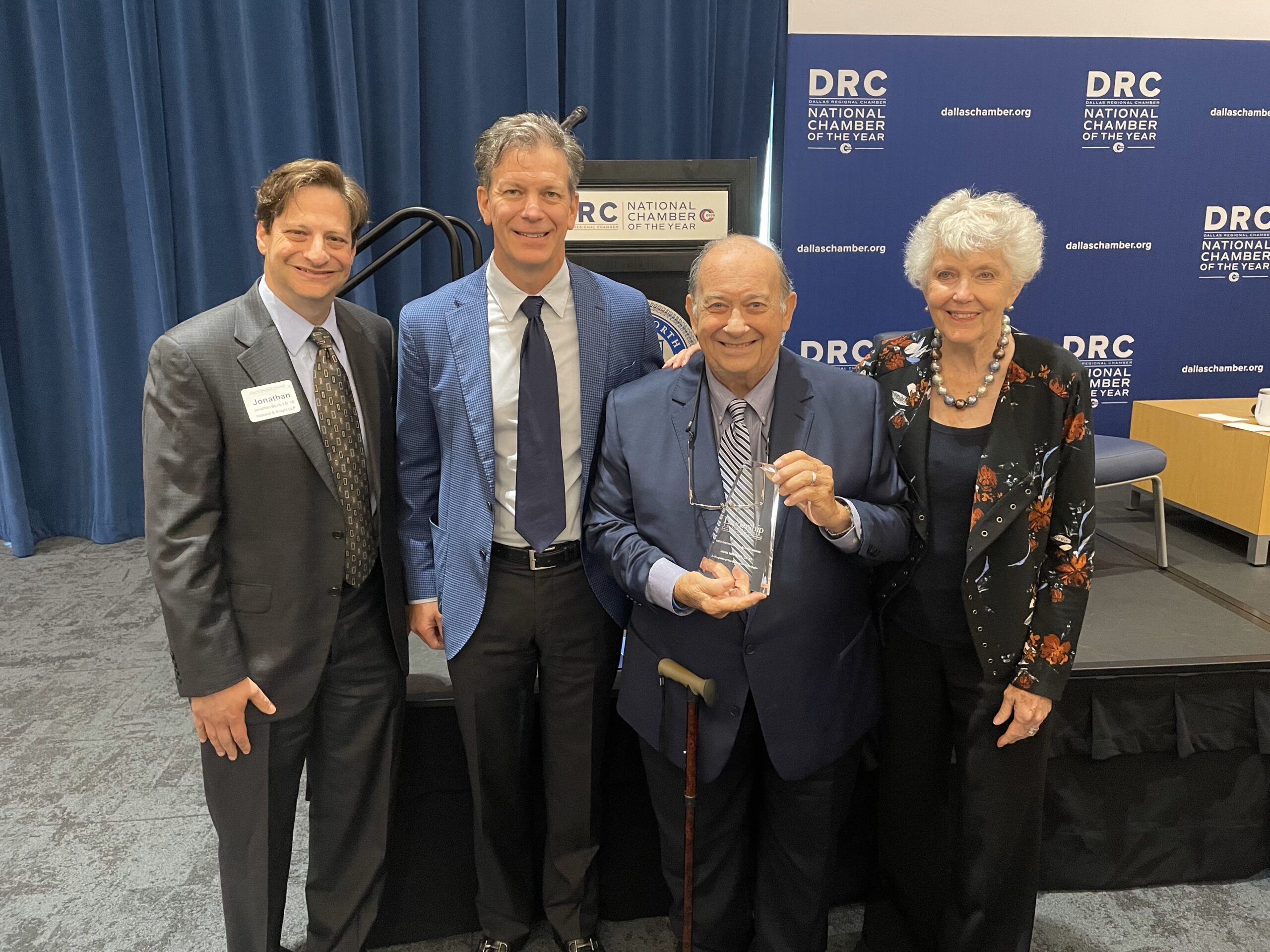
“The mission of Leadership Dallas Alumni is to connect alumni to each other and the community through impactful and inclusive leadership opportunities,” 2023 LDA Council Chair Jonathan Blum said. “We are connected by our desire to see the region succeed, and that that success is one for all in our community.”

John Roppolo, LD ’77 and retired fundraising professional, was presented the 2023 LDA Distinguished Alumni Award. This award acknowledges his contributions and commitment to the community, his demonstrated exceptional leadership qualities, and his positive impact on the Dallas community.

“I’ve had a long affair with Leadership Dallas Alumni. I was in the second class [of Leadership Dallas], and for over 50 years now I have been involved,” Roppolo said. “And I just want you to know that it has been a wonderful experience for me: the friendships I’ve made, the ability to hone my leadership skills, and the networking that it has provided me in this community… I’ve been able to serve many organizations because of the help that I’ve received in my leadership programs here at the Chamber.”

Brodsky left the LD Class of 2023 class with some encouragement to use their LD experience for good.

“If you’re in a position of power and you have a seat at the table, you have to advocate for things that go against the grain.”

The DRC’s Annual Leadership Luncheon was sponsored by Bank of America and Amazon. LDA is presented by EY, and the LD Class of 2023 is presented by Grant Thornton.

Visit our website to learn more about Leadership Dallas.

The Dallas Regional Chamber connected with member company Cruise to learn more about the autonomous vehicle company’s mission to connect people with the places, things, and experiences they care about, as well as the company’s upcoming expansion into the Dallas market.

How does Cruise help other businesses become more effective?

Cruise is singularly focused on our mission to improve road safety, reduce emissions, and reduce congestion with all-electric, driverless ride-hail service in cities. Almost all of the more than 40,000 vehicular-related deaths in the United States each year can be attributed to human error. We provide businesses with peace of mind knowing their employees and partners can get from A to B safely and efficiently using Cruise.

Cruise provides a sustainable and inclusive driverless ride-hail option to the substantial population of hospitality, restaurant, and student populations across the Dallas Region who regularly need safe late-night transportation. Our self-driving cars provide reliable, secure rides at the most unpredictable, and often vulnerable, times.

Cruise’s delivery business is currently operating in Phoenix through a partnership with Walmart but will continue to expand to other cities and partners as Cruise continues to scale.

What differentiates Cruise from other companies in your industry?

Guided by safety, Cruise delivers three core enablers for growth: amazing experience, low cost, and universal availability. For our riders, this means a safer, more reliable experience. Instead of working for your car, the Cruise autonomous vehicle (AV) works for you, giving you back the time spent driving to do whatever you want whether it’s relaxing or catching up on work.

Cruise took a city-first approach to the self-driving challenge, tackling the hardest challenges first to build technology that can handle the mundane parts of driving as well as the most unpredictable and complex. This approach and generalizable technology enable us to deploy our cars in new cities quickly and safely. Combined with our one-of-a-kind partnership with General Motors and Honda, we are the only driverless company with fully integrated manufacturing that enables us to deliver this new transportation at scale.

Our fleet is made up of roughly 300 all-electric AVs, powered 100% by renewable energy, and our sensor technology is unique and industry-leading.

Cruise is committed to demonstrating our appreciation for every city that welcomes us. We are the only AV company that has pledged to devote a portion of our fleet to help meet community needs, committing 1% of our fleet to serve local communities. In San Francisco, we leveraged our fleet to deliver over 2.2 million meals to folks in need, and this commitment will grow as we scale and operate in more cities.

What do you enjoy most about doing business in the Dallas Region?

It is thrilling to do business in a city buzzing with diverse industries and economic opportunity. Dallas embodies the “Everything is bigger in Texas” mindset, and we’re excited to be part of the action.

Why did you decide to become a DRC member?

The DRC offers unmatched programming and networking opportunities in Dallas and across the North Texas region. When looking to do business in Dallas, the DRC is the most direct, respected avenue to connect with other business leaders and community organizations, understand the state of play in the region, and reach our target audiences.

Getting to know this community is critical to our success in the region, and we know the DRC is a valuable partner in that journey.

How has your business changed in the past five years?

We’ve come a long way since our founding in 2013. Looking back on the last few years, 2018 was hugely evolutionary for us. Foundational investments from GM, Softbank, and Honda allowed us to further our AV development, and we quickly scaled to 1,000 employees. In the years following, we unveiled our purpose-built vehicle, repurposed a fleet of Cruise vehicles to deliver meals to vulnerable San Francisco residents during the COVID-19 pandemic, partnered with Walmart on a self-driving delivery in Arizona, and began offering driverless rides on the streets of San Francisco.

Specifically in the last 18 months, Cruise has made critical technical advances that flipped the self-driving question from “if” to “where next?” With more than two million driverless miles and more than six million total autonomous miles under our belts, our focus now is on solving a new challenge: scale. We have expanded from our hometown of San Francisco to welcome riders in Austin, Phoenix, and, most recently, Houston and Dallas.

Michael Wood, Managing Director, Education & Workforce

BEST PLACE FOR WORKING PARENTS® DALLAS IS PRESENTED BY

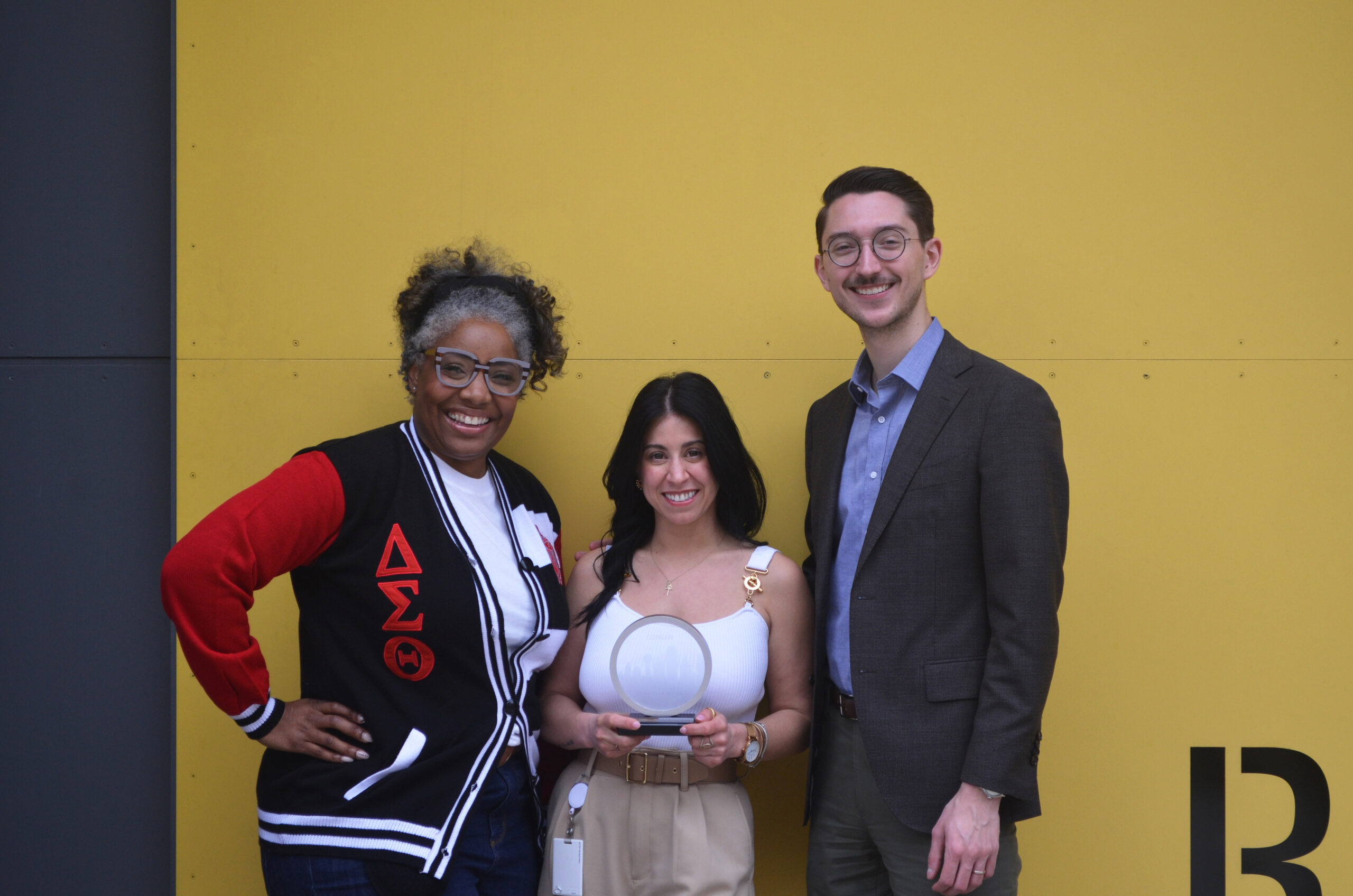
In 2022, the Dallas Regional Chamber (DRC) named three local companies as recipients of the inaugural Best Place for Working Parents® Dallas Innovator Awards for their exceptional commitment to family-friendly policies in the workplace. Corgan, an architecture and design firm headquartered in Dallas, earned the distinction as the Medium Business Innovator.

Since 2021, the Dallas Regional Chamber (DRC), in partnership with PNC Bank, has sponsored the Best Place for Working Parents® Dallas, a local partner of the Best Place for Working Parents® national initiative. The program recognizes family-friendly workplaces in the Dallas Region through a proprietary business self-assessment and aims to raise awareness of the importance of family-friendly benefits and policies for employers and workers.

“Corgan strives to be a place where all aspects of an individual employee are supported,” said Hannah Cherner, Human Resources Business Partner for Corgan. “Our commitment to family-friendly policies helps demonstrate that goal to current and future Corgan employees.”

For Corgan, family-friendly benefits are a key driver of the firm’s diversity, equity, and inclusion (DEI) and recruitment strategies.

Cherner said offering a robust set of family-friendly policies helps ensure that Corgan is a welcoming work environment for a broad variety of employees. In turn, having diverse perspectives on staff enables the firm to serve a more diverse set of clients.

Strong family-friendly benefits are also a key recruitment and retention tool for Corgan. Beyond keeping pace with competitors and industry trends to prevent turnover, Corgan uses its benefits package to demonstrate its commitment to current and prospective employees.

From left to right: Halima McWilliams, Associate Principal, HR Operations & Culture, Corgan; Hannah Cherner, HR Business Partner, Corgan; Michael Wood, Managing Director, Education & Workforce, DRC

While Corgan has always valued family-friendly benefits, the firm’s evolution into a top workplace for parents largely took place over the last few years. The first inflection point, said Cherner, came when employees flagged they did not have enough parental leave, sparking a benchmarking exercise that revealed other gaps in Corgan’s benefits.

The COVID-19 pandemic also accelerated the firm’s expansion of family-friendly policies, such as flexible working hours and environments.

“Architecture is a very collaborative field and it’s one that is difficult to do virtually,” said Cherner. “We really had to build upon our benefits to get people back to the office quickly, safely, and in a way that didn’t disrupt their lives outside of work.”

Corgan’s most comprehensive family-friendly benefit is its partnership with Stork Club, an industry-leading benefits provider that offers employees a wide range of supports, from family planning assistance to child care referrals. Corgan’s most utilized benefit for working parents is the paid parental leave policy, which offers all new parents up to 12 weeks of fully paid leave upon the birth or adoption of a child.

While usage rate is a key metric in assessing the strength of any benefit, the impact of family-friendly policies extends beyond the working parents it directly supports. In fact, Cherner said that both current and prospective Corgan employees appreciate benefits targeted at working parents, even if they do not have immediate plans to take advantage of those benefits.

“We find the greatest return on investment for our family-friendly policies in recruitment and retention,” said Cherner. “Particularly in recruitment, benefits like Stork Club really help us stand out to top-tier candidates and set us apart from other firms.”

Still, there are measures employers can – and should – take to ensure employees are aware of and utilizing the benefits that are available to them, said Cherner.

Routine benchmarking can help employers identify underutilized benefits in addition to gaps in their existing offerings. Focus groups with employees can help employers better understand why benefits are underutilized and identify solutions to improve usage. Solutions may include training to increase awareness of benefits and initiatives to bring benefits, such as a doctor, to the workplace.

Cherner’s advice to companies looking to strengthen their family-friendly policies is simple: listen to your employees.

“It’s really important to have a formal mechanism to hear from employees directly about what they need and what they don’t have access to,” she said. “A little bit goes a long way, especially in the United States where benefits like family leave aren’t subsidized by the government.”

Learn more about Best Place for Working Parents® Dallas and complete the business self-assessment by visiting the DRC website. The self-assessment can be completed in under 3 minutes and immediately notifies employers if they are eligible to receive the designation by comparing their family-friendly policies to those of similarly sized companies in the region.

Workplace trends indicate the direction the business world is heading, and monitoring those trends can help companies take action to stay competitive in recruiting and retaining talent, said Jessica Heer, Senior Vice President of Marketing and Talent Attraction at the Dallas Regional Chamber (DRC).

The DRC conducted a Future of Work survey of its members in May 2023 to better understand the workplace arrangements of companies in the Dallas Region. Alongside other industry data, the survey reveals workplace trends from the talent and employer perspective—and how workplaces are evolving in response.

“In the Great Resignation, we watched talent take more power in the hiring and talent retention landscape,” Heer said. “The exodus trend continues, but it’s much lower than the height in 2021. In the aftermath of the Great Resignation, workers still have heightened expectations, but we’re starting to see a shift.”

Insight from DRC member BGSF, a workforce solutions provider, shows job candidates are prioritizing hybrid and flexible workplaces above all else when considering a job opportunity. BGSF’s findings are complemented by a pulse survey conducted by Future Forum in late 2022, which showed remote and hybrid workers cite flexible work policies as the primary reason their company culture is changing for the better.

“In our work with job candidates across numerous industries, we’re seeing that flexibility is the new compensation,” Troy Chapdelaine, Managing Director of Strategic Recruiting Solutions at BGSF. “Candidates are asking about hybrid and flexible work arrangements in interviews before they bring up compensation—though they still expect strong compensation, in addition to great company culture with career advancement opportunities.”

DRC’s 2023 Future of Work survey indicated 85% of respondents are offering flexible work schedules, as well as hybrid and remote work. In most cases (38%), hybrid working arrangements are determined at the team level, though company-led schedules are close behind (31%).

Though many workplaces have responded to talent’s valuation of flexibility in both schedule and work location, employer in-office requirements are on the rise. According to CBRE Group’s spring 2023 U.S. Office Occupier Sentiment Survey, 65% of employers are requiring some level of in-office work, while 40% are planning to ramp up their office attendance requirements.

Notably, AT&T recently announced plans to have managers return to the office while simultaneously consolidating the company’s footprint into nine core offices, including its Dallas headquarters.

“This is a trend to watch,” Heer said. “By AT&T joining the rise of in-office work, we’ll likely see more companies start to follow suit and increase their in-office work expectations for employees, and we know from CBRE’s data that 67% of employers are placing more importance on quality of the working environment than they did pre-pandemic.”

As the scales start to tip toward prioritization of in-office work, companies are morphing workplaces into live-work-play locations with spaces to learn, collaborate, and celebrate, and health, wellness, and convenience amenities.

“The trend toward on-site amenities could be viewed as a strategy to try and maintain the positive culture and work-life balance shifts that come with flexible and hybrid working arrangements that we know help retain talent while still shifting back toward regular in-office work,” Heer said.

As companies navigate workplace trends and the evolving landscape, the DRC offers numerous resources to help attract and retain talent, including Best Place for Working Parents® Dallas and the Say Yes to Dallas talent attraction campaign.

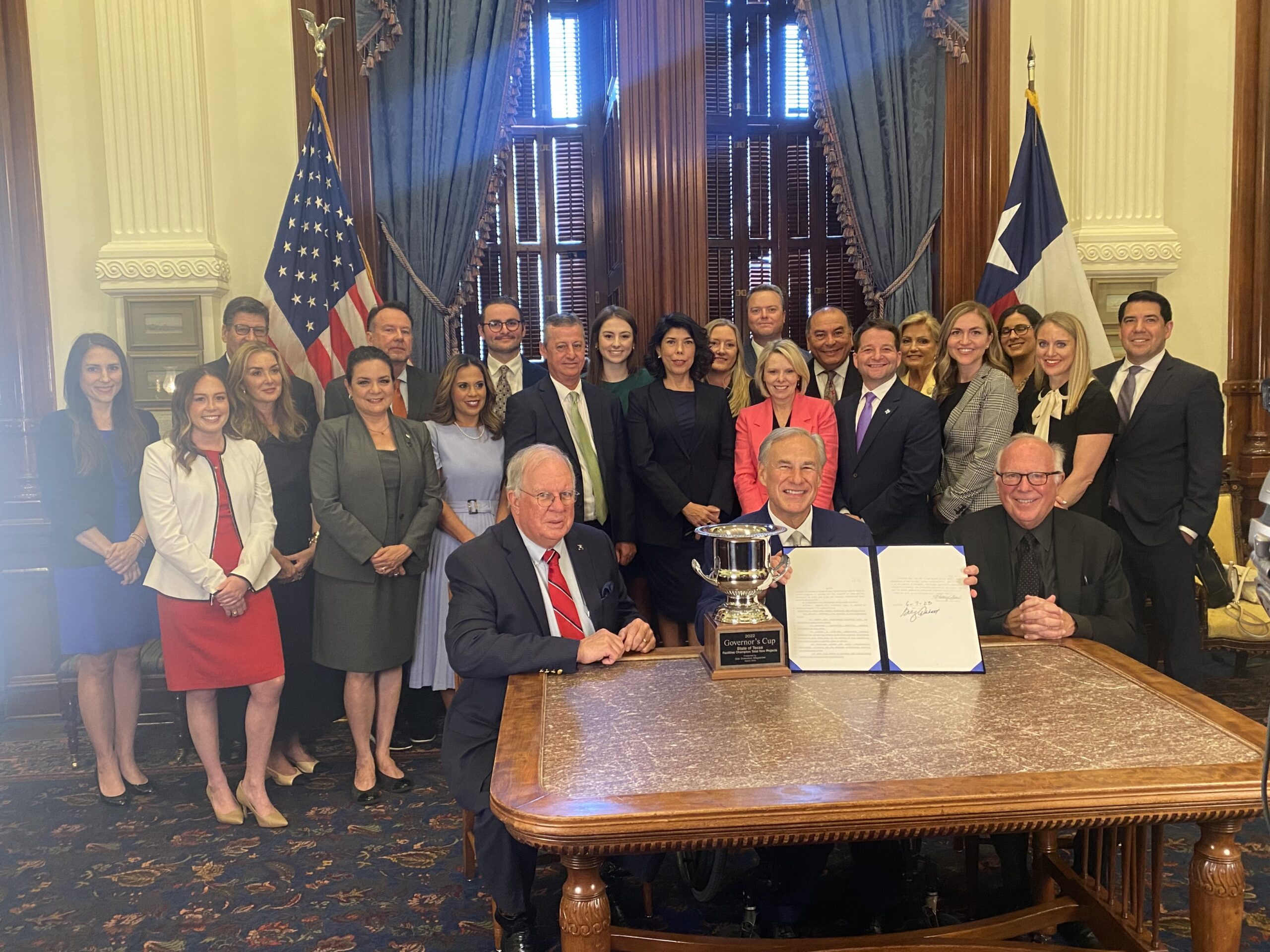
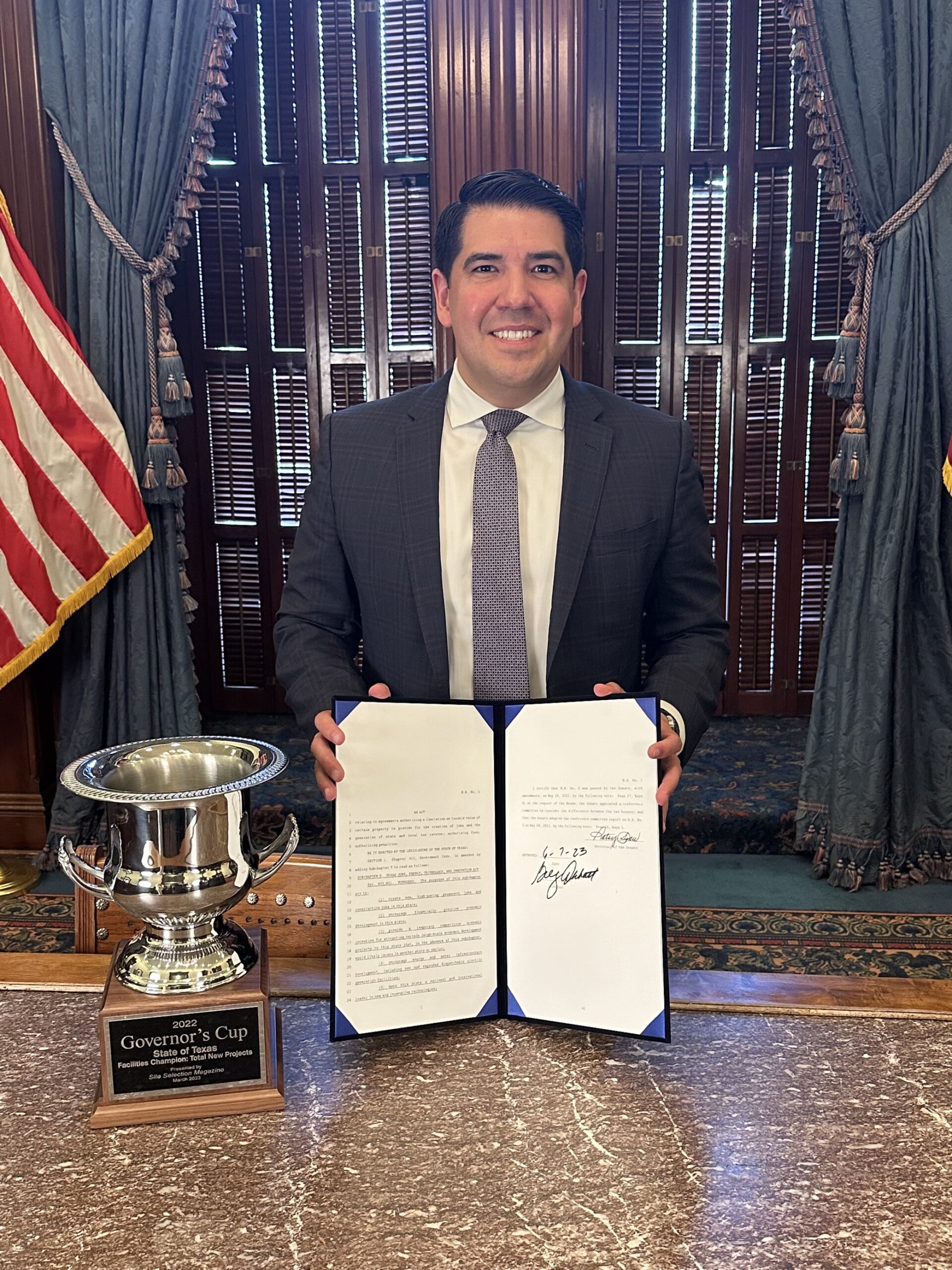
In the final stretch of the 88th Texas Legislative Session on Sunday, May 28, lawmakers passed House Bill 5 (HB 5), a key priority bill for the Dallas Regional Chamber (DRC) that will create a new transparent and accountable economic development incentive tool designed to help attract large corporate projects to the state. Gov. Abbott signed the bill into law Wednesday, June 7.

Gov. Greg Abbott signs House Bill 5.

The DRC entered the legislative session in January advocating for a bill such as HB 5—named the Texas Jobs, Energy, Technology, and Innovation Act—to keep Texas competitive in economic development. Texas’ previous economic development incentive tool, known as the Texas Economic Development Act, expired at the end of 2022 after two decades of helping fuel an economic boom that included the addition of 222 corporate headquarters, hundreds of industrial projects, and 1.3 million new jobs to Dallas-Fort Worth since 2010.

“Economic development tools like the one House Bill 5 establishes are a vital piece of Texas and the Dallas Region’s winning economic formula,” said Dale Petroskey, President and CEO of the DRC. “This action by our state leaders helps Texas maintain its current position as the nation’s number one state for business, and I am deeply proud of the DRC’s tireless and effective advocacy efforts in support of this critical effort in concert with our partners statewide. Thank you to the legislators who worked on this bill, championed it, and ultimately voted for it.”

HB 5, authored by Chairman Todd Hunter and sponsored by Chairman Charles Schwertner, incentivizes corporate development projects by allowing school districts to offer temporary property tax abatements to induce big long-term gains, including enduring tax wealth and high-paying jobs in innovative sectors. This is especially important in a property tax-intensive state like Texas, and the bill, which makes significant improvements to its predecessor program, passed both the House of Representatives and Senate by a wide margin with bipartisan support.

“Texas is the most dynamic and diverse state economy in modern American history due in large part to forward-thinking incentive tools like this one,” said Mike Rosa, DRC Senior Vice President of Economic Development. “Passing HB 5 signals to diverse industries that they can thrive here and sets the table for our economy’s continued growth for years to come. This program will help us continue to recruit large capital investments and create jobs for residents throughout the state.”

DRC Senior Vice President of Public Policy Matt Garcia with the signed bill.

Rosa served as one of just 11 people statewide invited to testify in support of HB 5 before the House of Representatives’ Committee on Ways and Means; he was the only economic development professional invited to lend his expertise to the same committee.

In addition to Rosa’s expert counsel, the DRC’s Public Policy and Economic Development teams worked hundreds of hours with House and Senate members and their staff to serve as a resource for changes that could help make HB 5 as impactful as possible. DRC staff worked in close coordination with a statewide coalition of over 260 chambers and corporations to promote the critical nature of HB 5 and advocate for its passage.

When HB 5 was considered in the Senate, the DRC worked with the office of Senator Royce West to include a provision incentivizing companies to locate projects in federally designated Opportunity Zones, which are under-championed areas in rural and urban communities across the state.

DRC member companies joined the coalition’s advocacy efforts for HB 5 in meetings with lawmakers during the DRC’s 2023 Austin Fly-In and made many subsequent calls to their legislators to siren the importance of this legislation to the continued growth of the Dallas Region.

The DRC thanks Gov. Abbott, Lieutenant Governor Dan Patrick, and House Speaker Dade Phelan for urgently passing HB 5 before conclusion of the regular legislative session, as well as Chairman Hunter, Chairman Schwertner, Chairman Morgan Meyer, and Chairwoman Angie Chen Button for their diligence and commitment to this initiative throughout the entire legislative process.

The DRC also thanks members of the Dallas Region’s delegation who supported HB 5 and the members of the Conference Committee on HB 5, including Senator Nathan Johnson, Chairwoman Button, and Chairman Meyer, for their hard work and commitment to this important legislation.

By Michael Wood, Managing Director, Education & Workforce

When the Texas Senate approved House Bill 8 to overhaul the state’s community college finance system Friday, May 19, it marked a transformational shift to emphasize funding for student outcomes and a key legislative win for the Dallas Regional Chamber.

Advocates for HB 8 widely expect that Governor Greg Abbott will sign the bill into law after the legislature adjourns on Monday, May 29. Initial estimates project that North Texas community college systems will receive approximately $70 million in new funding over the next two years as a result of HB 8.

“The continued economic success of the Dallas Region depends on the quality of our local talent pipeline, and our community colleges are a vital contributor to that pipeline,” said Dale Petroskey, President & CEO of the DRC. “HB 8 is a huge win for our region, our community colleges, our employers, and, most importantly, our future workforce. The DRC is proud to have supported this critical legislation.”

The bill’s central provision would shift the majority of state funding for community colleges to a new, dynamic formula that rewards institutions for each student that completes a credential of value, transfers to a four-year institution with at least 15 credit hours, or completes 15 credit hours in an academic or workforce program. Greater funding would be awarded to institutions for adult learners, or academically or economically disadvantaged students that meet these same benchmarks.

“This unprecedented state investment in our community colleges will have an immediate impact on the community college systems in North Texas,” said DRC Senior Vice President of Education & Workforce Jarrad Toussant. “Even better, this funding has the potential to grow exponentially in future years as institutions improve their student outcomes, creating a strong incentive for colleges to partner directly with employers.”

HB 8 has sailed through the 88th Texas Legislature due in large part to planning and advocacy efforts, including those from the DRC, dating back well before the start of the legislative session in January.

In 2021, the 87th Texas Legislature approved the establishment of the Texas Commission on Community College Finance to study and develop recommendations to reform Texas’ community college funding model. The commission was comprised of community college presidents, state lawmakers, and civic leaders including Todd Williams, President and CEO of The Commit Partnership—a Dallas-based education nonprofit—and former DRC Board member.

As the commission met throughout 2022, the DRC saw the need to provide the perspective of the business community in support of the commission’s efforts.

“Dallas-Fort Worth leads the country in job growth, having added 1.3 million new jobs since 2010 and nearly 200,000 over the last three years,” said Tre’ Black, Chair of the DRC’s Education & Workforce Council and President of On-Target Supplies & Logistics. “Despite this economic success, Dallas Region employers are struggling to fill open jobs due to gap in the credentials jobseekers have and those required by high-demand positions. Community colleges are well-positioned to address these gaps.”

The DRC convened a working group of Dallas Region business leaders—including representatives from AT&T, Bank of America, JPMorgan Chase, and Hunt Consolidated—to advocate for the consideration of business-friendly reforms.

After proactive conversations with state and local higher education leaders and members of the commission, the group prepared a letter to the commission with several key funding recommendations, including: reform to the state’s outcomes-based funding mechanism for community colleges, additional supports for high-needs student populations, and targeted funding to expand employer-college partnerships.

When the commission issued its final report in December 2022, several specific reforms were closely aligned with the DRC working group’s recommendations—signaling a shared vision for the way forward amongst state leaders as the 88th Texas Legislature prepared to gavel in and act on the commission’s report.

Gov. Greg Abbott and House Speaker Dade Phelan identified the issue of community college finance as a priority early in the session, and first drafts of the House and Senate budget proposals earmarked $650 million in new funding for community colleges over the next biennium. By the end of February, commission member and House Appropriations Article III Chairman Gary VanDeaver had filed HB 8.

Continuing the DRC’s close involvement and advocacy efforts, Black and Toussant provided testimony in favor of HB 8 before the House Committee on Higher Education in late March, after which the bill received unanimous approval from committee members before receiving full House approval Wednesday, April 12, on 146-1 vote. HB 8 then received unanimous approval from the Senate Education Committee Tuesday, May 16, before proceeding to the Senate floor.

As passed by the Senate, HB 8 largely mirrors the recommendations in the commission’s final report and aligns with the priorities the DRC’s working group identified.

If and when HB 8 is signed by Gov. Abbott, the Texas Higher Education Coordinating Board will undertake rulemaking to determine how to implement the various provisions included in HB 8 ahead of the law’s Sept. 1, 2023, effective date. New funds will reach community colleges at the start of the 2024 state fiscal year, also on Sept. 1 of this year.

The Dallas Regional Chamber convened experts on the continuum of mental health care for its Q2 Executive Circle event Wednesday, May 10, at McKesson to help Dallas Region companies better understand how to advocate for and support employees’ mental health.

“May is mental health awareness month; what more important presentation could we do for this event than mental health?” said Dale Petroskey, DRC President and CEO. “Mental health is so important to making you the best person you can be; the best employee you can be; the best colleague you can be; the best friend, parent, and so on and so forth.”

Hani Talebi, of Meadows Mental Health Policy Institute; LeAnn Smith, of McKesson; and Dr. Hicham Ibrahim, of UT Southwestern Medical Center

The event attracted business leaders of the Dallas Region to hear a panel conversation featuring Dr. Hicham Ibrahim, Associate Vice President and Chief Medical Officer of Ambulatory Services at UT Southwestern Medical Center, and LeAnn Smith, Executive Vice President and Chief Human Resources Officer at McKesson. The panel was moderated by Hani Talebi, Ph.D., Chief Clinical Officer and Senior Vice President for Health System Integration at Meadows Mental Health Policy Institute.

Together, the three offered both the provider and employer perspective on the mental health crisis facing America’s workforce.

“To put the issue into perspective, 32% of adults in the U.S. suffer from a mental health condition,” Ibrahim said. “When you look at the workplace, the numbers seem to be more impressive. Recent surveys show that anywhere from 60% to 75% of employees report at least one mental health symptom in the workplace.”

Ibrahim was clear that the lost productivity and poor performance often associated with employees’ mental health challenges cannot wholly be pinned on preexisting conditions but that work conditions have a lot to do with it. Conditions such as excessive workload, lack of work-life balance, boring or repetitive work, and lack of connection with supervisors or fellow employees.

“Mental health care is not one size fits all,” said Smith, adding that employee assistance plans and medical benefits are universal standards. “[The need for] connection is a common thing coming up. People feel better when they feel connected at work, and one way we can build connections is through employee resource groups.”

To help manage mental health in the workplace, Smith encouraged employers to evaluate their internal processes and whether their company culture is conducive to employees feeling comfortable speaking up about stress and other mental health-affecting factors.

“Are you overly hierarchical, resulting in a tough management style? Or do you measure your managers on their effectiveness in creating an inclusive culture and open environment?” Smith said, providing examples of questions employers can ask themselves.

Ibrahim and Smith agreed that removing the stigma of caring for one’s mental health in the workplace should be a priority and the practice should start at the top.

“Elevate mental health and mental wellness as a top organizational priority,” Ibrahim said. “It would be quite powerful for you as business leaders to share with your employees your own struggles with stress and mental health. Business leaders should be Normalizers in Chief for mental health issues and wellness in the workplace.”

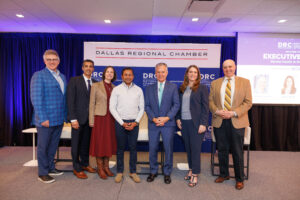
Event panelists with Martin Yung, of HUB International Texas; Angela Farley, of the DRC; Nimesh Jhaveri, of McKesson; and Dale Petroskey, of the DRC.

Smith added it’s important to have a robust listening strategy, including surveys or focus groups to take the pulse of the workforce and training managers on how to use that data.

Ibrahim also provided an update on the new behavioral health hospital that will serve the Dallas Region, which has been a key legislative priority for the DRC for several years. Ground broke on the innovative facility, which will be operated by UT Southwestern, in December 2022.

The DRC’s Executive Circle series is presented by McKesson. HUB International Texas served as the event sponsor for the Q2 event.

If you are interested in joining future Executive Circle events, contact events@dallaschamber.org.

To celebrate Asian American and Pacific Islander (AAPI) Heritage Month, the Dallas Regional Chamber caught up with Caren Lock, Regional Vice President & Associate General Counsel of TIAA, to get her perspective on AAPI influences and representation in the Dallas Region.

In her role at TIAA, Lock is the primary interface for the company and its subsidiaries on all legislative, executive, regulatory, and administrative matters for the South and Midwest regions. In 2015, Lock co-founded The Orchid Giving Circle which provides community grants to support social change and services to the North Texas Asian Community. Lock serves on the Dallas Mavericks Advisory Council, Board of the Dallas Holocaust and Human Rights Museum, and the President’s Advisory Board of UT Southwestern Medical Center.

Caren Lock, Regional Vice President & Associate General Counsel of TIAA. (Photo by D CEO magazine)

Tell us about an experience that has influenced your life.

Shortly after my family immigrated to the United States, I watched in horror as my parents were scammed at a tire shop. Since I was the only one who could speak basic English, I jumped in to politely explain that my parents did not bring in a car with four flat tires like the salesperson claimed, only one. I couldn’t even see above the counter and had to speak to the salesperson on my tippy toes. When he dismissed us, I started to do the only thing I could: talk louder than him. It caused such a scene that they offered to fix all four tires and only charge us for one.

I learned that day if I use my voice to help those who are disadvantaged, the impact is amplified because that tire shop would think twice before taking advantage of another family with limited language skills.

What Asian American and Pacific Islander figures have had the biggest influence on your life? Why do you look up to them?

I have had many mentors throughout my professional life, but the one I credit with shining a light on the importance of volunteering and philanthropy is The Honorable Karen Gren Scholer, Judge of the United States District Court for the Northern District of Texas. She reminded me a few years after I started practicing law that I needed to give back to the Dallas community that welcomed and nurtured me [after immigrating to the United States].

Judge Scholer encouraged me to start serving on nonprofit boards and use my skills to shine a light on issues affecting Dallas. It took me a while to realize my passion is in women and girls. Since that time, I have served as Board Chair of the Texas Women’s Foundation and the first Asian American Board President of the Dallas Assembly.

Please share some Dallas Region-based AAPI-serving organizations you support. Why do you support them?

One of my proudest legacy projects is the Orchid Giving Circle. A small group of us started this organization to democratize philanthropic giving while giving back to the North Texas Asian Community. Since our founding in 2015, Orchid Giving Circle has granted more than $1.5M to more than 30 different organizations.

What can employers do to help AAPI professionals?

Corporate America can help the AAPI community by supporting organizations like Orchid Giving Circle and providing mentoring opportunities focus on first-generation Asian Americans entering the corporate world. My hope is that we can be better together.

What would be the title of your autobiography? Why?

“Resilience: Because Failure is Not an Option.”

To celebrate Asian American and Pacific Islander (AAPI) Heritage Month, the Dallas Regional Chamber caught up with Urmil Shah, Chairman of the Asian Chamber of Texas and Senior Software Engineer at Texas Instruments, to get his perspective on AAPI influences and representation in the Dallas Region.

Urmil Shah, Chairman of the Asian Chamber of Texas and Senior Software Engineer at Texas Instruments

Shah has more than 15 years’ experience in design and architecture of scalable enterprise applications and process improvement for security, quality, and test cost reductions. He serves on the DRC Board of Directors and has previously served on the Boards of Directors for the Greater Dallas Asian American Chamber of Commerce and the Greater Dallas Indian Chamber of Commerce.

What Asian American and Pacific Islander figures have had the biggest influence on your life? Why do you look up to them?

The journey from M. Y. Lee’s role in constructing the transcontinental railroad and the immense struggles faced during the 1800s, to Yuji Ichioka’s revolutionary phrasing of the term “Asian American,” represents a remarkable progression toward celebrating civil liberties and a society that values diversity. As a child, I gazed at the stars in awe, wondering what mysteries lay beyond our world. Kalpana Chawla, an Indian-born American astronaut and aerospace engineer, shattered glass ceilings and soared to new heights as the first woman of Indian origin to venture into space in 1997 and again in 2003. Despite her humble origins in a small town in India, Chawla earned her bachelor’s degree before moving to the United States to pursue her master’s and Ph.D. Her indomitable spirit propelled her to become a part of NASA, proving that one’s race, gender, and background should never impede aspirations. Chawla’s unwavering determination has blazed a trail for countless individuals to chase their dreams relentlessly and never give up hope. Her story serves as a poignant reminder that the universe is ready and waiting to support those who dare to dream big, no matter how impossible it may seem.

What are the biggest challenges facing the AAPI community? What can employers do to hep their AAPI leaders excel professionally?

The AAPI community has been facing significant challenges that include discrimination, stereotyping, lack of representation in leadership positions, and the harmful model minority myth. The recent rise in anti-Asian hate crimes and xenophobia during the COVID-19 pandemic has further exacerbated these challenges. The numbers are alarming as nearly 11,000 hate crime incidents against Asians have been reported since the beginning of the pandemic. Shockingly, 74% of AAPI women have experienced racism or discrimination by strangers in the last year alone. This is an urgent issue that needs to be addressed at all levels of society.

As we mark the anniversary of the horrific shooting in Atlanta, it is a sobering reminder that the very fabric of our society is built on trust, acceptance, and how we treat each other. It is imperative that we prioritize creating a safe and supportive environment for everyone to promote growth and well-being of families, businesses, and society.

Employers have a crucial role to play in empowering their AAPI leaders to excel professionally.

Professional Growth:

  • Only one in four C-suite executives is a woman and only one in 50 is an AAPI woman. Even when high-performing AAPI women are less likely than other groups of women to receive positive feedback on our leadership abilities.
  • Leaders have to be proactive, starting with assigning mentors to new employees and providing leadership training and access to industry conferences and networking events. This will help develop their skills and provide them with opportunities for career advancement.
    • To address this issue, the Asian Chamber is planning to start a NextGen program for Asian professionals for all businesses and their employee resource groups. It will be a platform to provide the members with resources and opportunities to create a thriving ecosystem of successful AAPI businesses, including networking, mentorship, and education.
    • Excellent programs like Leadership Dallas and Leadership America will empower the individuals with the tools and skillset for the C-suite
  • Employers can encourage the formation of AAPI employee resource groups (ERGs) to provide a supportive network for AAPI employees. ERGs can help AAPI employees connect with each other, share experiences, and provide mentorship opportunities.

Bias and Cultural Awareness:

  • Provide Cultural Awareness Training: Employers should invest in providing cultural awareness training to their staff to increase their understanding of AAPI culture, history, and customs. This will help create a more inclusive work environment for AAPI employees.
  • Address Bias in the Workplace: Employers should work to eliminate bias in the workplace, including unconscious bias, microaggressions, and discrimination. They can provide training on identifying and addressing these issues, create policies and procedures to address bias and discrimination, and hold employees accountable for their actions.
  • Support AAPI Causes and Organizations: Employers can show their support for the AAPI community by donating to AAPI organizations and causes, participating in AAPI heritage month events, and highlighting AAPI leaders in their organization. This can help create a sense of community and support for AAPI employees.

Overall, employers can help their AAPI leaders excel professionally by creating an inclusive workplace culture, addressing discrimination and bias, providing professional development opportunities, addressing the model minority myth, and supporting AAPI causes and organizations.

Please share some Dallas Region-based AAPI-serving organizations you support. Why do you support them?

Dallas-Fort Worth has a rich and culturally vibrant Asian community. There are many fantastic organizations serving the community, including:

  • Asian Chamber of Texas is an umbrella organization representing more than 20+ South Asian countries serving since last four decades.
  • Japan America Society is a gateway to Japan, guiding individuals and businesses every step of the way with anything related to Japan.
  • US China Chamber of Commerce active and vibrant Chinese community in DFW.
  • Indian Classical Music Circle bringing the rich culture of Indian classical music to the community since last 40 years.
  • Dallas Filipino Lions Club dedicated community helping year-round with promoting businesses, health and vision care clinics, feeding the homeless and advocating and educating in all walks of life.

These organizations are essential resources for the AAPI community in the Dallas Region, and they provide valuable services to support and uplift the community. Supporting these organizations can help ensure that the AAPI community in the Dallas Region has access to the resources and support they need to thrive.

What would be the title of your autobiography? Why?

“Breaking Barriers: In the Land of Opportunity”

The title “Breaking Barriers” reflects the challenges and obstacles that you may have faced as an Asian, particularly if you had to navigate biases and stereotypes related to your race or gender. The subtitle highlights the transition and growth you have experienced in your career, and how you have been able to excel in your field despite potential challenges. Overall, this title celebrates your accomplishments and emphasizes the importance of persistence, resilience, and breaking down barriers in achieving success.

To celebrate Asian American and Pacific Islander (AAPI) Heritage Month, the Dallas Regional Chamber caught up with Bob Pragada, CEO of Jacobs, to get his perspective on AAPI influences and representation in the Dallas Region. Pragada is a passionate advocate for inclusion and diversity and intensely proud of his Indian American heritage.

Bob Pragada, CEO of Jacobs and DRC Board member

Pragada joined Jacobs in 2006 and over time he has held several senior management positions before being appointed Chief Operating Officer in 2019, then CEO in 2023. In his early career, Bob was the first Indian American to graduate from the United States Naval Academy. He then served as an officer in the U.S. Navy Civil Engineer Corps for nine years where he rose to the rank of Lieutenant Commander. Pragada serves on the DRC Board of Directors and served as Board Chair in 2022.

What Asian American and Pacific Islander figures have had the biggest influence on your life? Why do you look up to them?

Without a doubt, the biggest Asian American influencers throughout my life are my mom and uncle. Their incredible work ethic inspired and influenced me to achieve everything I have to date. They always put other peoples’ lives and wants ahead of their own, and their inner quality of wanting to give back to America continues to shine through after all these years.

What are the biggest challenges facing the AAPI community? What can employers do to help their AAPI leaders excel professionally?

Broadly speaking, the United States is still learning that – similar to Europe – every country within Asia is extremely different. Therefore, Asia has a lot of different cultures that need representation. Employers should learn and celebrate the different backgrounds of all their Asian employees. At Jacobs, we do this through our One World Employee Network, which provides an inclusive environment that actively nurtures, supports, and celebrates our diverse employees and clients across all ethnicities and cultures.

Please share some Dallas Region-based AAPI-serving organizations you support. Why do you support them?

I support the U.S. India Chamber of Commerce DFW and Jacobs’ One World Employee Network to be an ally of all ethnicities and, specifically through the chamber, those with Asian American backgrounds similar to mine.

What would be the title of your autobiography? Why?

“My American Dream” – I lived and continue to live it!

By Morgan Christian, Director of Public Policy and Communications

The 88th Texas Legislature has reached the beginning of its home stretch, with several procedural deadlines fast approaching that will determine whether bills live another day or meet their ends.  

The House and Senate have each passed their respective proposals for the 2024-25 state budget – the only item lawmakers are constitutionally required to pass – and appointed “conference committee” negotiators to iron out the differences in the two versions of the bill.  

With “sine die” looming on May 29, this process will ramp up as the selected lawmakers begin reconciling varying priorities and funding amounts. The Senate has called for $308 billion in spending over the next two years, while the House has called for $302.6 billion, and there are fundamental differences between the two chambers’ approaches to funding that must be addressed – particularly around property tax relief and the fate of “education savings accounts,” or school vouchers.  

While these discussions unfold, it is a critical time for the DRC and the business community to advocate for key spending priorities that would affect the Dallas Region. Two issues require concerted support: funding for a behavioral health hospital and funding for a regional law enforcement training center.  

Behavioral Health Hospital Funding 

In the area of health care, the DRC is advocating for full funding for the UT Southwestern-operated behavioral health hospital that will serve the Dallas Region.  

Last legislative session, the DRC led a coalition of more than 30 organizations from across the region in asking lawmakers for initial funding for this hospital, a need that was identified by the state in 2014. However, due to inflation and rising construction costs, $101.9 million in additional funding is needed to complete the construction of the facility, and $68.5 million is needed for ramp-up operations such as clinician recruitment and workforce development. 

While the House has included the requested funding amounts in its budget bill, the Senate has included $38 million for construction costs only. 

Fully funding this new facility is vital to reducing wait times for North Texans seeking urgent mental health care. Presently, the Terrell State Hospital serves the needs of 25 counties, and there are only about five state inpatient hospital beds per 100,000 residents in the Dallas Region – less than half of the national average. With the demand for services surging as the result of rapid population growth, a declining supply of service providers, and the effects of the COVID-19 pandemic, patients often wait days or even weeks for treatment. 

The DRC is actively advocating for the full $101.9 million and $68.5 million to be included in the final budget bill and sent a letter to conference committee members on this issue signed by 18 member companies and local organizations.

Regional Law Enforcement Training Center Funding  

The DRC is also advocating for $50 million for the construction of a state-of-the-art regional law enforcement training center housed on the University of North Texas at Dallas campus. Such an investment would make regional law enforcement agencies stronger and more effective and, importantly, help Texas continue to position itself as a national leader in policing research and training. 

UNT Dallas is one of the fastest-growing colleges in the country and offers a space to educate officers in a holistic, collaborative context. A new training center would serve as an operating base for the renowned local Caruth Police Institute, Texas ABLE Center of Excellence, and Texas Law Enforcement Peer Network – initiatives that address leadership development, policy, and reducing the impact of stressors and trauma that often lead to poor performance and health outcomes for officers.  

The center would also serve as the home of a new academy for the Dallas Police Department (DPD), which has become a model in data-driven policing that prioritizes community engagement, despite the department’s staffing and training needs being hindered by an outdated, temporary facility built in 1990. DPD’s academy also trains the police forces of numerous Dallas suburbs.  

The DRC sent a letter signed by 24 member companies and local organizations to conference committee members urging them to include $50 million for a new training center in the final budget bill. 

Take Action 

The five Senate conference committee members are Finance Committee Chair Joan Huffman (R-Houston), Sen. Brandon Creighton (R-Conroe), Sen. Lois Kolkhorst (R-Brenham), Sen. Robert Nichols (R-Jacksonville), and Sen. Charles Schwertner (R-Georgetown).  

The five House conference committee members are Appropriations Committee Chair Greg Bonnen (R-Friendswood), Committee Vice Chair Mary González (D-Clint), Rep. Jacey Jetton (R-Richmond), Rep. Gary VanDeaver (R-New Boston), and Rep. Armando Walle (D-Houston).  

The DRC encourages members of the Dallas Region’s business community to call these lawmakers to ask them to support these two priorities that are key to maintaining a high quality of life for all Texans. Contact the DRC Public Policy team to learn more and join the DRC’s efforts in Austin.