By Michael Wood, Vice President, Education & Workforce

Estimated reading time: 1 minute

On Thursday, Feb. 12, the Dallas ISD Board of Trustees unanimously approved a $6.2 billion bond proposal. The measure will appear on the Saturday, May 2, general election ballot for voter approval.  

If passed, it would be the largest school bond authorized in Texas history. Here is what you should know about the proposal.  

Building on the impact of Dallas ISD’s 2020 bond campaign 

Public school bonds in Texas may only be used to finance capital expenses, such as the cost of building new schools, renovating existing campuses and investing in safety and technology.  

Voters approved Dallas ISD’s most recent bond proposal in 2020, resulting in $3.5 billion in capital funding for the district. The 2020 bond impacted more than 200 campuses across the district, including 16 new replacement campuses and 10 new facilities, and provided for upgrades in technology, security and athletics.  

Among those new facilities are Dallas ISD’s Career Institutes. These centers provide students throughout the district access to workforce training programs across 18 high-demand industries, such as aviation, construction, cybersecurity, HVAC, mechatronics and health care.  

Dallas ISD’s 2026 bond proposal, explained 

The 2026 bond proposal is split into four separate propositions. Proposition A, which would fund new buildings and renovations, represents nearly $6 billion of the $6.2 billion price tag. That funding would go toward more than two dozen replacement campuses, district-wide renovations and sufficient new classroom capacity to eliminate portables across Dallas ISD.  

The average age of Dallas ISD schools was lowered to nearly 43 years, from 52 years, after the 2020 bond. Proposition A would further reduce the age of Dallas ISD’s facilities to around 33 years. The national average is 49.  

Proposition B would provide $145 million for technology upgrades. Proposition C would enable the district to refinance debt at a cost of $143 million. And Proposition D would service swimming pools and natatoriums across Dallas ISD for $26 million.  

If passed, the 2026 bond would result in a property tax increase, equivalent to roughly $3 per month for a home valued at $500,000.  

Compared to the 10 largest school districts in Dallas-Fort Worth, Dallas ISD has the lowest total tax rate at nearly $1 per $100 in valuation. Dallas ISD would remain the lowest should the 2026 bond pass.  

How and when to vote on the Dallas ISD bond 

The 2026 bond proposal will appear on the ballot on Saturday, May 2. Depending on where you live, your ballot may also include races for school board trustee, city council, or other local ballot initiatives. Early voting begins Monday, April 20, and ends Tuesday, April 28.  

For more information about the Dallas ISD bond, please visit Dallas ISD’s Bond 2026 webpage 


By Kelly Cloud, Vice President, Economic Development, Life Sciences

Estimated reading time: 2.5 minutes

This February, Novartis announced its first facility in Texas, a new 46,000-square-foot radioligand therapy (RLT) manufacturing site in Denton, which will expand the company’s impact and global patient population.

As a major, global company and industry leader, Novartis’ decision signals to other biotechnology companies that Dallas-Fort Worth is a place with the talent, access and other attributes needed to support development of critical therapies—and to compete with top-tier life science metros in the U.S.

That’s certainly one reason I and the team at the Dallas Regional Chamber are excited about this win. It opens more doors for us as we continue to recruit and expand the life science sector here.

We’re also excited because the DRC has worked hard for the past few years—thanks to support from the team at Lyda Hill Philanthropies—to build our region’s brand and grow opportunities just like this to complement the successes at Pegasus Park, the long-established excellence of UT Southwestern and our other universities, and to leverage our growing talent and corporate life science base.

DFW can compete for major life science companies

We’ve built a pitch and better assembled the considerable life science assets already here, both university and corporate, to effectively present this region. We’ve trained our regional community allies, when needed, on what life science companies are looking for when locating. And we’ve logged a lot of frequent flier miles and time in touring vans to approach, meet and host companies, like Novartis, during their selection process.

During my visit to Novartis’ New Jersey site in August 2025, I met their team and saw firsthand their industry-leading technology. When I walked into the facility, it was immediately clear that patients are at the center of all that they do. Getting to know Novartis’ team—especially travelling to see them on their turf—was critically helpful when they visited us. It allowed us to tailor their evaluation and their time spent here in an effective way. It informed how we built and worked with local partners to host and answer their questions, meet their needs and give us our best chance of winning this exciting project.

When recruiting life science companies like Novartis, two critical advantages that we have are increasingly important:

DFW is the central gateway through which life science companies can reach patients and create impact

DFW’s central position—not only to coastal life science markets—but to a patient population of over 50 million people within a 10-hour drive is a key advantage for patient access, especially when working with time-sensitive treatments, like Novartis’ RLT. DFW International Airport, meanwhile, enables direct access to any destination in the continental U.S. within four hours, expanding patient outreach and global connectivity for Novartis’ critical treatment.

Novartis’ Denton RLT site “strengthens [the company’s] ability to meet growing demand, building the capabilities needed to deliver these next-generation treatments with the speed and precision they require,” said CEO Vas Narasimhan in his latest press release.

DFW Airport has also actively invested in preparing for these treatments’ unique demands, providing controlled environments along supply chains. Along with being one of two IATA CEIV Pharma certified cargo communities, DFW Airport houses the second-largest cold chain storage capacity in the U.S., proactively working on the front line of global innovation for personalized medicine.

DFW’s workforce is ready to meet demand

Novartis pioneered the first FDA-approved RLT, and DFW’s workforce is uniquely positioned to pioneer life science innovation and exceed the biomanufacturing industry’s ever-evolving needs. Our higher education partners demonstrate countless successes in partnering with various industries to create a highly-technical, innovative workforce, and our regional workforce training partners have built the necessary talent framework through grants and programs, like the EDA Good Jobs Grant and NCTM2 in Bridge Labs at Pegasus Park.

But we’re not starting from scratch. DFW has a robust and dynamic talent pool, ripe with translational skills. Our workforce excels in highly regulated, technical spaces, such as food and beverage, cosmetics, semiconductor and aerospace manufacturing. These nuanced industries demand a skilled workforce, and our regional partners are collaborating to expand our workforce’s skillsets in preparation for biomanufacturing.

The core of DFW’s success is regional collaboration, and it is the key to the DRC’s work in accelerating our region’s status from an emerging life science market to the industry-leading, central hub for biomanufacturing.

Congratulations to the Denton City Council and the City of Denton’s Economic Development team for their investment and partnership in welcoming Novartis to its first Texas home.

By Dylan Guest, Vice President, Communications

Estimated reading time: 1.5 minutes

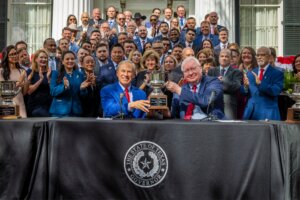
Texas has once again secured its position as the nation’s leader in economic development, earning Site Selection Magazine’s prestigious Governor’s Cup for a record-setting 14th consecutive year. The award recognizes Texas as the top U.S. state for corporate investment projects in 2025, reinforcing the state’s sustained strength in attracting private-sector growth. 

With 1,406 qualifying corporate investment projects, Texas more than doubled the total of second-place Illinois and tripled that of third-place Ohio. The milestone reflects continued business confidence in the state’s economic climate, workforce, infrastructure and pro-growth policies. 

The Dallas-Fort Worth-Arlington (DFW) metro accounted for 410 of those projects, demonstrating the region’s continued role as one of Texas’ primary drivers of corporate expansion and relocation activity. 

“Texas’ continued success is no accident,” said Dallas Regional Chamber President & CEO Brad Cheves. “The DFW region plays a critical role in that performance year after year, driven by a strong talent pipeline, world-class infrastructure and a business community that moves with speed and confidence. Our region is proud to help drive this sustained success for Texas.” 

To qualify for the Governor’s Cup count, a corporate project must meet at least one of three criteria: invest a minimum of $1 million, create at least 20 new jobs or add at least 20,000 square feet of new space. 

The DRC was represented at the Governor’s Cup celebration in Austin by Vice President of Economic Development Kevin Shatley, who joined Gov. Greg Abbott and statewide partners in recognizing Texas’ 14th consecutive victory. 

“There is no state that is better-designed or better-positioned economically now and going forward,” said Gov. Abbott. “When we have so many of those robust local economic development teams working alongside the State of Texas, that is wind at our back to ensure that we will be leading in projects now and going forward. You can see that we are on a trajectory to ensure our economic diversification is going to inoculate us in good times, as well as bad times, to ensure our economy is still going to grow, still create new jobs, prosperity and opportunities for Texans going forward.” 

In addition to the Governor’s Cup data, the DRC tracks corporate location and expansion announcements across the DFW region throughout the year. In 2025, the DRC recorded 87 corporate locations or expansions across 26 regional cities. 

Those announcements included: 

  • 30 headquarters relocations or expansions 
  • 17 technology companies 
  • 14 life sciences companies 
  • 9 projects in southern Dallas County 

This activity reflects the depth and diversity of the DFW economy—from corporate headquarters and advanced manufacturing to high-growth technology and life sciences sectors—and reinforces the region’s position as a premier destination for business investment. 

To learn more about the DRC’s economic development work, visit our website. For additional data on the Dallas-Fort Worth region’s performance, explore our Economy in Brief, presented by Citi, and DFW Region Facts. 

By Makayla Rosales, Coordinator, Opportunity and Impact  

Estimated reading time: 3 minutes 

March is a time to recognize and celebrate the achievements, resilience, leadership and lasting impact of women who have shaped our nation’s history and continue to advance our society. What began in 1978 in Santa Rosa, California, as a local ‘Women’s History Week’ was officially designated as Women’s History Month by Congress in 1987. Since 1995, every U.S. president has issued an annual proclamation honoring the month, while the National Women’s History Alliance selects a unifying theme to guide reflection and action with a different focus every year. 

This year’s theme, “Leading the Change: Women Shaping a Sustainable Future,” challenges us to act with purpose and intention. It celebrates the women who are reimagining and rebuilding systems to create lasting sustainability, not just in the environmental sense but across financial stability, resilient communities and inclusive leadership pipelines. Women are shaping the frameworks that drive long-term, systemic change, and our role is not only to honor their achievements but also to actively support systems that empower both people and the planet. By amplifying women’s leadership, we invest in a future that is equitable, sustainable, and inspiring for all. 

Engage in the workplace 

One effective way to engage staff during Women’s History Month is to host table talks or panel discussions featuring women leaders at an upcoming department or all-staff meeting. These sessions can highlight leaders from both within and outside the organization, highlighting stories of resilience, innovation and impact. The session can incorporate guided questions aligned with the month’s theme, prompting employees to share individual experiences, reflect on workplace challenges andexamine how mentorship, sponsorship and sustainable leadership show up in their day-to-day work. Facilitators might ask how women’s leadership has shaped their professional journeys, what systemic barriers still exist and how teams can collectively drive more sustainable practices. By creating space for intentional dialogue and reflection, organizations foster deeper understanding and the opportunity to reinforce a culture of inclusion that extends beyond a single month of recognition. 

Additionally, recognizing women’s achievements through internal spotlights, awards or social media features not only amplifies their voices but also sets a powerful example for the entire organization. Highlighting individual accomplishments can take many forms, from employee spotlights in newsletters or posting on the company’s social media to recognition at company meetings or through dedicated awards programs. Sharing these stories publicly on social media or internal communication channels celebrates contributions and inspires others to pursue their own professional growth. By consistently recognizing women’s impact and using their platforms to sponsor and celebrate the achievements of those around them, organizations reinforce a lasting culture of inclusion, representation and empowerment that extends well beyond Women’s History Month. 

Attend an event 

If you are interested in bringing your team, friends or family to festivities celebrating Women’s History Month, here are some local events. 

Oak Cliff Vendor Marketplace 12-2 p.m., Saturday, March 7, 2026 

4107 W. Camp Wisdom Rd. Suite 235 

Get ready for a fun-filled event of vendors, creativity and community for Women’s History Month. This free event will feature a keepsake digital photobooth for attendees, games, a themed event, swag bags, women’s history trivia and more! 

Dallas Farmer’s Market-International Women’s Day 9-5 p.m., Saturday, March 7, 2026 

920 S. Harwood St., Dallas, TX, 75201 

International Women’s Day is Sunday, March 8, and we are celebrating the incredible women working in agriculture at the Dallas Farmers Market all weekend long! Shop local and support our women farmers and ranchers.  

Walking in Her Shoes: Give to Gain International Women’s Day Panel 11:30 a.m., Tuesday, March 10, 2026. RSVP here to attend in person, or register here to attend virtually. 

Eastfield Campus: Building B, Multipurpose Room (B 1041/1042), 3737 Motley Dr., Mesquite, TX, 75150 

Join Dallas College as we interview esteemed panelists about the hurdles and successes they have experienced as accomplished, elite women leaders in the Dallas community. Free lunch will be provided for those who attend in person. 

She Serves, She Leads 9-5 p.m., Wednesday & Thursday, March 25 & 26, 2026 

Briscoe Carpenter Livestock Center: 1403 Washington St., Dallas, TX, 75210 

This year marks the fifth Annual Dallas Police Department Women’s Symposium at the Briscoe Carpenter, themed “She Serves, She Leads,” a two-day event dedicated to uplifting, motivating and uniting women in public safety. 

Other March holidays to celebrate 

In addition to Women’s History Month, some notable March holidays are Holi, on Tuesday, March 3 this year, which is also known as the festival of colors. In Hindu tradition, Holi carries deep spiritual significance, symbolizing love, renewal, hope and the triumph of good over evil. The celebration marks the end of winter and the arrival of spring, serving as a joyful reminder to embrace new beginnings, let go of the past and come together in shared community and celebration. 

Purim is also recognized on Tuesday, March 3, which  is a Jewish festival celebrated in late winter or early spring that commemorates the story of courage and resilience told in the Book of Esther. The holiday is observed through community gatherings, charitable giving, sharing food and festive celebrations. Purim highlights themes of advocacy, unity and standing up for others. 

Additionally, International Women’s Day on Sunday, March 8, is a global observance celebrating the social, economic, cultural and political achievements of women. It is both a recognition of progress and a call to action to advance gender equity and create more inclusive, equitable systems worldwide. 

Eid al-Fitr is an important Islamic holiday on Friday, March 20, this year, marking the end of Ramadan, the holy month of fasting, prayer and reflection. The celebration begins with a special communal prayer and is observed through gatherings with family and friends, charitable giving and shared meals. Companies can support employees observing Ramadan by offering flexible work hours and being mindful of scheduling around fasting, such as avoiding mandatory lunch meetings or food-centered events. Providing space for prayer and encouraging open dialogue about needs helps create a respectful and inclusive workplace culture. 

By Amber Dyer, Manager, Communications & Marketing 

Estimated reading time: 3 minutes

Lucy Gafford, Program Director of the University of North Texas’ (UNT) Workplace Inclusion and Sustainability Employment (WISE) program, presented at the Dallas Regional Chamber’s year-end Education and Workforce Council meeting in December 2025, hosted by Bank of America at InfoMart, showcasing how the program uses vocational planning to prepare young adults with disabilities for the workforce. 

Empowering students to discover what’s possible 

To Gafford, UNT’s WISE program serves as a conduit through which high school and college students with disabilities are empowered to envision broader futures for themselves.  

“Most of these students, when they come in, may not have an idea of what life is going to look like,” she said. “[After completing the program], most of the time, they walk away and say, ‘I didn’t know I could do this,’ and their families also have similar reactions: ‘I didn’t know my student was capable of living on their own,’ or ‘I didn’t know that they had this interest in a particular field or area.’” 

Through services that combine academic research with practical workforce training, WISE helps students discover their capabilities and interests while focusing on transition services, professional development and competitive employment.  

“[The program] works directly with Texas Workforce Commission and their Vocational Rehabilitation (TWC-VR) services division to develop and deliver the required training and credentialing for all employment services provided across the state,” said DRC Senior Vice President of Education & Workforce, Jarrad Toussant. 

Services that help students embrace their future  

The WISE program offers students multiple service options: Customized Trainings, UNT Embracing Neurodivergent Groups in Academics & Gainful Employment (ENGAGE), TWC-VR Credentials & Endorsements, Texas Beacons of Excellence, Transition Programs and the ACRE Certificate (Basic). 

UNT’s Transition Programs give high school students hands-on career exploration opportunities. Students live on the UNT campus for one to two weeks during the summer, participating in activities that help them envision life after graduation.  

We talk about their life holistically,” said Gafford. “What do they want to do after they graduate from high school? Do they want to go to college? Do they want to go directly into the workforce? What opportunities are out there, and what jobs are available?” 

The ENGAGE program embraces neurodivergent students by creating personalized plans to help reach their academic and vocational goals while they’re at UNT and beyond. 

“We want to help them figure out how to connect [and] work together,” she said. “[The program] started as a Tuesday night group and has now [turned] into intensive, wraparound case management services, where we work with students one-on-one to develop their goals and what they would like to achieve professionally [and] personally around their academics.” 

Gafford added that the program has blossomed beyond student-focused services to include an employee resources group for neurodivergent faculty and staff, as well as campus-wide training designed to foster an accessible environment. 

“We collaborated with our HR system to figure out how we [can] have a more staff-friendly hiring process. So, we provided training for hundreds of different entities across campus, our libraries and our residential advisors to make sure they understood how to serve students and their peers when they were working with neurodivergent individuals.” 

Creating impact that goes beyond the UNT campus

The university’s commitment to students doesn’t end at graduation. Through its partnership with TWC-VR, UNT developed a credentialing and endorsement program that trains employment service providers throughout Texas, raising the standard of job coaching and supporting employment services for graduates entering the workforce. 

“We like to make sure people can get what they need, where they need,” said Gafford. “And so, we are training professionals in the field to provide [those services].” 

The partnership extends to the “Texas Beacons of Excellence” Project, an initiative creating pathways for Texans with disabilities to transition away from subminimum pay and toward a competitive workforce. 

“It is still legal if you have a 14(c) certificate to pay people with disabilities less than minimum wage,” said Gafford. “What we want to do is equip businesses to hire and retain qualified staff, and for any of these entities that have 14(c) certificates, find pathways for individuals out of subminimum wage and into Competitive Integrated Employment (CIE).” 

Even as the partnership works to eliminate subminimum wage practices, people with disabilities face unemployment rates double those of people without disabilities.  

“Nationally, the unemployment rate is 10.4% for people with disabilities, compared to 4.5% of those without,” said DRC Senior Vice President of Opportunity & Impact, Latosha Herron-Bruff. “And in Texas, the unemployment rate is 9.3% for people with disabilities and 4.7% for those without.” 

This disparity reflects more than an economic issue; it reveals untapped talent, unrealized potential and the systematic barriers that people with disabilities can face.  

“When companies invest in disability inclusion, they reap dividends in culture, productivity and reputation,” said Herron-Bruff. 

In addition, Bank of America’s Senior Vice President of Support Services Marc Woods, noted that companies that employ workers with disabilities demonstrate notably higher retention rates. 

“We have 65 employees here with disabilities,” said Woods. “They can bring their entire selves to work and feel free to express themselves in different ways, which leads to high employee engagement scores and high employee attention rates — we are 98% voluntary retention, with the other 2% being able to grow into other areas with traditional roles.” 

Following the meeting, members of the DRC Education & Workforce Council toured Bank of America’s Support Services wing at InfoMart for a behind-the-scenes look at teams supporting key operational functions. The tour highlighted how intentionally designed roles and workflows enable employees with disabilities to thrive, strengthen workplace culture and drive strong retention. 

Independence is the foundation of belonging 

Overall, these programs share a common goal: fostering independence. 

By bridging academic skills with employer needs, these initiatives help students with disabilities strive toward independence.  

“True belonging for people with disabilities is independence,” said Dylan Rafaty, President & CEO of the North Texas Disability Chamber. “And to gain independence, we want to be able to have good money. We want to be able to live independently, go out in the community, support our family, our friends and so forth.” 

For more information on the disability community, check out the DRC’s Disability Inclusion Toolkit. 

By Tyler Files, Director, Talent Strategies, and Bart Slowik, Managing Director, Research & Innovation

Average reading time: 4 minutes

As we navigate the intersection of artificial intelligence and talent management, we are witnessing a fundamental shift in how organizations approach hiring, development and retention. But this transformation isn’t about choosing between human intuition and machine efficiency — it’s about finding the sweet spot where both can thrive. 

These conversations are happening every day in the DRC’s work with regional employers, and they’ve become central to our new Talent Labs program. This six-month, hands-on program brings senior talent and HR professionals together to workshop real-world strategies and solutions for their companies’ needs, including navigating the evolving role of AI in talent management. 

The great divide in AI adoption

We’re seeing two distinct responses to AI in the workplace. Some people are diving headfirst into AI and trying to incorporate it into all of their daily tasks, experimenting with everything from automated scheduling to content generation. Others remain cautious, even skeptical, particularly in the HR and talent space, where the stakes of getting it wrong feel especially high. 

In our Talent Labs conversations, we often hear this caution — this ‘we’ve got to get back in person’ mentality. When you’re afraid of what AI represents, particularly in hiring capacity, concerns multiply. We’ve heard stories from hiring managers about candidates with polished, AI-enhanced resumes who make it all the way to final-stage interviews, only to reveal in person that their capabilities don’t match their application materials. It was very clear in some cases, with almost doomsday-level disconnects between what was promised and what was delivered. 

The knee-jerk reaction? Abandon virtual processes entirely, eliminate video interviews, skip the tech panels and get candidates in the door as quickly as possible. But we think the better answer is creating a happy medium where we’re using AI thoughtfully in the hiring process — not eliminating technology but applying it strategically. 

AI as a coach, not a replacement

One of the most exciting possibilities we see is having AI serve as a coach or trainer, pushing people to be more productive and make more connections. This represents something fundamentally different from the replacement narrative that dominates many AI conversations. 

From a practical standpoint, AI is still ROI-driven. The processes seeing the most adoption are those where AI delivers clear value, mainly summarizing meetings and generating content through generative AI. Agentic AI remains experimental, but generative AI is already present across departments, helping with everything from drafting communications to synthesizing notes. 

Within HR specifically, clear use cases include generating performance reviews, organizing notes and synthesizing content. The question isn’t whether these tools work — they do. The question is how we deploy them responsibly. 

Preserving institutional knowledge 

One application that particularly excites us is using AI to capture institutional knowledge from retiring professionals. As the baby boomer generation retires, companies are losing decades of accumulated expertise. At Toyota, when an employee with 25 years of experience was retiring, they built an ‘Ask Jim’ AI to preserve his institutional knowledge. 

This approach serves multiple purposes: it prevents knowledge loss, keeps retiring employees engaged during transitions and creates lasting organizational resources. It’s AI augmenting human expertise, not erasing it. 

Navigating bias and governance

Eliminating bias when using AI for HR processes is a major concern. We put trust in providers and their guardrails, but organizations can’t outsource responsibility entirely. Heavily regulated industries, like banking, are ahead on this front; they’ve implemented internal AI governance with strict regulations to ensure compliance and prevent bias. 

These banking institutions provide a model for other sectors. AI governance isn’t optional; it’s essential. As AI becomes more integrated into hiring and promotion decisions, organizations need clear policies, regular audits and accountability structures. 

The best possible outcome 

We believe the best outcome is for AI to be fully integrated into HR operations in the safest way possible, meaning not by replacing people, but by helping us increase productivity. Agentic AI should enable us to do more things simultaneously and eliminate tedious work, but there’s a fine balance between replacing someone and assisting someone. 

To safely and responsibly integrate AI, HR must find this balance, where we remain part of the process as humans — where our creativity and human connection aren’t lost. There’s tremendous value in establishing relationships and building trust. If HR can preserve that human element while leveraging AI’s efficiency, that will be a huge success. 

Moving forward 

Through our Talent Labs program, we’re creating a space where senior talent and HR professionals can wrestle with these questions together. Participants bring their real-life talent opportunities and challenges to the table and workshop solutions with peers and experts from the DRC. Over six sessions, they develop talent action plans focused on retention, attraction or development — and increasingly, those plans must account for how AI tools can support rather than supplant human judgment. 

With the growing economic energy in our region, talent is critical to future prosperity. The need for talent professionals to come together and design innovative talent strategies has never been more important, especially as AI reshapes what those strategies look like. 

As we continue our work at the Dallas Regional Chamber supporting the region’s talent ecosystem, we’re committed to helping organizations navigate this transition thoughtfully. AI isn’t going away, and neither is the fundamental human need for connection, empathy and intuition in the workplace. 

The organizations that thrive will be those that view AI as a tool for enhancement rather than replacement — those that use technology to free their people for higher-value work while maintaining the human touch that makes great workplaces truly great. That’s the future we’re building through Talent Labs and across all our talent initiatives, and we’re excited to partner with regional employers on that journey. 

Ready to level up your company’s talent strategies? Applications for the 2026 cohort will open soon. Contact talent@dallaschamber.org for more information. 

By The SPCA of Texas

Estimated reading time: 3 minutes

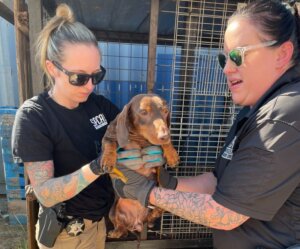
Founded in 1938, the SPCA of Texas is a 501(c)(3) non-profit animal welfare organization operating an adoption center, a spay and neuter clinic, a mobile adoptions vehicle and an animal rescue center in Dallas County. The organization also maintains a team of animal cruelty investigators who rescue hundreds of animals across North Texas each year. The SPCA of Texas’ mission is to create a brighter future for animals, people and the community.

In addition to adoption and sheltering services, the SPCA of Texas serves as an active community resource, offering accessible spay/neuter and veterinary care, volunteering and animal fostering opportunities, community-based resources through the Russell H. Perry Pet Resource Center and other services that help keep pets with the families who love them — all while strengthening the bond between animals, people and the community.

The SPCA of Texas will soon expand our lifesaving capacity through the addition of The Addy Foundation Animal Recovery Center on The Stephens Greth Foundation Campus, designed to serve as a hub for animal cruelty investigations and provide advanced medical care and low-stress housing for vulnerable animals. This campus includes the Dallas Animal Care Center and the Russell E. Dealey Animal Rescue Center.

How does the SPCA of Texas help its clients build value?

As a nonprofit serving tens of thousands of animals and pet-owning families each year, the SPCA of Texas builds value by supporting the fabric of community health, safety and stability. When pets are healthy, sheltered and supported, families and neighborhoods thrive. We provide access to affordable veterinary care, spay and neuter services and preventative wellness to help pet owners overcome financial barriers.

Our Pet Resource Center helps keep pets with the people who love them by supplying pet food, basic goods and other support during times of crisis.

Businesses, schools and community partners benefit from our expertise in animal welfare, disaster response, education and volunteer engagement. By reducing the strain on municipal shelters, decreasing pet homelessness and improving public health outcomes, we contribute to a safer, healthier and more compassionate region — an environment where companies can attract talent, families can grow and communities can flourish. Our generous donors make this work possible.

What differentiates the SPCA of Texas within your industry?

A few unique capabilities set the SPCA of Texas apart:

  • Comprehensive, wraparound services: Beyond adoptions, we offer cruelty investigations, emergency response, community-based support and high-quality veterinary care.
  • Regional leadership in animal cruelty enforcement: Our Animal Cruelty Investigations Unit partners closely with law enforcement, supporting cases that can save lives and improve community safety.
  • Professional medical infrastructure: Through our upcoming Animal Recovery Center, surgery suites and specialized kenneling, we are expanding our capacity to treat more vulnerable animals.
  • A focus on people as well as pets: We understand that caring for animals means caring for the humans connected to them.
  • Deep volunteer and corporate engagement: Thousands of volunteers, community service participants and youth leaders amplify our impact.

Together, these capabilities allow us to support animals with complex medical and behavioral needs and create a brighter future for animals, people and the community.

What benefits does the SPCA of Texas enjoy by doing business in the Dallas Region?

The Dallas Region offers an unmatched combination of philanthropic spirit, civic engagement and economic momentum. Our work is strengthened by:

  • A strong corporate citizenship culture where companies actively invest in community wellbeing
  • Robust volunteerism supported by businesses, schools and neighborhood groups
  • A dynamic donor base passionate about improving quality of life
  • Access to veterinary talent and academic partnerships that help advance high-quality care

Dallas also sits at the center of regional emergency response pathways, enabling our teams to mobilize quickly for cruelty cases, natural disasters and large-scale rescues.

Why did the SPCA of Texas become a DRC member?

We joined the Dallas Regional Chamber to collaborate with leaders who understand that thriving communities are built on compassion, safety and support. Our membership allows us to:

  • Build relationships with mission-aligned companies
  • Share expertise on topics ranging from emergency response to workplace volunteering
  • Learn how regional growth impacts pets and pet-owning families
  • Engage emerging leaders and professionals in animal welfare

Partnering with the DRC helps us amplify our message, expand corporate volunteering and sponsorship opportunities and ensure that the animals and people of North Texas are represented in broader conversations about community wellbeing.

How has the SPCA of Texas changed in the past five years?

The past five years have been transformational. We have:

  • Adopted a new mission focused on animals, people and community
  • Elevated transparency, professionalism and donor stewardship
  • Expanded our mobile adoption and outreach footprint across North Texas
  • Strengthened our approach to large-scale cruelty response and disaster preparedness
  • Increased community-based support through the Pet Resource Center, distributing food and supplies to families in need
  • Launched Care Unleashed, a $31 million capital campaign that will modernize our medical care, expand lifesaving capacity and create more comfortable kenneling spaces designed to reduce stress

At the same time, we’ve maintained the values that have defined us since 1938: compassion, commitment and collaboration.

By Amber Dyer, Manager, Communications & Marketing

Estimated reading time: 2 minutes

In December 2025, the Dallas Regional Chamber brought together six North Texas city mayors at the Renaissance Dallas Hotel in Richardson for its final public policy event of the year. The State of the Region, presented by Blue Cross Blue Shield of Texas and JPMorganChase, examined how regional collaboration is fueling prosperity, strengthening infrastructure and preparing our workforce for the future. 

A regional powerhouse since 1990 

The Dallas-Fort Worth region has long been a powerhouse for economic growth and regional prosperity. 

“Since 1990, no metro area in modern American history and no state in modern American history have grown as much as we have today,” said DRC Senior Vice President of Economic Development Mike Rosa.   

The establishment of Dallas-Fort Worth International Airport played a pivotal role in that success.  

Fort Worth Mayor Mattie Parker, Arlington Mayor Jim Ross and Garland Mayor Dylan Hedrick

“Before DFW Airport opened, the cities of Dallas and Fort Worth combined were 53% of our region’s population, a majority before the airport opened,” said Rosa. “Today, [they represent just] 28%.” 

Over time, that growth expanded beyond infrastructure to include corporate relocation and economic development. Since 2014, the Dallas Region has attracted over 800 corporate locations and expansions, including 300 headquarters.  

Just in the past year, the region secured 184 major corporate announcements, with 61 headquarters spread across 36 cities throughout the area. This volume outpaces any other U.S. market, reflecting the region’s unmatched corporate appeal.  

Unique economic drivers sustain corporate appeal 

Sustaining this appeal requires strong regional collaboration paired with unique city contributions. 

“What drives our success is our focus on the economic engine and powerhouse of each of our cities,” said Mattie Parker, Mayor of Fort Worth. 

Each city’s growth strategy reflects its unique constraints and opportunities.  

“Whether you’re landlocked or lake locked, growth can still happen through redevelopment,” said Dylan Hedrick, Mayor of Garland. 

But local ambitions must align with regional considerations. 

“We have to be players that are thoughtful of regional impact in a number of different elements,” said Amir Omar, Mayor of Richardson. “It’s a key factor in all of our growth.”  

At the same time, cities must recognize they cannot serve every need.  

“If you’re a city that tries to be all things to all people, you will be guaranteed to fail,” said Jeff Cheney, Mayor of Frisco. “And so, each city has to find what their unique offering is. … Having your own niche and brand really helps [the city] stand out. And I think all the cities in DFW have done that — and the reason was to become a powerhouse.” 

Frisco Mayor Jeff Cheney, McKinney Mayor Bill Cox and Richardson Mayor Amir Omar

The region sustains its powerhouse status by preserving its distinct city identities while collaborating to avoid duplication and maximizing collective impact.  

Regional collaboration helps drive economic success 

“Our regional construct requires us to work together collaboratively on the big things that matter to us all: infrastructure, mobility, health, safety, the commons.” said Rosa. 

Collaboration is also essential to maintaining a competitive edge over other regions.  

“It’s critical that we work together because we are competing with other parts of the country,” said Bill Cox, Mayor of McKinney. “So, we must continue to have leadership that believes in business and collaborative efforts.” 

Stable governance and regional cooperation underpin the region’s sustained economic success.  

“There’s so much hinging upon our success, not just for Texas, but for the country,” said Parker. “Which is why you’re seeing so much interest from coast-to-coast investment here in DFW. Our responsibility as mayors is to shepherd that [growth] and pass it on to the next generation to make sure our cities are stronger into the future.” 

This mindset requires cities to actively support one another’s success.  

“The bottom line is that I know that the better Richardson does, the better we do. The better Frisco does, the better we do,” said Jim Ross, Mayor of Arlington. “The better everybody does, the better we do. And we’re blessed to have some of the best neighbors around. And I think that benefits us from an economic development perspective unlike any other place in the country.” 

 To learn more about the Public Policy team’s work, visit our website. 

By DRC Research & Innovation

Average reading time: 4 minutes 

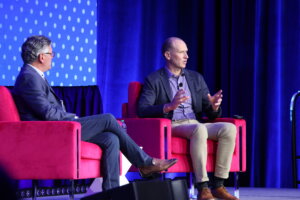
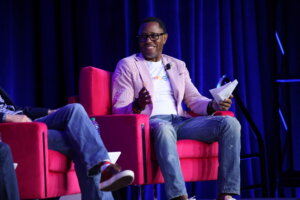
Entrepreneur and investor Mark Cuban will headline the Dallas Regional Chamber’s 2026 Convergence AI conference, presented by Accenture and the T.D. Jakes Foundation. The event returns to the Irving Convention Center at Las Colinas on March 30-31. Now in its third year, the conference is one of the largest AI business gatherings in Dallas-Fort Worth (DFW), drawing more than 750 leaders to discuss the latest innovations in AI. 

Cuban on AI literacy and the end of ‘static SaaS’ 

Cuban’s appearance comes as he continues to stress the urgency of AI adoption for business survival. 

“There are going to be two types of companies in this world: those who are great at AI and everybody else,” Cuban said. “And the ‘everybody else’ is going to fail because AI is such a transformative tool.” 

In a recent interview on the “Technology Brothers” podcast, Cuban also argued that the era of rigid, static software-as-a-service platforms is fading. The next wave of value lies in personalizing AI models to fit complex, real-world workflows rather than forcing companies to adapt to off-the-shelf software. He frequently calls AI the “ultimate time-saving hack,” emphasizing productivity gains for both individuals and enterprises. 

Carlton Dossman, Corporate Vice President of U.S. Commercial Industries at Microsoft, and Joshua Ridley, Founder, Chief Growth Officer, and former CEO of Willow (Convergence AI Dallas 2025)

Workforce and education in the AI era

Beyond enterprise adoption, Convergence AI Dallas 2026 will examine how AI is reshaping workforce strategy and education. 

Kelley Cornish, President and CEO of the T.D. Jakes Foundation, will join Thomson Reuters to discuss the future of talent, focusing on how employers can address widening skills gaps as AI systems take on more routine cognitive tasks. 

Education will also be a highlight. Dr. Kristen DiCerbo, Chief Learning Officer at Khan Academy, will discuss the impact of KhanMigo, the organization’s AI-powered tutor and teaching assistant. In conversation with Capital One, Dr. DiCerbo will explore how personalized, AI-driven learning tools are influencing classroom instruction by providing real-time feedback to students while streamlining lesson planning for educators. 

AECOM and the rise of the ‘autonomous engineer’ 

While workforce conversations look ahead, Dallas-based infrastructure firm AECOM is already embedding AI into its core operations. 

AECOM President Lara Poloni and Chief Technology Officer Sarah Urbanowicz will discuss how the company is integrating this technology across its global engineering workflows. 

Last year, AECOM completed a $390 million acquisition of Norwegian AI startup Consigli, according to industry reports. Its ‘autonomous engineer’ platform is designed to automate complex engineering tasks, such as spatial analysis, design coordination and multidisciplinary optimization. The move reflects a broader shift in the architecture, engineering and construction sector, where firms are increasingly developing proprietary AI capabilities to improve efficiency, reduce costs and maintain a competitive advantage. 

Coding agents and the ‘Clawbot’ era 

Beyond simple automation, agentic software development is moving to center stage this year. OpenClaw’s viral rise reflects a broader shift toward AI systems operating with greater autonomy across technical workflows. That shift is accelerating the adoption of agent-driven development tools capable of reading, writing and deploying code with minimal human oversight, reshaping how software is built and maintained. 

The transition brings both opportunity and risk. Consulting firm Improving will host a main stage interview with Alex Laubscher, Field CTO of Cognition, the company behind the autonomous coding agent Devin. He will be joined by Chris Gustafson, Director of Americas Office of Field CTO at Okta, an identity and access management company focused on securing AI agents, to examine the growing challenge of managing identity, access and governance for a new generation of nonhuman developers. 

Leaders from Palantir and Fujitsu Intelligence will continue the discussion, outlining how strategic agent deployments are redesigning workflows and delivering measurable returns across industries. 

From strategy to implementation: Convergence Labs

Returning for a second year, Convergence Labs, presented by Slalom, will offer live demonstrations and technical deep dives aimed at moving beyond high-level strategy. 

Consulting firm Slalom will lead demos alongside breakout sessions featuring leaders from AT&T, Humana, RTX, Google, Lockheed Martin, Gartner, Caterpillar and others.  

The sessions focus on navigating what many describe as the ‘jagged frontier,’ which involves identifying where technology can deliver an immediate return on investment and where human oversight remains essential. 

James Harding, Gen AI Technical Solutions Consultant at Google (Convergence AI Dallas 2025)

New this year: Public Sector AI Workshop

This year, the conference is partnering with the North Texas Innovation Alliance to host an invitation-only workshop for public sector leaders focused on responsible AI deployment. The session will bring together government and civic officials to examine how AI can improve public services, strengthen internal operations and support measurable community outcomes.  

Positioning DFW as the home of applied AI 

The 2026 Convergence AI conference positions DFW as a hub for enterprise AI deployment rather than just experimentation. 

“DFW has become a proving ground for applied AI,” said Duane Dankesreiter, DRC Senior Vice President of Research & Development. “What makes DFW different is the concentration of companies actually putting these technologies to work across infrastructure, finance, health care, education and the workforce. Convergence AI Dallas brings that applied focus together in one place.” 

Additional speakers will be announced in the coming weeks. More information and tickets are available at www.convergencedallas.ai. 


By Latosha Herron Bruff, Senior Vice President, Opportunity & Impact

Average reading time: 4 minutes

2025 marked a turning point for the Dallas Regional Chamber’s Quality of Life work. What began as strategic expansion evolved into tangible action, real investment and measurable impact across our region. From Southern Dallas classrooms to the Texas Capitol, we’ve focused on one clear goal: creating pathways to opportunity for every resident in our region. 

Dreams taking flight

One of the most exciting developments in 2025 was our investment in the Dreams Experience Academy (DEA), a bold initiative that’s rewriting what’s possible for young people in Southern Dallas. With seed funding from the DRC’s Tomorrow Fund Investors, DEA is opening doors into the $3 trillion media and tech economy for students who have too often been overlooked. 

This isn’t just another after-school program. Rooted in Southern Dallas but with a vision that extends far beyond our region, DEA connects students in grades 7-12 directly to industry leaders, creative skills and high-growth careers. In a community where absenteeism reaches 47%, the program’s requirement is simple but powerful: participation requires school attendance. It’s a model that links commitment with opportunity through world-class mentorship and hands-on experiences in media, entertainment and technology. 

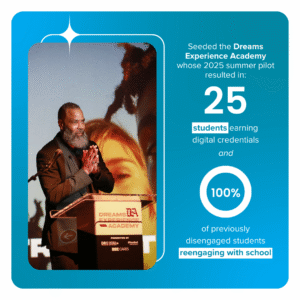
The 2025 summer pilot results speak volumes. All 25 students earned digital credentials. Every single previously disengaged student reengaged with school. And 89% said they would recommend the program to their peers. By blending education, mentorship and creative industries, DEA offers a model for narrowing opportunity gaps while fueling tomorrow’s economy. 

Reshaping perceptions, driving investment 

Opportunity starts with awareness. And Southern Dallas County is rich with opportunity. Our inaugural Opportunity Summit, presented by Ernst & Young LLP (EY) and Regions Bank and held at The Shops at Redbird, highlighted Southern Dallas County’s strategic investment potential to over 300 business leaders and community advocates. Featuring five innovative panelists, a dynamic keynote speaker and 25 businesses and organizations featured at the Developers Expo, this groundbreaking event reshaped perceptions of the under-championed area while presenting opportunities for individuals and companies to grow alongside one of the region’s most promising markets. 

 In addition, we launched a targeted, refreshed Say Yes to Dallas campaign in 2025, designed to get people out to experience and fall in love with Southern Dallas County. From buzzing businesses to cultural gems, we’re working to reshape how the region is experienced. 

The campaign featured 33 businesses and destinations across 14 zip codes, showcasing the strategic advantages that make Southern Dallas County a smart choice for investment and growth. By changing how people experience Southern Dallas County today, we’re fueling the momentum for new jobs, investment and a thriving future. When business leaders see firsthand the assets, talent and potential in these communities, perceptions shift and opportunities multiply. 

Building the builders 

Since 2022, the DRC has partnered with the Community Developers Roundtable to back emerging developers who are bringing new life and investment to under-championed communities. We’re helping turn big ideas into real projects. 

In 2025, we showcased five developers through Vision Tours, totaling 24 engagements that connected emerging talent with the resources, networks and insights they need to succeed. These aren’t just development projects — they’re neighborhood transformations led by people who understand their communities deeply and are committed to sustainable, inclusive growth. 

Advancing quality of life for all  

Quality of life means creating environments where everyone can contribute and thrive. Building on the success of our award-winning Disability Inclusion Toolkit, presented by EY, that launched in 2024, we made updates the following year that refreshed the data and improved the digital user experience.

These updates continue to demonstrate our dedication to illustrate that disability inclusion isn’t just the right thing to do — it’s a business asset. By helping companies tap into the talents of people with disabilities, we’re expanding the workforce and strengthening our regional competitiveness. 

Similarly, at our 2025 Women’s Business Conference, presented by JPMorganChase and Baylor Scott & White Health, women leaders charted a bold path forward, reinforcing that representative and dynamic leadership drives innovation and growth. To showcase that innovation and entrepreneurial spirit, our team wanted to increase the number of women-led businesses featured in our Frost Marketplace.  

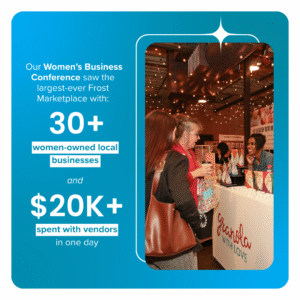
After targeted marketing efforts, we received over 150 applications and selected 30 businesses to feature in our Frost Marketplace, resulting in over $20,000 of vendor revenue — providing a boost in more ways than one. Hundreds of attendees also gained actionable insights and tools through meaningful conversations at our AI Office Hours, powered by Improving, and Table Talks, powered by CMP. These conversations and tools are changing how our region’s businesses approach talent, culture and opportunity. 

Advocating where it counts 

Quality of Life improvements require both private investment and smart public policy. During the 89th Texas Legislature, we worked to advance key priorities that protect businesses while elevating quality of life across our region. From legislative wins that support business growth to advocacy on issues ranging from childcare to housing, we’ve worked to ensure our region’s needs are heard in Austin. 

We’ve also deepened our Community Connections work, recognizing that solving food insecurity extends beyond simply increasing availability. True solutions require understanding root causes, building trust and creating systems that address dignity alongside need. 

Looking ahead 

As we move into 2026, I’m energized by what we’ve accomplished and even more excited about what’s ahead. The Dreams Experience Academy is scaling. Our Say Yes to Dallas campaign is changing perceptions and driving investment. Emerging developers are bringing fresh vision to underserved communities. And our advocacy continues to shape policy that elevates quality of life for everyone. 

This work reflects a fundamental truth about regional competitiveness: economic growth and quality of life aren’t competing priorities — they’re inseparable. When we invest in pathways to opportunity, when we champion under-championed communities, when we ensure everyone can contribute their talents, we don’t just improve lives — we strengthen our entire regional economy. 

The future of work, as we’ve explored in conversations about human-centered AI, lies in collaboration — between humans and technology, between established institutions and emerging leaders and between investment and community. That’s exactly the approach we’re taking. 

Thank you to our Tomorrow Fund Investors, our community partners, our member businesses and everyone who has joined us in this work. Together, we’re not just imagining a more opportunity-rich region. We’re building it. 

Here’s to turning more vision into reality in the year ahead. 

To stay up to date about the latest news, upcoming events and specific initiatives, subscribe to the Quality of Life newsletter here. 

By Rebekah Chenelle, Senior Vice President, Public Policy

Average reading time: 5 minutes 

2025 was one of the most productive years on record in the Dallas Regional Chamber’s public policy work. From developing our Legislative Agenda with more than 75 member companies to the final days of the 89th Texas Legislative Session, our team remained laser-focused on ensuring the Dallas Region business community had a powerful, unified voice in Austin. 

The results speak for themselves. 

Building our foundation: The DRC Legislative Agenda 

Long before the gavel dropped on the first day of session, the DRC was already hard at work. We spent months meeting with member companies across every sector to understand their priorities and vision for Texas’ future.  

The DRC also hosted the first-ever Dallas Regional Days at the top of the Texas Triangle in late November 2024 to show off the Dallas-Fort Worth region to state legislators ahead of the 89th Texas Legislative Session. 

This collaborative process resulted in our 2025 Legislative Agenda, a strategic blueprint that guided every meeting, testimony and conversation at the Capitol. 

This wasn’t just a wish list. It was a roadmap built on the real-world needs of the companies driving our region’s economy. 

140 days of relentless advocacy 

Once session began, the Public Policy team hit the ground running. Over 140 days, we tracked more than 550 bills, held over 150 meetings with state lawmakers, submitted 34 written testimonies and kept members informed through 17 weekly briefing calls. 

The DRC was an active and engaged voice in Austin throughout the year. Whether testifying before committees, meeting with legislative staff or hosting our Austin Fly-In that brought more than 40 member companies to the Capitol, we made sure the business community’s priorities were heard. 

Delivering results: More than $62 billion in strategic investments

Our advocacy delivered tangible results. We helped secure more than $62.8 billion in state investments aligned with DRC priorities — funding that will transform our region’s infrastructure, workforce and competitiveness. 

Key wins include $2.5 billion for the Texas Water Fund  as a next step in securing long-term water supply and infrastructure, $5 billion for the Texas Energy Fund to modernize the grid, $4.1 billion in new property tax relief, $466 million for statewide broadband expansion and $60 million for the Texas Moving Image Fund. 

Moving critical legislation across the finish line

We didn’t just advocate for funding — we moved policy. Twenty-eight bills that aligned with DRC priorities made it to the Governor’s desk and became law.  

House Bill (BH) 2 stood out as cornerstone legislation, addressing Governor Abbott’s emergency designation for teacher pay raises. In addition to across-the-board compensation increases, the bill also incentivizes districts to adopt performance pay measures, which began at Dallas ISD and has been shown to improve both teacher retention and student outcomes in reading and math.  

Also passed was Senate Joint Resolution 59, which provided for a constitutional amendment to create an endowment for the Texas State Technical College system. This new endowment will be an asset in continuing to advance career and technical education while demonstrating to prospective employers that we’re developing the skilled workforce they need. 

Senate Bill (SB) 7 established a balanced framework directing billions toward water infrastructure, with 50% dedicated to new water projects like desalination and 50% to infrastructure repair, conservation and flood mitigation. This legislation is a great step toward long-term water reliability for Texas communities and removes a major barrier to business growth in our region and across the state. 

SB 2206 extended and strengthened the R&D tax credit, keeping Texas competitive in the global innovation economy. By increasing the franchise tax credit and creating enhanced rates for research conducted through higher education institutions, this legislation fuels investment in the next generation of industries and positions Texas to capture a larger share of high-value innovation jobs. 

On cybersecurity and technology, we helped pass HB 150 and HB 4751, which established the Texas Cyber Command and other innovative programs, positioning our state as a leader in digital security and emerging technologies — critical capabilities as we continue to attract data centers and tech companies to the region. 

HB 149 establishes Texas’s first AI regulatory framework, and the DRC worked with Texas Representative Giovanni Capriglione and our partners to prevent this bill from being detrimental to businesses across the state. This is important because while AI and its regulation are still in early stages, Texas, and specifically the Dallas Region, are leading the progress.  

This session, we saw the legislature allocate over $100 million in new funding for rural hospitals across the state, ensuring that communities throughout Texas have access to quality care. Additionally, the Dementia Prevention Research Institute of Texas secured $3 billion over a decade, which was approved by voters in November. This is a significant investment in addressing one of our aging population’s most pressing health challenges.  

HB 3348 represents a particularly important victory for North Texas hospitals. This legislation advances funding for uncompensated care through the Local Provider Participation Fund mechanism, allowing health systems to continue to leverage federal matching dollars and ensure that everyone who needs care can receive it, regardless of their ability to pay. 

We also secured important business protections. SB 1300 and SB 1646 tackle copper theft and organized retail theft, safeguarding companies’ assets and improving quality of life in communities across Texas. 

Playing defense against bad policy

Just as important as the bills we passed were the bills we stopped. Throughout session, we worked to defeat harmful legislation that would have undermined Texas’ competitiveness. We stopped bills that would have raised costs and compliance burdens on employers, risked weakening the state’s favorable business tax environment and introduced restrictive regulations that threatened innovation and growth. 

Our ability to play defense is just as critical as our ability to advance proactive policy, and this session demonstrated our team’s effectiveness on both fronts. 

Taking our message to voters 

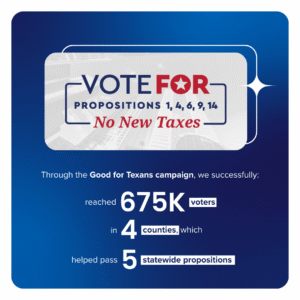
Our work didn’t end when the Legislature adjourned. In November, Texas voters faced 17 constitutional amendments on the ballot, and we knew five of them — Propositions 1, 4, 6, 9 and 14 — were critical investments in our state’s future. Through the DRC-backed Good for Texans campaign, we helped educate voters on these smart investments, and all five passed with strong support. 

These propositions fund everything from water infrastructure and brain research to education facilities — investments that will pay dividends for decades to come. We also helped cut business personal property taxes and prohibit future taxes, which will help small business owners continue to flourish in our region.  

Looking ahead 

Looking back on 2025, I’m incredibly proud of what we accomplished together. But I’m also energized by what lies ahead. The work of implementing these historic investments is just beginning, and we’ll continue to work closely with state leaders and local stakeholders to ensure every dollar is deployed effectively and that the Dallas Region remains a driver of Texas’ continued economic success. 

To our member companies: thank you for your partnership, your input and your trust. Your engagement made all of this possible. To the state lawmakers who listened, collaborated and fought for policies that strengthen our region and our state: thank you for your leadership. 

Here’s to building on this momentum in 2026 and beyond. 

Have questions about how these policy wins impact your company? I’d love to hear from you. Send me an email anytime at publicpolicy@dallaschamber.org.

By Jarrad Toussant, Senior Vice President, Education & Workforce

Average reading time: 3 minutes 

The Dallas Regional Chamber was a driving force for significant change in education, talent and workforce in 2025. From expanding access to transformational educational pathways to advocating for policies that benefit both companies and their employees, we’ve remained steadfast in building an education system that ensures a skilled workforce while creating opportunities across our region. 

Investing in future-ready students

Investing in tomorrow’s workforce is crucial to the region’s economic growth. Through the Tomorrow Fund, the DRC has supported initiatives that strengthen the region’s educational pipeline from early literacy through career readiness. 

We partnered with the Southern Sector Work-Based Learning Alliance to launch a work-based learning pilot connecting high school students in Southern Dallas County with companies to gain hands-on work experience. This initiative placed 12 students from three Southern Dallas County school districts in rigorous work-based learning experiences with four employers. 

Recognizing that workforce readiness begins with strong foundational skills, we also provided funds for the Dallas Education Foundation’s Texas Reading Toolkits – a resource designed to help develop early literacy. These multi-sensory learning tools reached 102 K-2nd grade and dual language classrooms across 17 schools in communities where students often read below grade level. 

These strategic investments opened pathways for students transitioning into the workforce while strengthening the educational foundation throughout the Dallas Region. 

Lab-proven talent strategies

To meet the evolving needs of our employers, our team designed Talent Labs, a program supporting companies looking to develop innovative talent strategies in response to the shifting economic landscape. 

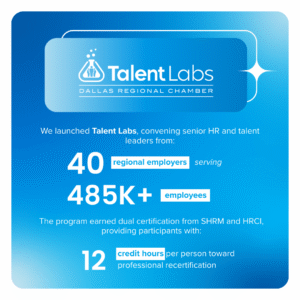
The launch marked a significant milestone for the DRC, convening senior HR and talent leaders from 40 regional employers, collectively representing more than 485,000 employees. Together, they developed customized talent strategies tailored to their companies’ unique needs. 

The program offered more than actionable insights. After securing dual accreditation from Society for Human Resource Management and the HR Certification Institute, participants earn 12 credit hours toward recertification, reflecting the DRC’s dedication to helping HR professionals maintain their credentials while staying ahead of emerging talent trends. 

Historic state funding breakthrough 

During the 89th Texas Legislative Session, the DRC’s advocacy assisted in a historic state funding breakthrough, with Texas lawmakers approving more than $10 billion in new state support for education and workforce systems.  

Key highlights include $8.8 billion for public schools, the largest single funding increase in Texas history, including $677M for pre-K and early learning, complemented by major investments in teacher compensation, and more than $1 billion to support higher education research and facilities, with more than $150 million in research matching grants for DFW universities. 

Progress on child care solutions 

We’ve also made significant strides in improving the affordability and accessibility of childcare, addressing a workforce issue that costs Texas over $9 billion each year.  

This year, we supported the establishment of the Dallas County Child Care Benefits Program, which offers matching funds to employers who provide child care assistance. We also supported advocacy for $100M in new funding for the state’s child care scholarship program. 

These investments are an important step forward in addressing the child care needs of working parents in the Dallas Region and supporting a robust workforce for employers.  

Higher education in action 

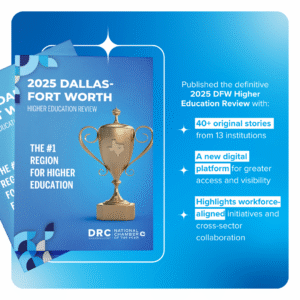
Our team launched the newest version of our DFW Higher Education Review to showcase why North Texas is Texas’ #1 region for higher education.  

The digital publication connects companies and lawmakers to the talent, innovation, and partnerships fueling business growth across the region. With more than 40 original stories from 13 higher education institutions, it highlights workforce-aligned initiatives and cross-sector partnerships that strengthen our regional economy. 

Looking ahead 

As the new year begins, it’s important to recognize the accomplishments that we’ve made together in 2025 while acknowledging the work that still lies ahead. The business community is directly impacted by our public school system, making it critical that we prepare Texas students for post-secondary education and the workforce. To do that, we must continue to invest not only in the individuals that will become our future workforce but also in the companies that hire them. 

By doing so, we can strengthen our educational pipeline to adapt to the ever-evolving economy while ensuring that the Dallas Region maintains its competitive edge in higher education, talent development and business investment. 

Have questions about how these Education, Talent & Workforce wins impact your company? I’d love to hear from you. Send me an email anytime at education@dallaschamber.org. 

By Ashlynn Bouldin, Coordinator, Communications & Marketing 

Average reading time: 2 minutes 

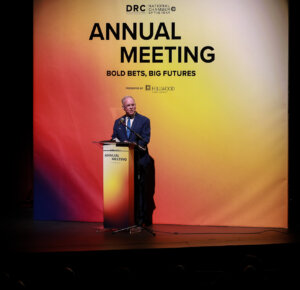
On Wednesday, Feb. 4, more than 800 business leaders and elected officials convened for the Dallas Regional Chamber’s 2026 Annual Meeting. Even with a weather-induced schedule change, the Dallas Region’s business community showed up reflecting the same momentum and commitment that continue to define North Texas. 

As the Dallas Region’s flagship business gathering, the Annual Meeting — presented by Hillwood, a Perot Company — both celebrated the progress of the past year and set the tone for what comes next. 

Brad Cheves, Dallas Regional Chamber President & CEO

Continuing the climb from base camp

Marking one month since stepping into his role as President & CEO, Brad Cheves reflected on the leadership decisions that shaped both the Dallas Region — and his own confidence in its future. 

“We stand on the shoulders of leaders who made bold bets before us — bets on infrastructure, education, innovation and an open, pro-growth business environment,” said Cheves. “Those decisions lifted this region higher than almost any other in the country. 

“But this is not the summit. It’s a base camp,” Cheves quickly added. 

By framing this moment as a starting point rather than a finish line, Cheves challenged leaders to stay engaged, aligned and intentional — so the region’s growth continues to compound rather than level off. 

Bold bets that shaped the Dallas Region’s success 

The event’s keynote came from legendary North Texas visionary Ross Perot Jr., joined in conversation by Bank of America Dallas President and 2026 DRC Board Vice Chair Jennifer Chandler. The Chairman of The Perot Companies and Hillwood reflected on the long-term vision behind AllianceTexas, a 27,000-acre inland port and planned community home to more than 66,000 jobs with a total $130 billion in economic impact. 

Perot emphasized that success depended on trust and collaboration. 

“[AllianceTexas] would not have worked if we didn’t have great public leaders. The blessing for Texas is the public leadership that we have,” said Perot. “With public-private partnerships, great public leaders and a great vision, we got it done.” 

He also pointed to population growth—and the talent and ideas that come with it—as a defining advantage for the Dallas Region.  

“Great entrepreneurs are moving in from around the nation — and now they’re moving in from around the world — to North Texas,” said Perot. “It’s because we are bold. We are courageous. If you do your best and you have integrity, but you fail, we’re all going to give you a chance to get up again.”  

At the foundation of that growth, Perot said, is the region’s people.  

“Why do we keep winning in Texas? It’s because of the workforce. We have the best workforce in the country. … The men and women in this workforce are the greatest advantage we have.” 

Ross Perot Jr., Chairman of The Perot Companies and Hillwood, and Jennifer Chandler, Bank of America Dallas President and 2026 DRC Board Vice Chair

Working toward the big futures ahead

Perot also pointed to the unexpected rise of the entertainment industry as a North Texas growth driver. With Taylor Sheridan’s Hollywood-style production operations now centered at AllianceTexas, Perot noted the global visibility and economic ripple effects that follow. 

“There are now 430,000 ft. of studios for Taylor,” said Perot. “The largest [film] studios in Texas are now in Alliance. … [The region is] seen all over the world, and an extra million people are coming into Fort Worth because of ‘Landman’ and Taylor Sheridan.” 

“I think all of Dallas should embrace this, and I think we’ll all be stunned at the impact the entertainment industry can have on this community.” 

Perot also pointed to artificial intelligence as a powerful — if more expected — engine of the region’s next phase of growth. While AI data centers themselves must be located near energy sources, he noted that North Texas is emerging as the hub for the infrastructure that supports them. 

Thanks to the Dallas Region’s deep talent pool and available real estate, “the AI supply chain cluster is being built in North Texas,” Perot said, with components then transported to data centers in West Texas. 

That same supply-chain logic, he added, is driving growth in advanced manufacturing. 

 “Another great cluster coming into North Texas is magnets,” Perot said, noting that MP Materials’ leadership recently visited AllianceTexas as Texas competes for new magnet facilities. The development positions the Dallas Region as a critical link in the supply chains supporting AI, energy and next-generation technologies. 

In his first address as 2026 DRC Board Chair, Hillwood’s Darcy Anderson underscored that the region’s success is the result of leaders willing to invest with confidence, plan for the long-term and work together. 

“That mindset remains just as important today, even when we have so much success to celebrate.”

Thank you to our 2026 Annual Meeting sponsors:

PRESENTING

SPONSOR RECEPTION

HAPPY HOUR

VALET

PLATINUM

GOLD

Company logo for Axxess

MEDIA PARTNER

SILVER

Fidelity Investments | Forvis Mazars
The Men and Women of Hunt Consolidated, Inc. | Oncor | Suffolk

BRONZE

Amegy Bank of Texas | Arcosa | Bank of America
Carrington Coleman | DHD Films | Frost
Gensler | JBJ Management | Matthews
Thomson Reuters | Troutman Pepper Locke

As of 2/4/2025

By Mike Rosa, Senior Vice President, Economic Development 

Estimated reading time: 2 minutes  

Beginning a new year, I reflect and report on our region’s results, trends and active corporate recruitment and expansion projects that have crossed into 2026. 

Our position as the top metro economy in the U.S. and within Texas continued in 2025. We’ve led the nation in workforce growth this decade, with 450,000 net new jobs. DFW is also top in Texas, being the largest contributor to the state’s remarkable run of 13 — and soon hopefully 14 — consecutive years as the state with the most corporate locations and expansions.

2025 by the numbers

  • 87 newsworthy corporate location and expansions 
  • 30 headquarter announcements 
  • 26 different regional cities with at least one ‘win’ 

Corporate decisions in our favor included: 

  • Astra Zeneca’s $400 million expansion in Coppell 
  • Paul Mitchell’s headquarters move from California to Wilmer 
  • Scotiabank selecting Dallas for its third major hub 
  • Wistron locating an assembly plant for Nvidia in Fort Worth 

These four companies represent sectors in which our region’s brand as a location is elevated: life sciences, headquarters, financial services and advanced manufacturing. 

Paving “Y’all Street” 

2025 was the year of “Y’all Street” — a term now ubiquitous in everyday business conversation, finding its way into national and international business reports. Scotiabank, the Texas Stock Exchange, Nasdaq and the New York Stock Exchange expanding in Dallas are the latest boosts. The new Goldman Sachs campus is taking shape in Dallas, and Wells Fargo’s new Irving campus is impressive.   

“Y’all Street” has been lit up with these recent deals and, very importantly, Texas’ leadership to make our business climate ideal. But really, it’s a longer street than you might realize, having been built over the past 25 years with significant corporate locations and expansions — many of which were supported by the Dallas Regional Chamber. 

From 2000 to 2025, our region grew from 212,000 to 386,000 jobs in the financial services sector. Along the way, we surpassed Philadelphia, Chicago and Los Angeles, moving from the fifth to second-highest number of financial service jobs out of all U.S. metros — behind only New York. 

It’s great branding, but it’s not the only feat we’re known for: 

  • Top U.S. metro for attracting talent — Lightcast 

Looking ahead

We’re busy. Here are a few top-line trends for 2026 based on our considerable interactions with location advisors and our active corporate location projects: 

  • Major office projects focus on Class A space in high-quality, amenity-rich, major metro environments — both urban and suburban — in order to attract, retain and return employees to the office. 
  • Major industrial projects — besides being rushed or paused by tariff policies — are searching for land or buildings with access to abundant power, water, talent and training capabilities. 
  • The DRC has seen an increase over the past couple of years in advanced manufacturing projects, financial services projects and life science projects, reflecting recent successes and our rising status in the eyes of companies and location advisors. 
  • The different community and real estate options available to companies in our region are a strength. Among our current active projects, several DFW cities are candidates. Companies are considering urban, suburban and edge locations based on talent needs, ready sites and buildings and, of course, other specific requirements.   

Companies can find what they are looking for in our region. The DRC is also very fortunate to have expert local and state economic developers as partners to help companies locate, expand and start here — and extend our region’s remarkable run.  

To stay up to date about the latest news, upcoming events and specific initiatives, subscribe to the Economic Development newsletter here. 

By Rebekah Chenelle, Senior Vice President, Public Policy

Estimated reading time: 1.5 minutes 

Primary election season is around the corner, and some major election changes are coming to North Texas counties. 

Key dates to mark

Early voting for the March primary election begins Tuesday, Feb. 17, and runs through Friday, Feb. 27, with Primary Election Day on Tuesday, March 3. To vote in any Texas election, voters must be registered at least 30 days before Election Day.

Miss the primary? There are more opportunities to vote

If a voter is not registered in time for the primary election, there will be additional chances to participate later this year — during the Tuesday, May 26, runoff election and the general election on Tuesday, Nov. 3. 

Why the March primary matters

The March primary elections will determine party nominees for several major statewide offices, including governor, lieutenant governor, attorney general and comptroller, as well as seats in Congress, the Texas Legislature, the State Board of Education and locally elected officials. 

How Texas’ open primary system works

Texas uses an open primary system, meaning voters can choose which party’s primary to participate in — Republican or Democratic. However, if a runoff election is required, voters must vote in the runoff for the same party whose primary they selected. In the general election, voters are free to choose candidates from either party, regardless of how they voted in the primary.  

Voting is one of the most direct ways Texans can shape the future of their communities, the state and the country. Clear, accessible information helps voters plan ahead with confidence. Find everything you need to prepare for Election Day in the DRC’s North Texas Voter Resources.

North Texas Voter Resources

View your ballot, key dates and where to vote

By Makayla Rosales, Coordinator, Opportunity & Impact 

Average reading time: 3 minutes 

Black History Month in 2026 holds special significance, as it marks the 100th anniversary of its national recognition. This milestone invites us to reflect not only on the progress that has been made, but also on why this work continues to matter. Engaging with Black history is more than honoring resilience and achievement; it is an opportunity to deepen cultural understanding, foster inclusion and strengthen the cultural competency that remains essential in today’s workplaces and communities.

In 1897, educator and civil rights activist Mary Church Terrell successfully urged the Washington, D.C. school board to dedicate Feb. 14 to honoring the life and legacy of Frederick Douglass. This observance became known as Douglass Day and marked an early step in a decades-long movement that would eventually lead to the establishment of Black History Month.

Building on this foundation, Dr. Carter G. Woodson, often referred to as the “Father of Black History,” launched the first Negro History Week in 1926 to formally recognize the contributions of Black Americans. He selected February to align with the birthdays of both Abraham Lincoln on Feb. 12 and Frederick Douglass on Feb. 14. By 1970, Negro History Week was observed in cities across the United States, and Kent State University became the first institution to expand the observance into Black History Month. In 1976, President Gerald Ford formally recognized Black History Month at the national level, urging Americans to honor the achievements and enduring impact of Black Americans throughout U.S. history.

Engage in the workplace 

One effective way to foster engagement and educational awareness during Black History Month is by intentionally creating space for reflection and shared learning. In recognition of the 100th anniversary, organizations have a unique opportunity to deepen the understanding of Black History Month’s origins, evolution and continued relevance today. Inviting a guest speaker, historian or outside organization to provide historical context and insight can ground the experience in credibility and meaning. This can be followed by a guided conversation, led by the speaker or a trained facilitator, with questions centered on cultural understanding and shared learning. Together, this approach encourages thoughtful dialogue, strengthens awareness and reinforces a culture of inclusion across the organization.

Another impactful way for companies to engage employees during Black History Month is by encouraging experiential learning through the community. Organizing staff or department outings to local museums, cultural centers or historical sites that highlight Black art, history and contributions allows employees to connect with the subject matter in a tangible and meaningful way. These shared experiences foster learning outside of the traditional workplace while strengthening team connection and cultural awareness. By intentionally supporting institutions within the community and positioning these visits as team-based experiences, organizations reinforce the value of collective learning and demonstrate a commitment to honoring Black history through engagement, presence and investment.

Additionally, another way for employees and organizations to engage in a meaningful way is to intentionally support local Black-owned businesses. Companies can highlight Black-owned vendors in internal communications, source goods or services from them, or organize team events that partner with Black-owned restaurants and organizations. Employees can participate by shopping locally, sharing recommendations and amplifying these businesses within their networks. These collective actions help translate recognition into real economic impact and strengthen our own communities that we live and work in.

Attend an event         

If you are interested in bringing your team, friends or family to local festivities celebrating Black History Month, consider these local events.


KALEIDOSCOPE | Cultural Awareness Series: 7:30 p.m., Friday-Sunday Feb. 13 & 15 

Dee and Charles Wyly Theatre, 2400 Flora St., Dallas, TX, 75201 

Celebrate the weekend with Dallas Black Dance Theatre’s visually rich and emotional experience, KALEIDOSCOPE. The program features work that honors the lives of Black artists and reflects on resilience, faith and cultural expression a perfect blend of performances where movement beautifully tells a story. 


MLK Taste of Soul: 11 a.m.-3 p.m., Saturday, Feb. 28 

MLK Jr. Recreation Center, 1 Pennsylvania Ave., Dallas, TX, 75215 

Come and celebrate the diversity of soul food cuisine at the “Taste of Soul,” featuring some of DFW’s best chefs and creations! Free samples, live entertainment and free giveaways will be there! 


Black History Month Cultural Celebration and 2026 HBCU Transfer Fair: 10 a.m.-3 p.m., Wednesday, Feb. 26 

North Lake Campus, 5001 N. MacArthur Blvd., Irving, TX 75038 

Join Dallas College Transfer Services and Intercultural and Global Student Engagement for the 2026 HBCU Transfer Fair, a celebration of culture, community and opportunity. 


Protecting Cultural Memory: Open Tuesday-Saturday from 1-5 p.m. 

African American Museum of Dallas, 3536 Grand Ave., Dallas, TX, 75210 

The African American Museum in Fair Park presents Protecting Cultural Memory: A commitment to the conservation and protection of the art and the archives, an exhibit focused on the preservation of historical archives and treasured works of art. Until March 2026, visitors can learn how the museum safeguards its collections and protects stories that are foundational to Black history and culture.  

Other February holidays to celebrate 

Lunar New Year is observed on Tuesday, Feb. 17 this year, marking the beginning of the 16-day Spring Festival and ushering in the Year of the Horse. Celebrated by millions around the world, the holiday centers around time-honored traditions,family reunions and the collective hope for prosperity, health and good fortune in the year ahead. The Year of the Horse is associated with energy, momentum and forward movement — qualities that reflect vitality, resilience and progress. Celebrations often feature red decorations and firecrackers, symbols of protection, renewal and optimism, as communities welcome a fresh start and the promise of new opportunities.

Ramadan is expected to begin on the evening of Wednesday, Feb. 18, with the first day of fasting observed on Thursday, Feb. 19. As the ninth month of the Islamic lunar calendar, Ramadan holds deep spiritual significance for Muslims worldwide and is observed as a sacred period of fasting, reflection and renewal. From dawn until sunset each day, practicing Muslims abstain from food and drink, breaking their fast before sunrise and after sunset. Beyond fasting, Ramadan is marked by heightened introspection, acts of service, communal prayer and the reading of the Qur’an — values that emphasize discipline, empathy and shared responsibility within the community. 

By Nicole Ward, Data Journalist 

Estimated reading time: 2.5 minutes

At the Yvonne A. Ewell Townview Center in Dallas, students are learning not just traditional high school curriculum, but how to start a business and run a major corporation. 

Students are discovering where their interests intersect with opportunities they may not even know about, and DRC member Gresham Smith is giving back to the community with what it does best: architecture, engineering and design.  

Through a partnership with Dallas ISD, the national consulting firm providessupport and information in the way of lectures, internships, scholarships and more — including learning modern business communication.   

Throughout the academic year, students at Townview’s Marvin E. Robinson School of Business and Management collaborate to produce KSBMRadio: The Voice of Townview, a student-led podcast dedicated to school news, sports and careers.  

In the short term, this podcast gives students academic credit. In the long term, it fosters valuable connections and shows them how they might grow their interests into a career.   

“They do three or four of these a year,” said Max Regalado, Workforce Development Partnerships Coordinator at Dallas ISD. “[On a recent episode, they interviewed] four people from Gresham Smith about their career journeys, about all the zig zags that got them to where they are today.”   

These conversations not only give students a realistic view of career development but also show them the benefits of storytelling as a way to make information stickier, something valuable to companies that are looking for ways to cut through the noise and clutter. 

Regalado said he has been working with Gresham Smith for about a year to expand Townview’s educational program. 

“Every time I suggest something, they’ll say, ‘that’s great, but can we make it bigger? Can we do more?'” 

Connecting students to career possibilities 

The Gresham Smith team are no strangers to the value of education partnerships. 

“The last four years, we’ve focused a lot on education and mentoring,” said Jose Tavarez, Project Manager and Engagement Leader at Gresham Smith.   

The firm works on programming spring and summer camps and with the Architecture and Design Exchange Foundation (ADEX), where they worked with students on professional development in architecture, engineering and design. The Gresham Smith team later expanded their work, partnering with Uplift Educationon up to four events annually.   

It was ata Building Business Opportunities lunch thatTavarez saidhecrossed paths with Stephanie Elizalde, DallasISD Superintendent.    

“She said, ‘if you work with Uplift, you should work with us too,’” said Tavarez.  

With that spark, Regalado and Gresham Smith Interior Designer Alejandra Espino-Trillo got to work. They designed an initial partnership centered on 10 lectures throughout the year, paired with two summer internship opportunities that ultimately opened doors to scholarships — helping students gain early exposure and sustained support.  

“The impact that Gresham Smithhasmadein justa little more than a yearis incredible,” said Regalado. “They’veeasily reached close to 1,000 [Dallas ISD] students.”  

For Espino-Trillo, making this kind of impact hits home.  

“I’m the first one [in my family] to leave home and go to college in a different city, and I had no idea the opportunities that were out there,” she said.   

She finds joy in showing students the many ways they can leverage their skills and education for jobs they may not have known existed. For example, they may only think of a teacher as the person who leads a grade level, but it could mean teaching design at a firm.   

Letting their stories do the talking   

Espino-Trillo wasinterviewed by thestudentpodcast hosts at Townview, and she delivered an overarching message to the future professionals: don’tget stuck on the idea that whatever you see right in front of you is all you get.

Will Carlson, an architect at Gresham Smith, was invited onto the podcast as well. He has been with the firm since 2018 and has worked with Dallas ISD for about a year. Carlson often tells students that, early in his career, he worked at a firm he didn’t love to remind them that they’re not locked in a single path.    

“I think these campuses do a great job of creating a space where these kids are not afraid to ask questions,” said Carlson.   

Not slowing down   

In 2026, Gresham Smith and Dallas ISD will team up with ADEX on a four-month program called Wing and Build, and the program’s conclusion will involve an exhibition of bird houses designed and built by students. 

As plans to grow the partnership continue, Tavarez said the motivation is clear: comments from former students saying, “you changed my mind about going to college.”   

For information on how you can strengthen and engage with the Dallas Region’s talent pipeline, email talent@dallaschamber.org to connect on your company’s needs.  

Estimated reading time: 2 minutes

The Dallas Regional Chamber proudly announces the winners of the 2025 Best Place for Working Parents® Dallas Innovator Awards, recognizing three local employers for setting a higher standard for supporting working families. 

This year’s honorees represent organizations of all sizes that are leading with innovative, family-friendly workplace practices: 

  • Micro/Small Business (under 200 employees): Bestow 
  • Medium Business (between 201 and 999 employees): Elevate 
  • Large Business (more than 1,000 employees): Children’s Health 

The Best Place for Working Parents® Dallas program is a regional extension of the national Best Place for Working Parents® initiative, spotlighting employers that prioritize family-friendly benefits and policies proven to support both employees and business outcomes. 

Participating companies complete a proprietary self-assessment evaluating their offerings across 10 research-backed policies, including paid parental leave, child care support and flexible work options. In 2025, more than 120 employers across the Dallas Region earned the designation. 

The Best Place for Working Parents® Dallas Innovator Awards recognize companies whose family-friendly offerings go above and beyond the designation criteria, setting new benchmarks for supporting working families. 

A panel of anonymous judges evaluated applications based on creativity, comprehensiveness and real-world impact. Only companies holding a Best Place for Working Parents® designation were eligible to apply. 

“Supporting working parents isn’t just good policy — it’s a workforce strategy,” said DRC President & CEO Brad Cheves. “These Innovator Award winners demonstrate how thoughtful, people-centered benefits strengthen teams, improve retention and position the Dallas Region for long-term economic success.” 

Bestow 

Bestow, a technology insurance company that helps modernize and digitize insurance providers, earned the Micro/Small Business Innovator Award. Despite its size, Bestow sets a high standard in offering 12 weeks of fully paid maternal and paternal leave with no tenure requirements, along with a “waterfall” return-to-work program that supports working parents as they transition back into the office. These policies have resulted in a 90% parental leave retention rate. Bestow also provides employees with pre-tax child care accounts and offers a 100% health care premium-paid option for employees and their families. 

“Being family-friendly isn’t a perk. It’s how we build a strong team and company. When people have the flexibility to show up for their families, they show up better for our customers and each other,” said Melbourne O’Banion, Co-Founder & CEO of Bestow.  

Elevate 

Elevate, a financial technology company providing tech-enabled online credit solutions, earned the Medium Business Innovator Award for its partnership with Carrot Family Forming Support, a comprehensive program that supports every path to parenthood, from fertility education and preservation to gestational carrier services and adoption. This benefit is offered at no cost to employees and includes up to $10,000 in reimbursement for family-forming services.  

“Elevate continuously focuses on creating benefits that reflect the lives our employees lead, inside and outside of work. Offering benefits that support our growing, diverse workforce is an important part of our values.” said Jason Harvison, CEO of Elevate. 

Children’s Health℠ 

Children’s Health, a nationally ranked pediatric health system in Dallas, earned the distinction as the Large Business Innovator. Children’s Health offers highly impactful benefits to its prospective and current team members, providing up to $10,000 in reimbursement for adoption or surrogacy expenses and subsidizing $1,000 in a dependent care flexible spending account for its employees, plus up to 100 hours of subsidized back-up care and discounts at local child care centers through their partnership with Bright Horizons.   

“Supporting working parents isn’t a single benefit or program at Children’s Health — it is a commitment that grows with our team members through every stage of life and career,” said Analisa Eaton, Vice President of Total Rewards at Children’s Health. “This recognition reflects our belief that when we thoughtfully support our people, they are better able to focus on what matters most — at home and in delivering exceptional care to fulfill our mission to make life better for children.”  

This marks the second time Children’s Health has earned this distinction. In 2022, the inaugural year of the Best Place for Working Parents Dallas® Innovator Awards, Children’s Health was recognized as a Large Business Innovator for its leadership in offering adoption and surrogacy reimbursement benefits, as well as dependent care flexible spending accounts. 

Championing family-friendly  

The DRC proudly recognizes these three companies for their leadership in supporting working parents. Their commitments highlight the vital role employers play in building a sustainable workforce, especially as access to affordable, high-quality child care remains a top priority for families and businesses alike. 

The DRC encourages employers across the Dallas Region to follow the examples set by Bestow, Elevate and Children’s Health by adopting innovative, family-friendly policies that support employees and strengthen the region’s workforce. 

To learn more about the Best Place for Working Parents® Dallas initiative — or to pursue the 2026 designation — visit the DRC’s website. 

By Makayla Rosales, Coordinator, Opportunity & Impact 

Average reading time: 4 minutes

Martin Luther King Jr. Day provides an opportunity to reflect on the life and legacy of Dr. King, whose leadership advanced racial equality through the principles of non-violence, service, and collective responsibility. The day serves as both a commemoration of progress and a call to action, reinforcing the importance of justice, equity, and community engagement in building a stronger society. This year, Martin Luther King Jr. Day is on Monday, Jan. 19th. 

On Nov. 2, 1983, President Ronald Reagan signed the ‘King Holiday Bill’ into law, establishing the third Monday in January as a federal holiday to honor the civil rights leader. Efforts to recognize Dr. King began just days after his assassination on April 4, 1968. However, it took 15 years of persistent advocacy from civil rights activists for the federal government to approve the holiday. It would take an additional 17 years before all 50 states officially recognized it. 

Today, Martin Luther King Jr. Day is the only federal holiday recognized as a National Day of Service, as it was his belief that meaningful change is driven by action. The day encourages individuals and organizations alike to engage in service, deepen their understanding, and contribute to ongoing efforts that promote opportunities for all. This day serves as a reminder of our shared responsibility to foster unity through education and open dialogue, and to remain committed to advancing racial reconciliation and eliminating discrimination in all its forms. 

Engage in the workplace

Organizations can meaningfully engage Martin Luther King Jr. Day by encouraging service and volunteerism that reflects Dr. King’s belief in the power of collective action. Departments or teams can partner with local nonprofits, schools, or community organizations, particularly those with existing company relationships, to volunteer their time. These experiences allow employees to give back in ways that are both impactful and aligned with organizational values, while strengthening meaningful connections within the communities they serve.

Additionally, creating space for learning and reflection is another impactful way to observe Martin Luther King Jr. Day in the workplace. Companies may host an all-staff presentation or a lunch and learn session featuring a guest speaker or historian who can provide deeper insight into the significance of the day, Dr. King’s legacy, the civil rights movement, and the ongoing pursuit of equity and justice. In addition, by facilitating guided discussions or reflection prompts, companies encourage employees to further explore themes such as inclusion, belonging, and what those values look like in practice within the workplace. These conversations also create opportunities to connect the principles of Martin Luther King Jr. Day with the organization’s mission, culture, and commitment to equity, supporting continued growth, stronger relationships, and a more inclusive work environment. 

Attend an event 

If you are looking to attend local events honoring Martin Luther King Jr. Day with your team, friends, or family, here are a few opportunities to consider: 

Day of Reflection, Prayer & Dedication: 11a.m.-1 p.m., Tuesday, Jan. 13 

MLK Recreation Center, 2922 MLK Blvd., Dallas, TX 75215 

Facilitated by faith leaders, the City of Dallas unites in sending prayers for the well-being of our city. We also commemorate the life of Dr. King by laying wreaths, symbolizing our unwavering dedication to his cause of a more just society. 

Multicultural Showcase: 12-1 p.m., Thursday, Jan. 15 

Dallas City Hall Lobby, 1500 Marilla St., Dallas, TX, 75201 

Join the Youth Commission in the Dallas City Hall lobby celebrating the rich tapestry of cultures, ethnicities, and traditions of Dallasites while honoring and celebrating the legacy of Dr. King. 

Drivers of Opportunities Symposium: – 9 a.m.-2 p.m., Friday, Jan. 16 

Briscoe Center at Fair Park, Gate #2, 1403 Washington St., Dallas, TX, 75210 

Join an interactive gathering that will bring together city council members, local leaders, and community organizations to explore the Drivers of Opportunity framework. This dynamic event will foster meaningful dialogue, collaboration, and a shared vision for creating lasting impact for all Dallas residents. 

Candle Lighting Ceremony: 7-8:30 p.m., Friday, Jan. 16 

MLK Jr. Recreation Center, 2901 Pennsylvania Ave., Dallas, TX, 75215 

Join the Alpha Sigma Lambda Chapter of Alpha Phi Alpha Fraternity, Inc. and the Martin Luther King, Jr. Community Center in kicking of 2026 MLK Week by commemorating the life and legacy of Dr. King. 

MLK Fest 2026: 8 a.m.-2 p.m., Saturday, Jan. 17 

MLK Jr. Community Center, 2922 MLK Jr. Blvd., Dallas, TX 75215 

A community clean-up and mural painting inspired by civil rights advocate Juanita Craft, followed by a resource fair and celebration at the MLK Center with live music, food, and guest speakers in partnership with the Walls Project, Epiphany, New Era, and the City of Dallas. 

MLK Day Parade: 10 a.m.-2 p.m. Monday, Jan. 19 

The Parade will take place at: MLK Blvd. Dallas, TX, 75215 

H.E.L.P and the city of Dallas invites you to participate in the annual Dr. Martin Luther King, Jr. Day Parade! 

More ways to celebrate in January 

The start of a new year is a natural moment for reflection, renewal, and setting intentions for the months ahead. It is an opportunity to consider not only our personal and professional goals, but also the values that guide how we engage with others and contribute to the communities around us. Approaching the year with a commitment to service and openness allows us to strengthen collaboration, foster understanding, and drive meaningful progress. By embracing these principles early in the year, we can set a tone of intentional and shared responsibility that carries through our work and relationships for the better. 

In this same spirit of reflection and meaning, Tuesday, Jan. 6, marked Three Kings Day. Also known as Epiphany, this holiday is a significant observance in the Roman Catholic tradition that concludes the 12 days of Christmas. This holiday commemorates the Three Wise Men and their journey to honor the infant Jesus with gifts of gold, frankincense, and myrrh. Across cultures, Epiphany is observed in many ways, often bringing people together through religious services, shared meals, giving gifts, and time-honored traditions that emphasize generosity, faith, and community. 

Monument Realty is a full-service real estate brokerage headquartered at The Star in Frisco, Texas, with over 800 agents across eight offices statewide. Founded in 2017, Monument is known for its client-first service, innovative tools, award-winning culture, and strategic brand partnerships that elevate the real estate experience for both clients and agents.

1. How does Monument Realty help its clients build value?

Monument Realty helps clients build value by combining expert market guidance with strategic services tailored to each stage of the real estate journey. Whether buying, selling, or investing, clients benefit from our data-driven pricing strategies, access to exclusive listings, powerful marketing campaigns, and a team of agents who are committed to delivering optimal outcomes. Our collaborative, transparent approach ensures that every decision is made with the client’s long-term financial goals in mind.

2. What differentiates Monument Realty within your industry?

Monument stands apart through a combination of award-winning culture, agent-first systems, and client-centered service. We are the only brokerage in the region that blends high-performance training, in-house marketing support, and exclusive partnerships with iconic Texas sports franchises like the Dallas Cowboys and Texas Rangers. Named the number one company to work for in DFW five years in a row, Monument has created a collaborative environment where agents are empowered, and that directly translates into exceptional service for clients.

3. What benefits does Monument Realty enjoy by doing business in the Dallas Region?
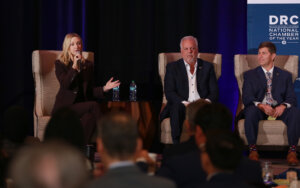
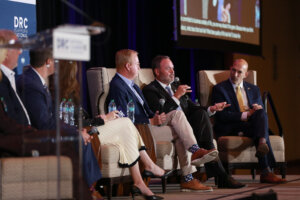
Operating in the Dallas Region provides Monument Realty with access to one of the fastest-growing and most economically dynamic markets in the country. The region’s diverse communities, strong job growth, and real estate demand allow us to serve a wide range of

clients, from first-time buyers to luxury investors. With our headquarters at The Star in Frisco, a hub of business, sports, and innovation, we are perfectly positioned to build strong relationships and continue expanding our impact across North Texas.

4. Why did Monument Realty become a DRC member?

Monument Realty joined the Dallas Regional Chamber to connect with other visionary leaders, contribute to the region’s economic development, and further align our business with the growth and innovation shaping North Texas. As a fast-scaling company rooted in community and collaboration, DRC membership reflects our commitment to being an engaged, proactive player in the region’s ongoing success.

5. How has Monument Realty changed in the past five years?

In just five years, Monument Realty has evolved from a local startup to one of the most recognized and respected brokerages in Texas. We have expanded from one office to eight, grown our agent base to over 800 professionals, and surpassed $9.4 billion in total sales volume. We have launched industry-leading training, in-house marketing services, and health benefits for agents, all while maintaining a culture of positivity and professionalism that continues to earn top workplace honors. Our growth has been rapid, but our mission remains the same: to raise the standard in real estate.