
|
Takeaways
|
By Ashlynn Bouldin, Coordinator, Communications & Marketing
Estimated reading time: 3 minutes
On Wednesday, Sept. 16, business and economic development leaders gathered for the DRC’s second-ever Tomorrow Summit, presented by PNC Bank and Deloitte, where they examined the forces shaping the future of business in the United States: American public sentiments, real-world AI applications, supply chain security and Dallas-Fort Worth’s growth as a global finance hub.
At the event, the DRC also recognized three organizations with the annual Building Tomorrow Together Award, presented by Forvis Mazars, for their significant investments in DFW. The 2026 recipients are Dallas College, MP Materials and Public Storage.
The event featured conversations with leaders from Gallup, Google, Principal Mineral, Nasdaq Texas and NYSE Texas. Below are their key insights.
The American outlook on business and opportunity
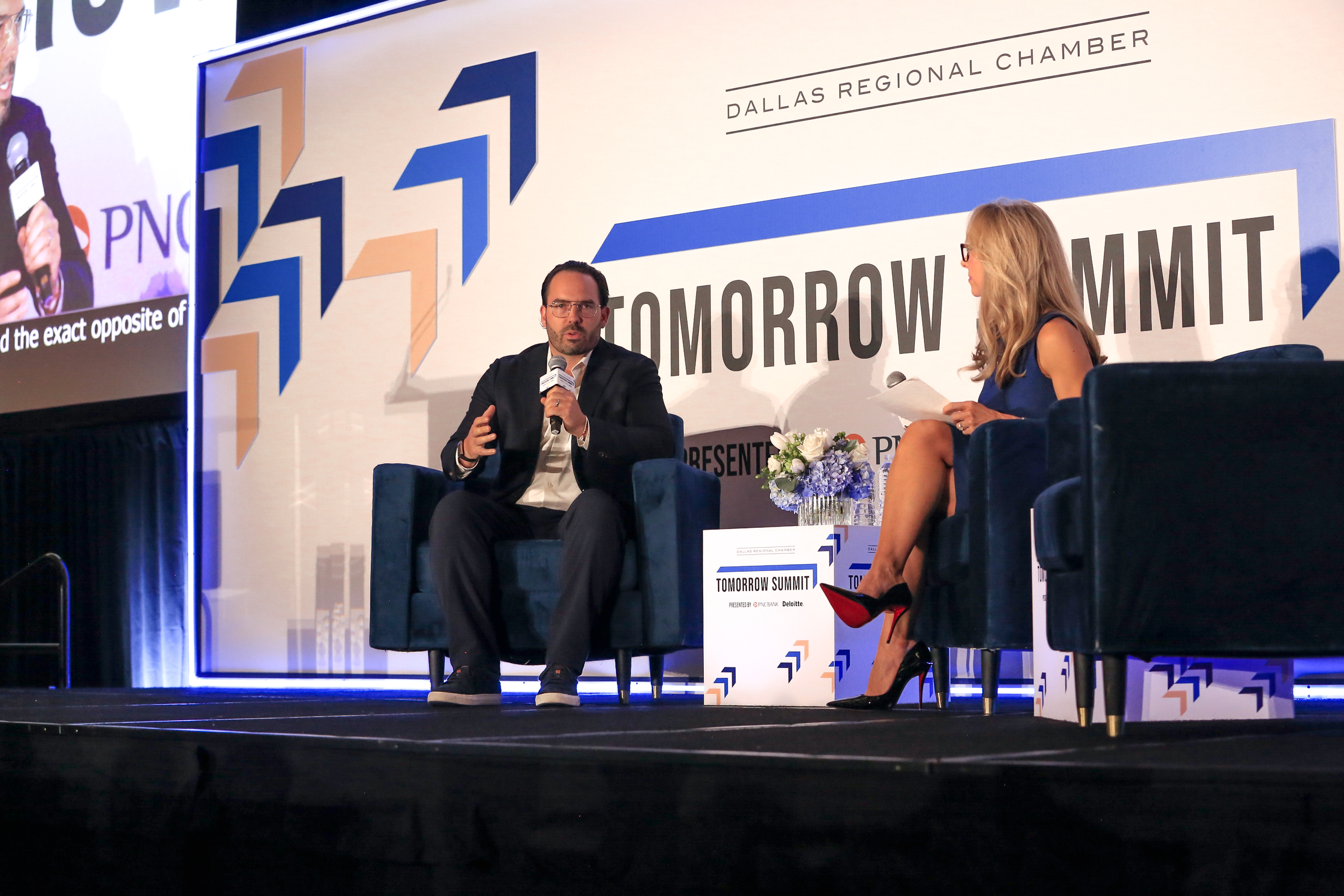
Joe Daly, Global Managing Partner at Gallup, shared data on American public opinions and explored what they indicate for the nation’s future, starting with a hot topic in today’s headlines: confidence in American institutions. Gallup tracks 14 American institutions annually, 12 of which are currently at or near all-time lows in public sentiment.
“Americans are very clearly telling us that the institutions that are really important to this country—that we all rely on and have trust in—have been in decline for multiple years.”
Daly identified three institutions currently experiencing majority negative reviews: the presidency, Congress and TV news. Meanwhile, the most favorably viewed institutions are the military and small businesses.
“67% of Americans have a favorable view of small businesses. Only 17% have a favorable view of big businesses,” he said. “I think a big part of that decline is trust. … I think we’ve just been getting let down over and over again. Let’s start getting back to the principles of what we want to look at on behalf of the American people.”
Learn more about American opinions on capitalism, socialism, data centers and more in the full recap of Daly’s conversation.
Current AI applications across industries and everyday life
Cris Turner, Vice President of Government Affairs, Knowledge & Information Products at Google, encouraged leaders to apply AI with intention and explore ways it can solve challenges.
“Please don’t waste your money on AI if you don’t know how you’re going to implement it into your workflow. The magic of AI isn’t AI unto itself; it’s the ability of AI to solve the challenge you’re working with. So, start with the challenge, work backwards and see where artificial intelligence can enter your world.”
Turner gave various examples of how businesses and institutions are effectively applying AI to solve challenges, with different use cases across every industry and sector. The cities of Memphis and Dallas, for instance, use AI to review camera footage from trash trucks and identify potholes and illegal dumping. Meanwhile, scientific researchers have saved an average of seven hours a week using AI for pattern recognition and data collection, allowing them to do more complex decision-making and analytics.
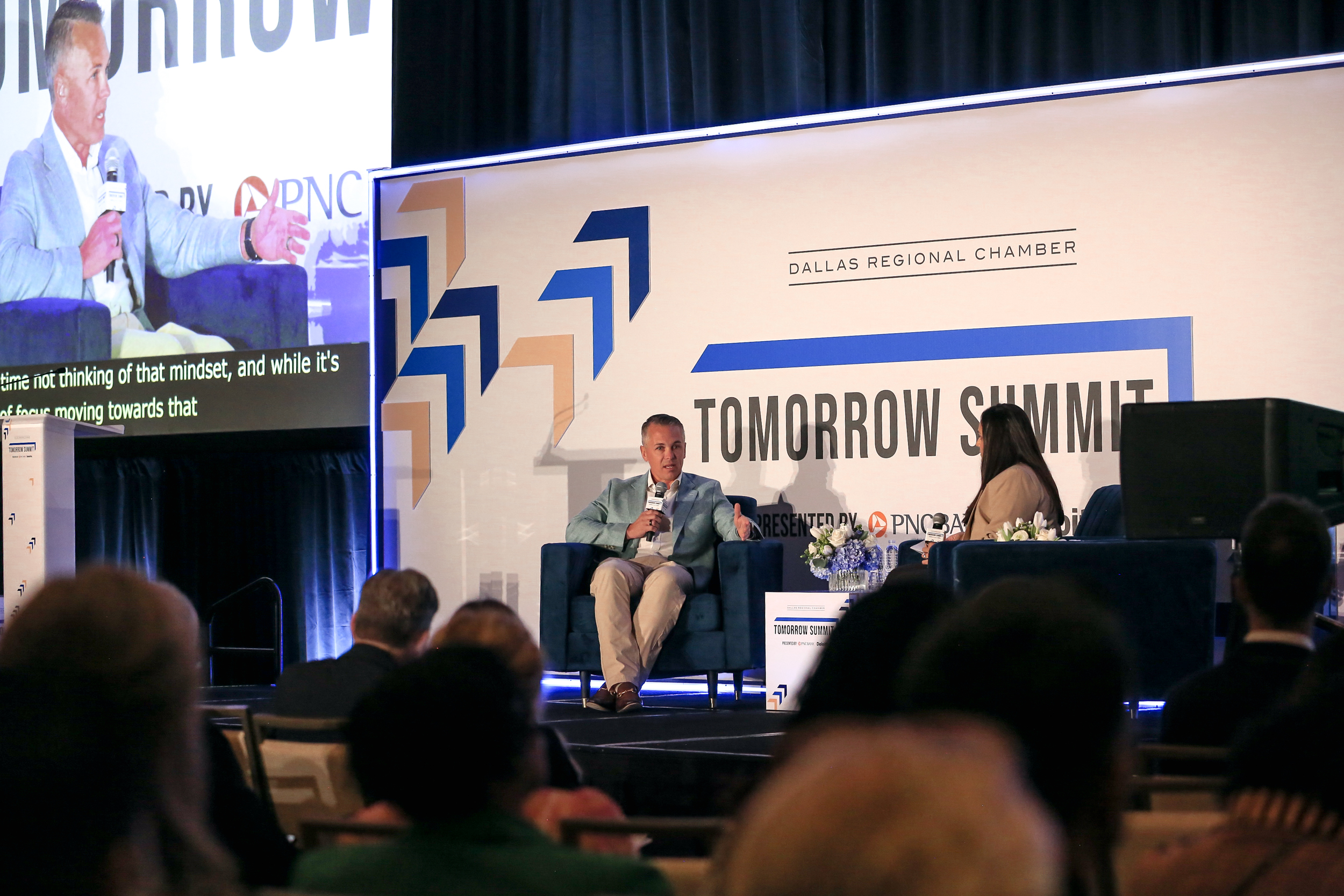
Explore more of Turner’s keynote, covering workforce development, DFW’s position as an AI leader, additional applied AI examples and more in the full recap.
Supply chain resilience and national security
Wes Spurlock, Co-founder & Chief Operating Officer at Principal Mineral, discussed the rising demand for critical materials and the importance of securing domestic supply chains for national security and economic resiliency.
“If you don’t have secure supply chains, you don’t have a product. And if you don’t have a product, you don’t have a business.”
He pointed to copper foil as a common material used across various industries and sectors critical to the economy and national security, from consumer electronics to defense. Despite the material’s rising demand, Spurlock noted that there is only one copper foil factory in the Western Hemisphere, creating significant choke points and vulnerabilities in supply chains.
“If we don’t have the copper foil that goes into copper-clad laminate and into the printed circuit board that you put chips on, we don’t have any of [those essential products].”
Learn more about the importance of securing critical materials and where businesses fit in national supply chains in the full recap of Spurlock’s conversation.
Y’all Street and the future of American capital markets
The event’s final panel, featuring Rachel Racz, President of Nasdaq Texas, and Bryan Daniel, President of NYSE Texas, focused on DFW’s rise as a financial center and the priorities and challenges affecting it.
“Finance follows opportunity,” said Racz. “The growth, opportunity and predictability of Texas and our government is now encouraging this financial infrastructure to join in.”
Both Racz and Daniel applauded DFW’s business community and the state’s government for curating an ideal environment for the financial sector to thrive. To further improve this environment, they encouraged legislators to avoid complacency and continue developing innovative policies.
“If we can keep our foot on the gas, not get too satisfied with the fact that we’ve been so successful for so long and really understand what these new horizons look like, I think we’ll end up with even better policies,” said Daniel.
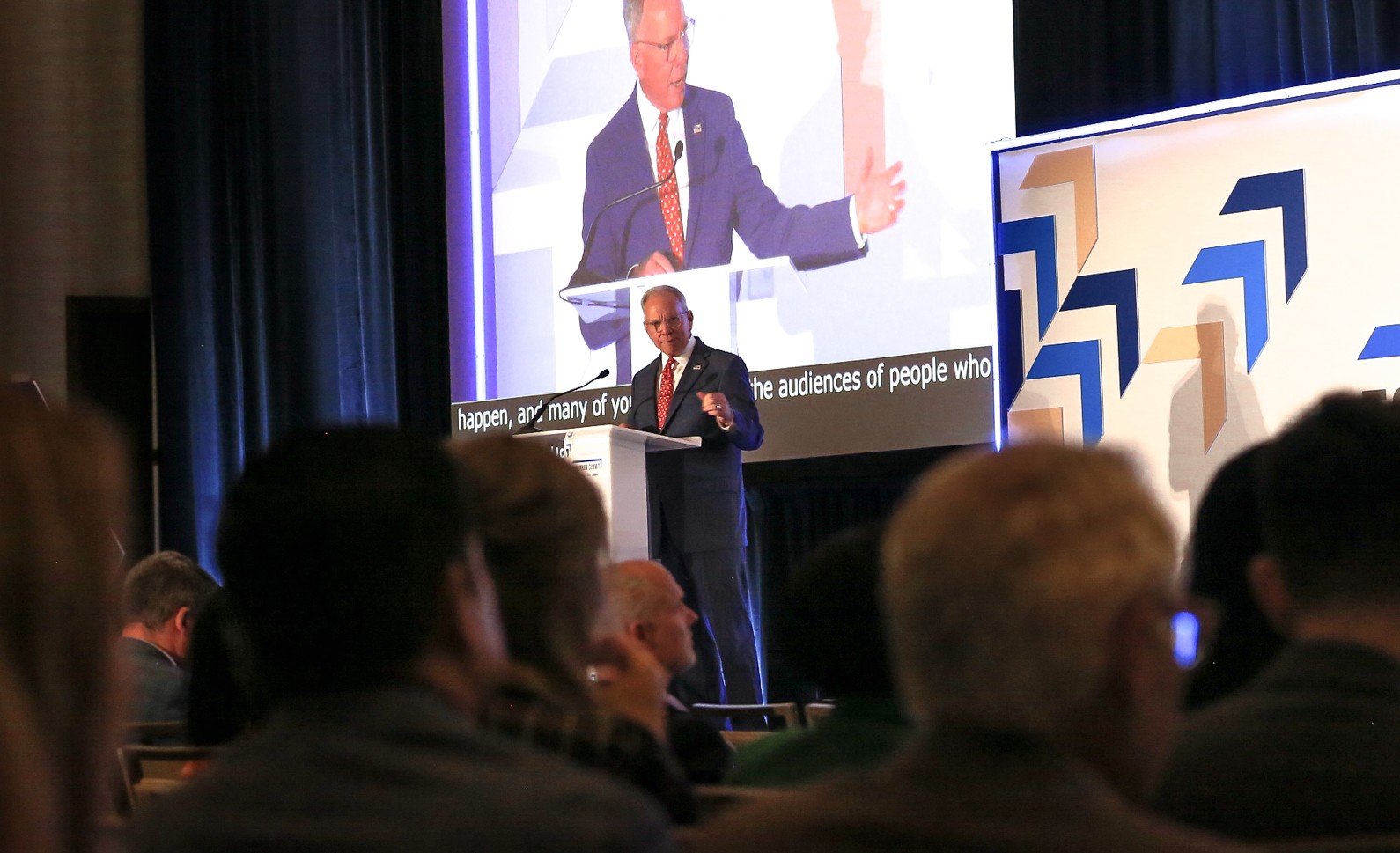
Explore more of Racz and Daniel’s conversation, covering policy priorities, workforce needs, capital markets competition and more in the full recap.
Building the future of Dallas-Fort Worth together
The Tomorrow Summit displayed the foundation of DFW’s success: regional collaboration and proactive investment. Brad Cheves, President and CEO of the DRC, concluded the event with a call to action for DFW leaders, urging them to continue building on that foundation by adapting with shifting public sentiments, technological innovations, supply challenges and opportunities in global finance.
“The future of Dallas-Fort Worth is ours to shape. … The forces we’ve explored today will create new opportunities and challenges. How well we anticipate them, how boldly we respond and how effectively we work together will determine whether Dallas-Fort Worth continues to lead.”
The DRC’s economic development priorities align directly with these opportunities, positioning the Dallas Region to propel today’s momentum into tomorrow’s prosperity. Contact our economic development team for more information.