
|
Takeaways
|
By Ashlynn Bouldin, Coordinator, Communications & Marketing
Estimated reading time: 2 minutes
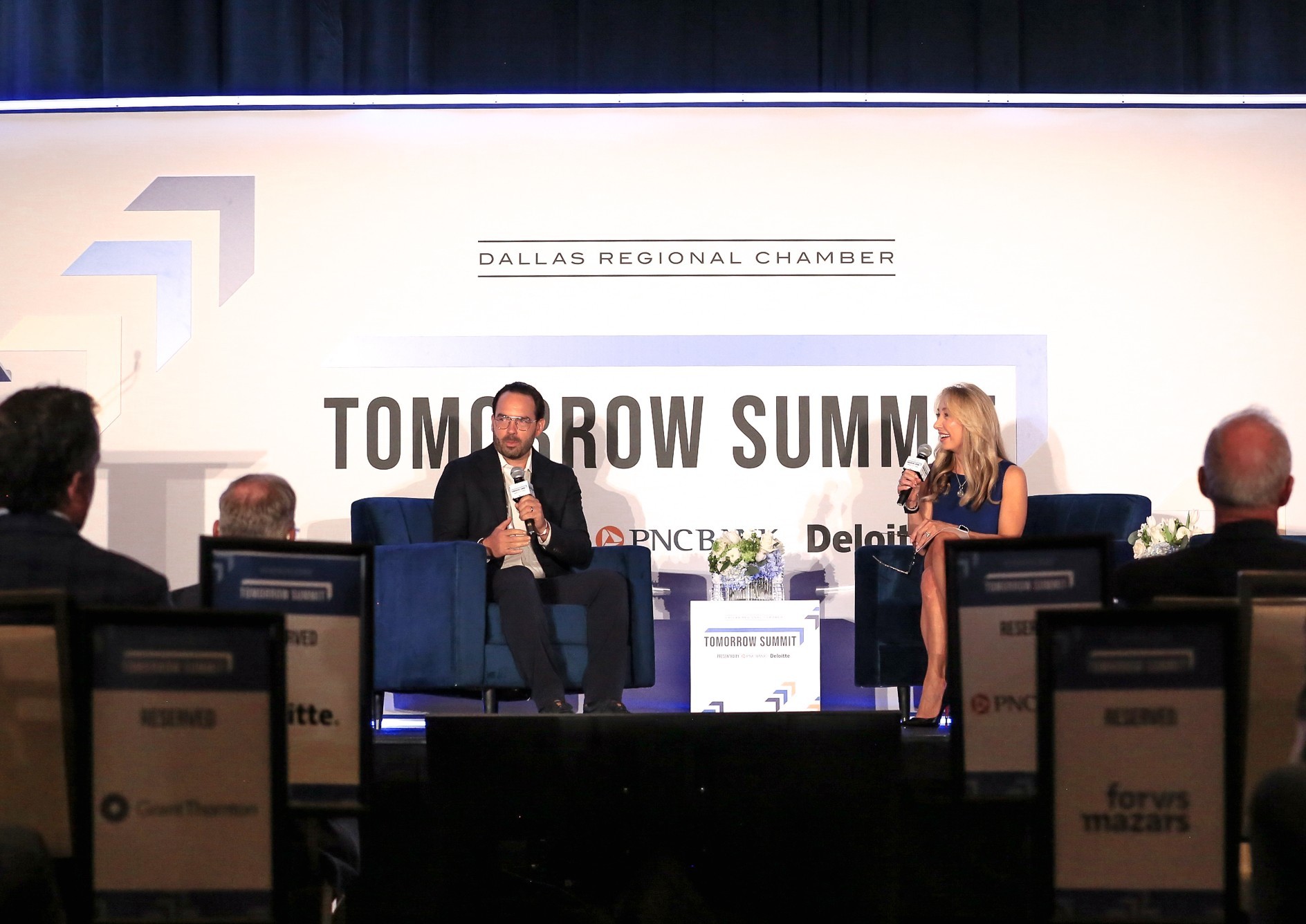
At the DRC’s second-ever Tomorrow Summit, presented by PNC Bank and Deloitte, business and economic development leaders examined the forces shaping the future of Dallas-Fort Worth. At the event, Joe Daly, Global Managing Partner and Head of Global Analytics at Gallup, invited leaders to analyze American public opinions to better understand those they impact and prepare for the future.
Below are key insights from Daly’s conversation, moderated by Nichole Jordan, Regional Managing Partner at Grant Thornton LLP.
Low confidence in institutions invites businesses to prioritize trust
Gallup tracks public opinions on 14 critical American institutions annually, including banks, higher education systems and labor organizations, among others. Daly noted that 12 of those institutions are currently at or near all-time lows in public sentiment.
“Americans are very clearly telling us that the institutions that are really important to this country, that we all rely on and have trust in, have been in decline for multiple years.”
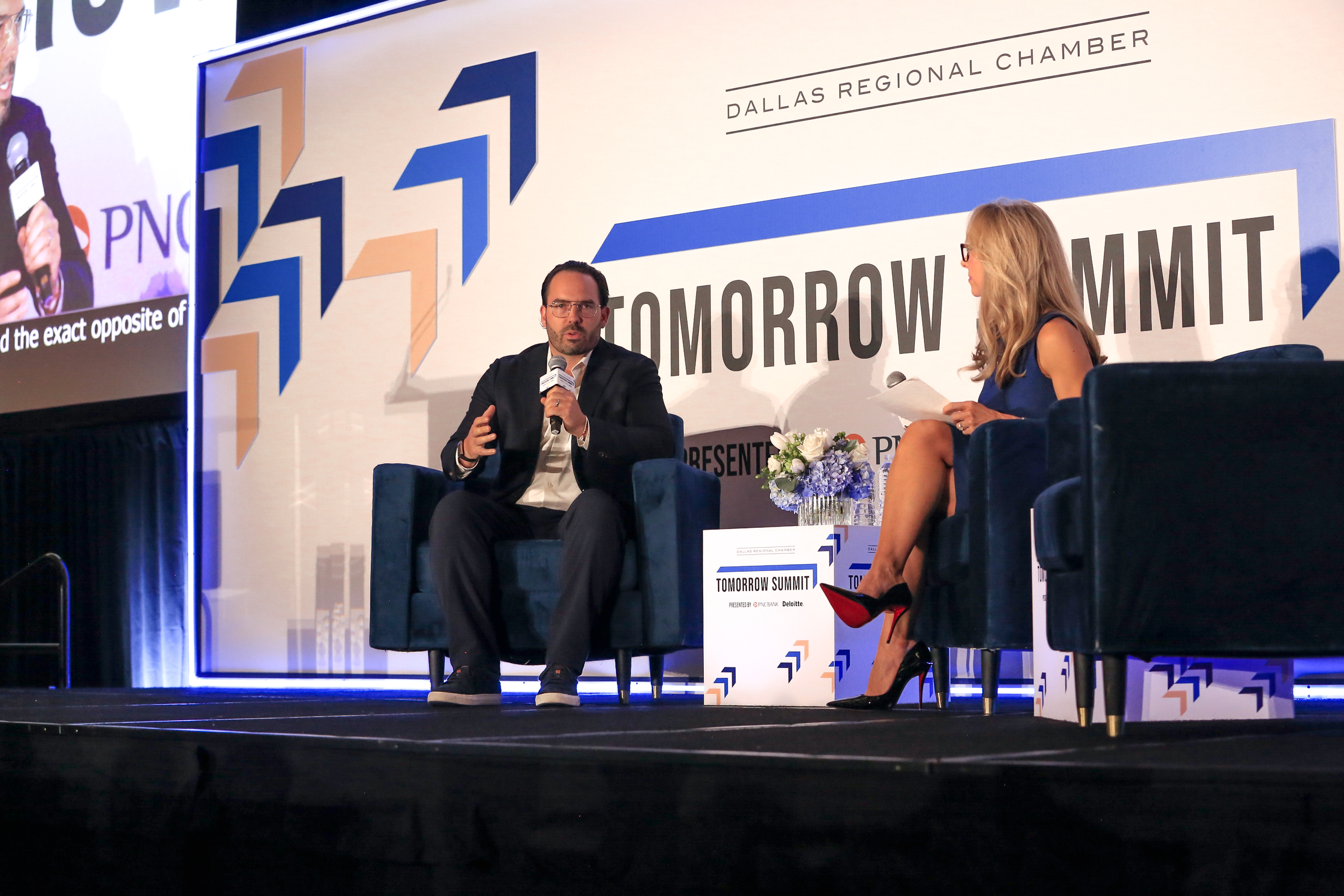
Daly identified three institutions currently experiencing majority negative reviews: the presidency, Congress and TV news. Meanwhile, the two most consistently favorably viewed institutions are the military and small businesses.
“67% of Americans have a favorable view of small businesses. Only 17% have a favorable view of big businesses.”
For business leaders looking to improve the American public’s perspectives on big businesses, Daly encouraged them to reflect on their principles, expectations and purpose and to consistently keep them at the center of their business decisions.
“I think a big part of that decline is trust. … I think we’ve just been getting let down over and over again. Let’s start getting back to the principles of what we want to look at on behalf of the American people.”
Americans are questioning the viability of capitalism and the American Dream
Daly also shared results from Gallup’s recent survey asking Americans for their views of capitalism, socialism and free enterprise.
“Capitalism used to run at about 60% positive view, and it’s come all the way down to 54% positive view,” said Daly. “Socialism has not experienced too much of rise—it’s maybe a point or two—but it remains kind of flat across the spectrum, whereas capitalism is coming down.”
While views of capitalism are on the decline, Daly noted that Americans, across every demographic segment, still view free enterprise overwhelmingly positively, associating it with innovation and economic progress.
In light of the United States’ 250th anniversary, Gallup also surveyed Americans on the state of the American Dream and its achievability.
“78% of Americans still believe that the American Dream is worth striving for. And I think it’s 68% or 69% of Americans still believe that they themselves can achieve it.”
While Daly expressed optimism around public perspectives on the American Dream, he also acknowledged the doubt surrounding who can achieve it, not based on the individuals’ motivations or capabilities—but on the limitations of the dream itself and the system that impacts it.
 “The only slight question mark I guess we all need to be digging into a little bit is that about half of Americans say that the system’s not exactly set up in a way that allows all people an equal chance at achieving [the dream].”
To keep the American Dream “alive,” Daly encouraged leaders to start with the youth. He noted that between fifth and twelfth grade, almost every child loses their “energy for the future and what they [can accomplish.]” If the dream is to feel tangible and achievable for all, the youngest Americans must feel empowered to pursue grand career and life goals, and they must have opportunities and environments in which they can thrive.
Businesses face critical questions as concerns surrounding AI and data centers rise
Daly closed out the conversation examining American opinions on two of the hottest topics in today’s headlines: AI and data centers.
“71% of Americans oppose building data centers in their communities. … We asked, ‘why do you feel that way?’ Surprisingly, it’s not job loss. A lot of it comes down to environmental concerns. They feel there’s issues around water problems, global warming, climate change, all those different things.”
The results pose a complicated, yet necessary, question for AI and data center businesses: How can leaders meet rising technological demand while striving for environmental sustainability and resolving community concerns?
With regards to AI specifically, Daly highlighted that, even with its large-scale integration into workplaces and everyday products, the vast majority of Americans harbor negative views of it.
“Only 19% of Americans feel that AI is going to be a net positive, but when you look at the adoption data, we’ve got more than 50% of Americans who are now using it.”
Daly emphasized that young people, especially, feel negatively about AI; their most-popular emotion around it is anger, largely due to the fear that it will neutralize white-collar jobs and entry-level hiring entirely. He noted that this fear exists within a disconnect between businesses and their communities, where businesses are more optimistic about AI’s impact and consumers are more concerned. Bridging this ideological gap requires leaders to understand the roots of these fears, address them with transparency and pursue resolutions intently.
As business, policy and economic development leaders shape DFW’s future, it grows increasingly critical to understand and intently act upon the sentiments and priorities of their communities. Thriving economies are built by regional collaboration, community engagement and thoughtful investment—a sentiment deeply ingrained in the DRC’s work.
To learn more about the DRC’s Tomorrow Summit and find insights shared by speakers from Google, Principal Mineral, Nasdaq Texas and NYSE Texas, explore the full event recap.