
|
Takeaways
|
By Ashlynn Bouldin, Coordinator, Communications & Marketing
Estimated reading time: 2 minutes
At the DRC’s second-ever Tomorrow Summit, presented by PNC Bank and Deloitte, business and economic development leaders examined the forces shaping the future of Dallas-Fort Worth. At the event, Rachel Racz, President of Nasdaq Texas, and Bryan Daniel, President of NYSE Texas, examined Dallas-Fort Worth’s rise as a financial center and the priorities and challenges affecting it.
Below are key insights from the discussion, moderated by Mike Rosa, Senior Vice President of Economic Development at the DRC.
DFW laid the ground work for finance long before Y’all Street made headlines
While Y’all Street is one of DFW’s hottest topics, Racz and Daniel agreed that the financial services sector is not growing here in isolation—nor did it grow overnight. Racz pointed to Texas’ broader characteristics as an ideal foundation for the financial sector build from.
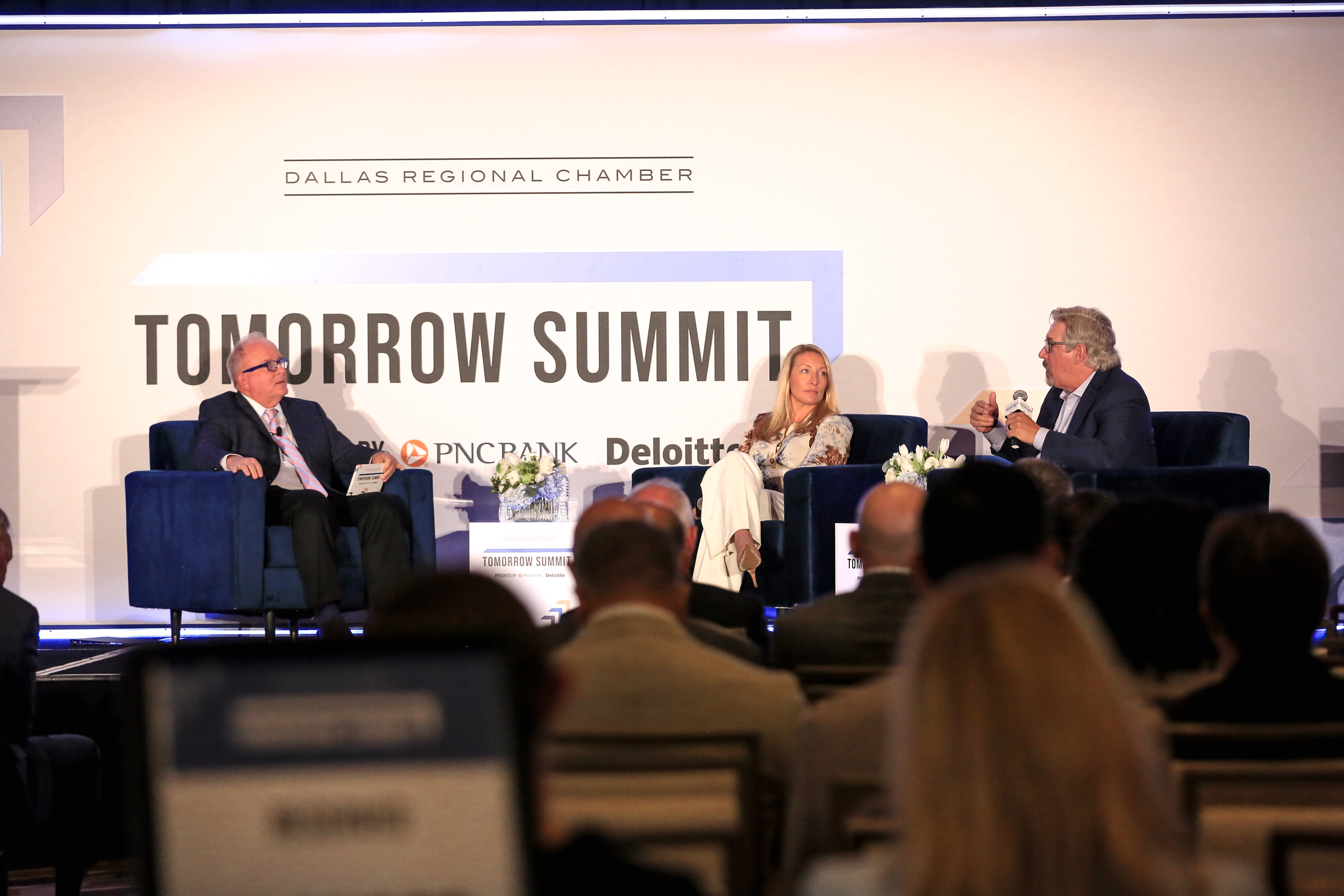
“Finance follows opportunity,” said Racz. “The growth, opportunity and predictability of Texas and our government are now encouraging this financial infrastructure to join in.”
Daniel noted that finance cannot grow independently; it grows by plugging into a diverse ecosystem. Long before the Y’all Street buzz, DFW built a diverse base of companies and industries, all of whom now use financial capital to scale. Daniel encouraged leaders to capitalize on the opportunities this diversity creates to ensure Texas remains an environment where industries can thrive together.
“Texas has its pick of what’s going to grow, but we don’t have to pick winners and losers. We don’t have to say we’re going to be an advanced manufacturing state or an aerospace state. We’re actually all of those things already. … So, let’s understand how [our industries] need to grow and how they want to grow.”
Y’all Street can scale once capital decisions are made in DFW
Y’all Street’s success is exciting, but Racz and Daniel discouraged leaders from growing complacent, as there is still work to be done to turn today’s momentum into lasting success for finance companies in DFW.
“It’s great that there are offices opening here. It’s great that headquarters are being built here. But that won’t matter until decisions are made in Dallas,” said Racz. “It will matter when capital market and fundraising decisions are made here and when capital is injected into companies from here. That is what will really matter, and I think we’ll start seeing that over the next five years.”
Daniel added that attracting companies is only part of building a thriving financial services sector. The next step is to ensure those companies can scale. Access to financing, a qualified workforce and available real estate are essential resources, and he was optimistic about regional efforts to strengthen each.
“We’ve got people working in concert with each other to make sure that those [resources] are delivered when we need them. … Sometimes I think our biggest concern is whether that’s all going to time out correctly so it all hits at the same time. That’s a good problem to have.”
 Stock exchange priorities in the upcoming legislative session
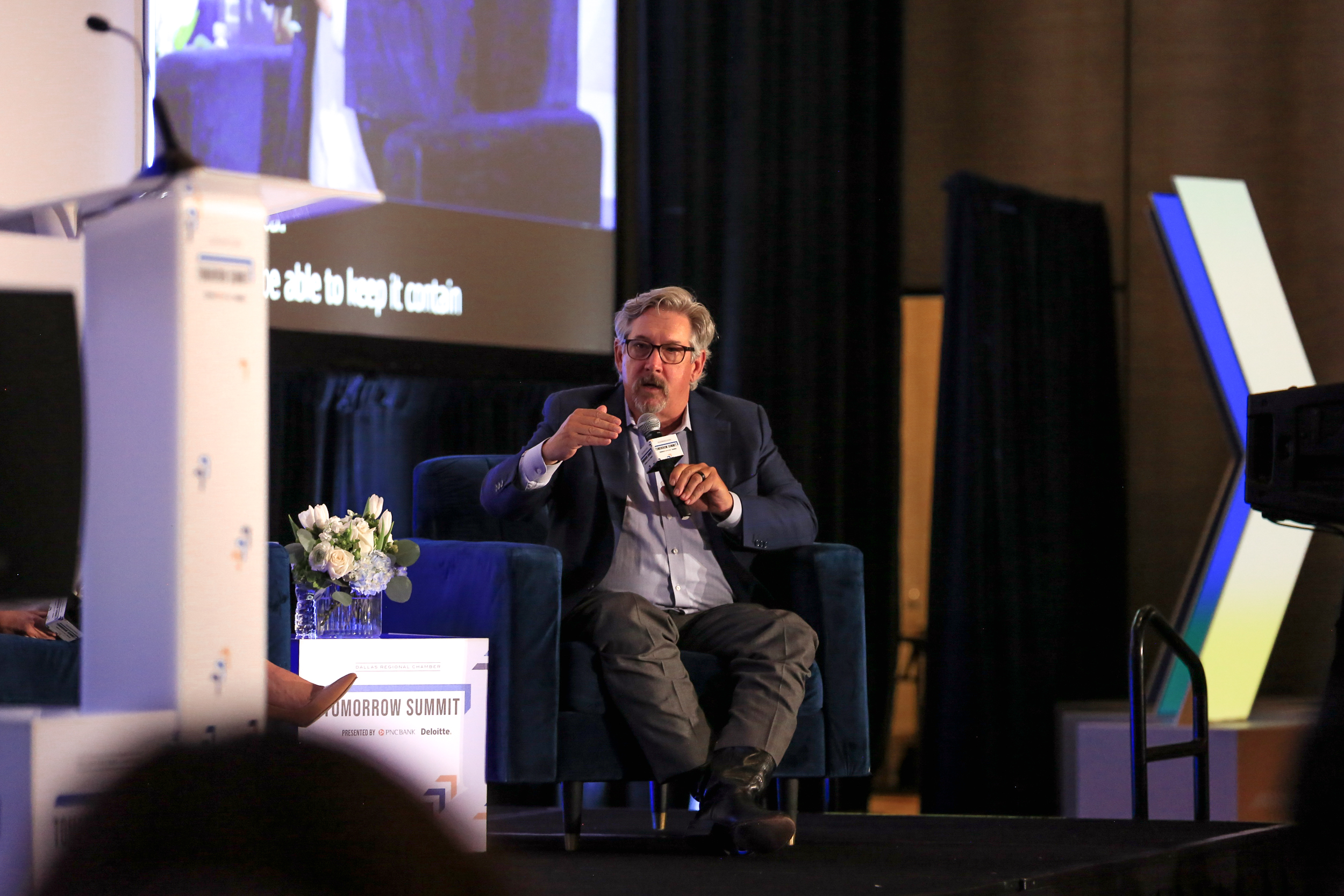
In light of the upcoming 90th Texas legislative session, Racz urged legislators to avoid policies that require companies to list in Texas. She argued that listing in a state is often conflated with generating economic activity when, in reality, they are distinctly separate. If legislators want to increase economic activity in Texas’ capital markets, she encouraged them to prioritize policies that support investment and trade.
“I want to be very clear: where you list does not impact the economy where you trade. Where you build business, where you hire, where you invest—that impacts the economy. So, when we have all of these bills being put forward in Texas about listing in Texas, that’s really silly. We should be talking more about where you trade, where you invest and creating real reinvesting in Texas.”
Daniel, meanwhile, encouraged legislators to prioritize competition, market transparency and “level playing fields” for businesses and stock exchanges alike, as they are essential principles for healthy capital markets and result in better products for companies.
“The thing that I think we really look for from both legislators and regulators is transparency in the markets. … [They need to] understand where people need basic protections, provide those basic protections without any kind of government overreach and ensure that there’s a level playing field.”
For decades, DFW’s leaders have worked to attract financial institutions and create the conditions for their success. Now, the opportunity is to build on that momentum with an ecosystem where capital is raised, allocated and put to work.
To learn more about the DRC’s Tomorrow Summit and find insights shared by speakers from Google, Gallup and Principal Mineral, explore the full event recap.