By Tyler Files, Director, Talent Strategies, and Bart Slowik, Managing Director, Research & Innovation
Average reading time: 4 minutes
As we navigate the intersection of artificial intelligence and talent management, we are witnessing a fundamental shift in how organizations approach hiring, development and retention. But this transformation isn’t about choosing between human intuition and machine efficiency — it’s about finding the sweet spot where both can thrive.
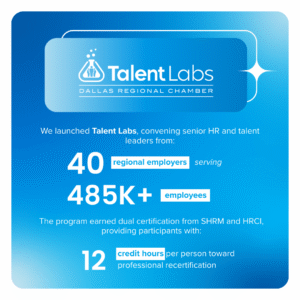
These conversations are happening every day in the DRC’s work with regional employers, and they’ve become central to our new Talent Labs program. This six-month, hands-on program brings senior talent and HR professionals together to workshop real-world strategies and solutions for their companies’ needs, including navigating the evolving role of AI in talent management.
The great divide in AI adoption
 We’re seeing two distinct responses to AI in the workplace. Some people are diving headfirst into AI and trying to incorporate it into all of their daily tasks, experimenting with everything from automated scheduling to content generation. Others remain cautious, even skeptical, particularly in the HR and talent space, where the stakes of getting it wrong feel especially high.
In our Talent Labs conversations, we often hear this caution — this ‘we’ve got to get back in person’ mentality. When you’re afraid of what AI represents, particularly in hiring capacity, concerns multiply. We’ve heard stories from hiring managers about candidates with polished, AI-enhanced resumes who make it all the way to final-stage interviews, only to reveal in person that their capabilities don’t match their application materials. It was very clear in some cases, with almost doomsday-level disconnects between what was promised and what was delivered.
The knee-jerk reaction? Abandon virtual processes entirely, eliminate video interviews, skip the tech panels and get candidates in the door as quickly as possible. But we think the better answer is creating a happy medium where we’re using AI thoughtfully in the hiring process — not eliminating technology but applying it strategically.
AI as a coach, not a replacement
One of the most exciting possibilities we see is having AI serve as a coach or trainer, pushing people to be more productive and make more connections. This represents something fundamentally different from the replacement narrative that dominates many AI conversations.
From a practical standpoint, AI is still ROI-driven. The processes seeing the most adoption are those where AI delivers clear value, mainly summarizing meetings and generating content through generative AI. Agentic AI remains experimental, but generative AI is already present across departments, helping with everything from drafting communications to synthesizing notes.
Within HR specifically, clear use cases include generating performance reviews, organizing notes and synthesizing content. The question isn’t whether these tools work — they do. The question is how we deploy them responsibly.
Preserving institutional knowledge
One application that particularly excites us is using AI to capture institutional knowledge from retiring professionals. As the baby boomer generation retires, companies are losing decades of accumulated expertise. At Toyota, when an employee with 25 years of experience was retiring, they built an ‘Ask Jim’ AI to preserve his institutional knowledge.
This approach serves multiple purposes: it prevents knowledge loss, keeps retiring employees engaged during transitions and creates lasting organizational resources. It’s AI augmenting human expertise, not erasing it.
Navigating bias and governance 
Eliminating bias when using AI for HR processes is a major concern. We put trust in providers and their guardrails, but organizations can’t outsource responsibility entirely. Heavily regulated industries, like banking, are ahead on this front; they’ve implemented internal AI governance with strict regulations to ensure compliance and prevent bias.
These banking institutions provide a model for other sectors. AI governance isn’t optional; it’s essential. As AI becomes more integrated into hiring and promotion decisions, organizations need clear policies, regular audits and accountability structures.
The best possible outcome
We believe the best outcome is for AI to be fully integrated into HR operations in the safest way possible, meaning not by replacing people, but by helping us increase productivity. Agentic AI should enable us to do more things simultaneously and eliminate tedious work, but there’s a fine balance between replacing someone and assisting someone.
To safely and responsibly integrate AI, HR must find this balance, where we remain part of the process as humans — where our creativity and human connection aren’t lost. There’s tremendous value in establishing relationships and building trust. If HR can preserve that human element while leveraging AI’s efficiency, that will be a huge success.
Moving forward
Through our Talent Labs program, we’re creating a space where senior talent and HR professionals can wrestle with these questions together. Participants bring their real-life talent opportunities and challenges to the table and workshop solutions with peers and experts from the DRC. Over six sessions, they develop talent action plans focused on retention, attraction or development — and increasingly, those plans must account for how AI tools can support rather than supplant human judgment.
With the growing economic energy in our region, talent is critical to future prosperity. The need for talent professionals to come together and design innovative talent strategies has never been more important, especially as AI reshapes what those strategies look like.
As we continue our work at the Dallas Regional Chamber supporting the region’s talent ecosystem, we’re committed to helping organizations navigate this transition thoughtfully. AI isn’t going away, and neither is the fundamental human need for connection, empathy and intuition in the workplace.
The organizations that thrive will be those that view AI as a tool for enhancement rather than replacement — those that use technology to free their people for higher-value work while maintaining the human touch that makes great workplaces truly great. That’s the future we’re building through Talent Labs and across all our talent initiatives, and we’re excited to partner with regional employers on that journey.
Ready to level up your company’s talent strategies? Applications for the 2026 cohort will open soon. Contact talent@dallaschamber.org for more information.
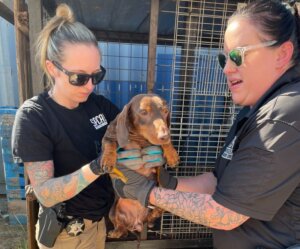
 As a nonprofit serving tens of thousands of animals and pet-owning families each year, the SPCA of Texas builds value by supporting the fabric of community health, safety and stability. When pets are healthy, sheltered and supported, families and neighborhoods thrive. We provide access to affordable veterinary care, spay and neuter services and preventative wellness to help pet owners overcome financial barriers.
 What benefits does the SPCA of Texas enjoy by doing business in the Dallas Region?
 Advancing quality of life for all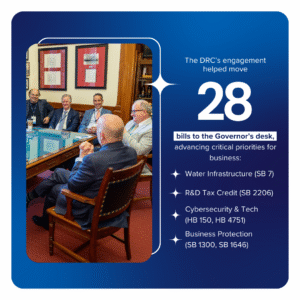
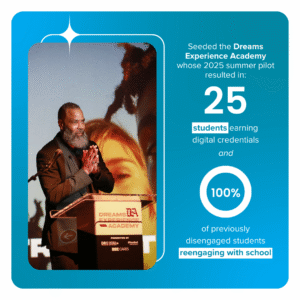
 Higher education in action




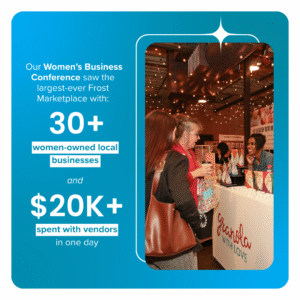
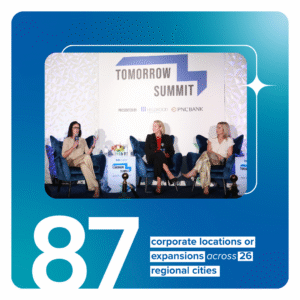 2025 by the numbers
 In 1897, educator and civil rights activist Mary Church Terrell successfully urged the Washington, D.C. school board to dedicate Feb. 14 to honoring the life and legacy of Frederick Douglass. This observance became known as Douglass Day and marked an early step in a decades-long movement that would eventually lead to the establishment of Black History Month.
 Another impactful way for companies to engage employees during Black History Month is by encouraging experiential learning through the community. Organizing staff or department outings to local museums, cultural centers or historical sites that highlight Black art, history a
 Lunar New Year is observed on Tuesday, Feb. 17 this year, marking the beginning of the 16-day Spring Festival and ushering in the Year of the Horse. Celebrated by millions around the world, the holiday centers around time-honored traditions,family reunions and the collective hope for prosperity, health and good fortune in the year ahead. The Year of the Horse is associated with energy, momentum and forward movement — qualities that reflect vitality, resilience and progress. Celebrations often feature red decorations and firecrackers, symbols of protection, renewal and optimism, as communities welcome a fresh start and the promise of new opportunities.
 Organizations can meaningfully engage Martin Luther King Jr. Day by encouraging service and volunteerism that reflects Dr. King’s belief in the power of collective action. Departments or teams can partner with local nonprofits, schools, or community organizations, particularly those with existing company relationships, to volunteer their time. These experiences allow employees to give back in ways that are both impactful and aligned with organizational values, while strengthening meaningful connections within the communities they serve.