
By Ashlynn Bouldin, Coordinator, Communications & Marketing
Estimated reading time: 2.5 minutes
On Wednesday, May 13, business and hiring leaders gathered at the University of Texas at Dallas’ Davidson-Gundy Alumni Center for the DRC’s State of Talent and Workforce, presented by INSPYR Solutions and Texas Mutual Insurance.
At the event, attendees received exclusive insights from Scotiabank on their recent Dallas expansion and heard from a panel of talent leaders discussing regional talent challenges and solutions. Below are key takeaways from the event’s speakers.
Education and workforce development systems attract corporate expansion and sustain regional growth
DRC President and CEO Brad Cheves emphasized education and workforce development as the keys to building a talent pipeline that can support the Dallas Region’s growth.
“Our region’s talent and workforce determine the sustainability of our success,” said Cheves. “If our growth outpaces our education and workforce development systems, we lose our advantage and slow our momentum.”
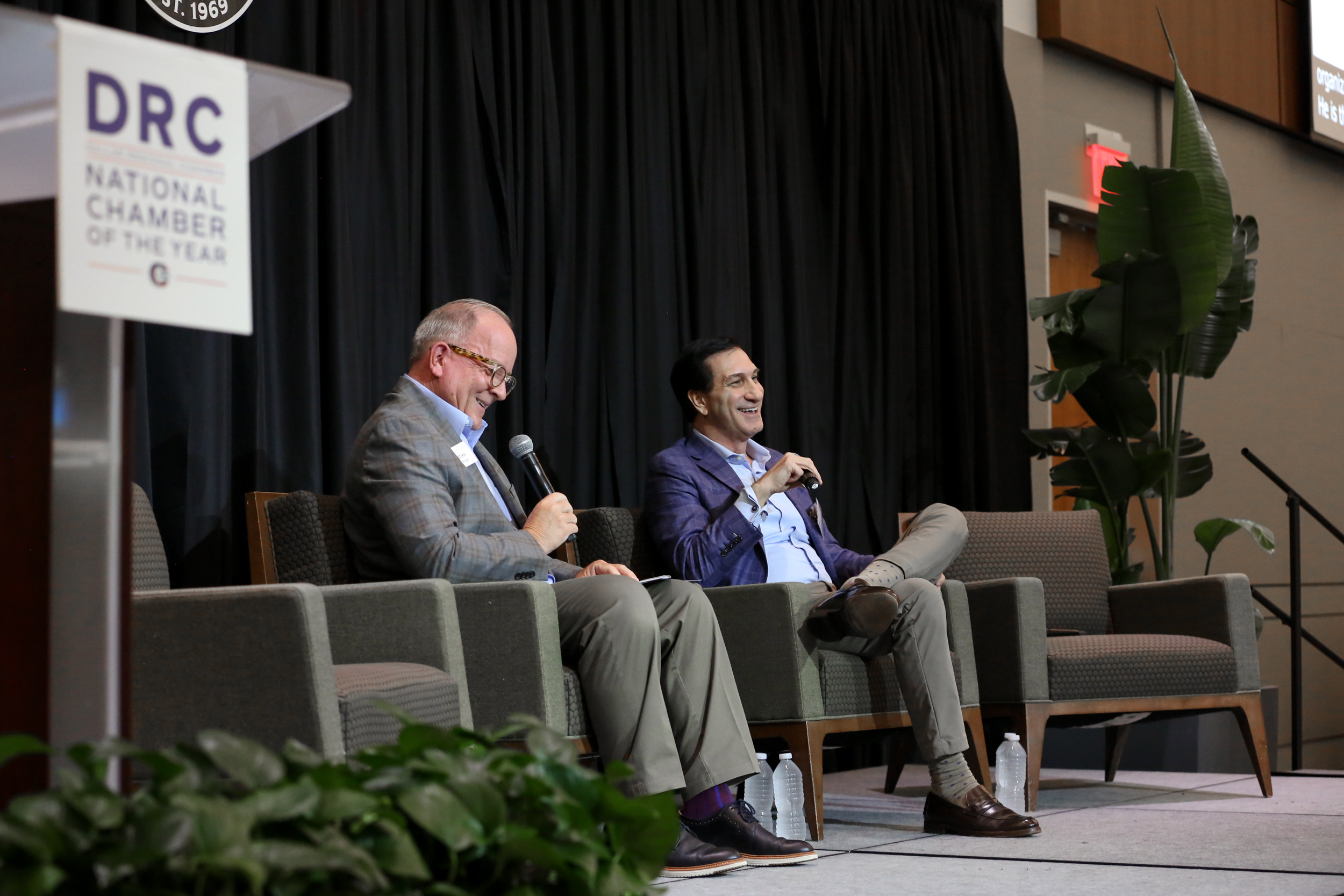
During his fireside chat, G.A. Pivik, Managing Director at Scotiabank, praised the region’s education systems as a driving factor in Scotiabank’s decision to establish a new U.S. regional hub in Dallas.
“One of the major pieces that sold us on North Texas was the density of the education,” said Pivik. “We wanted to be in a place where we had access to a pool of talent.”
Scotiabank cited the Dallas Region’s exponential growth and renowned talent pipeline as pivotal to expanding their global impact. The bank’s Dallas hub will create approximately 1,020 new jobs and more than $60 million in capital investment for the region.
Businesses can build a specialized workforce and broaden their talent pipelines to meet specific needs
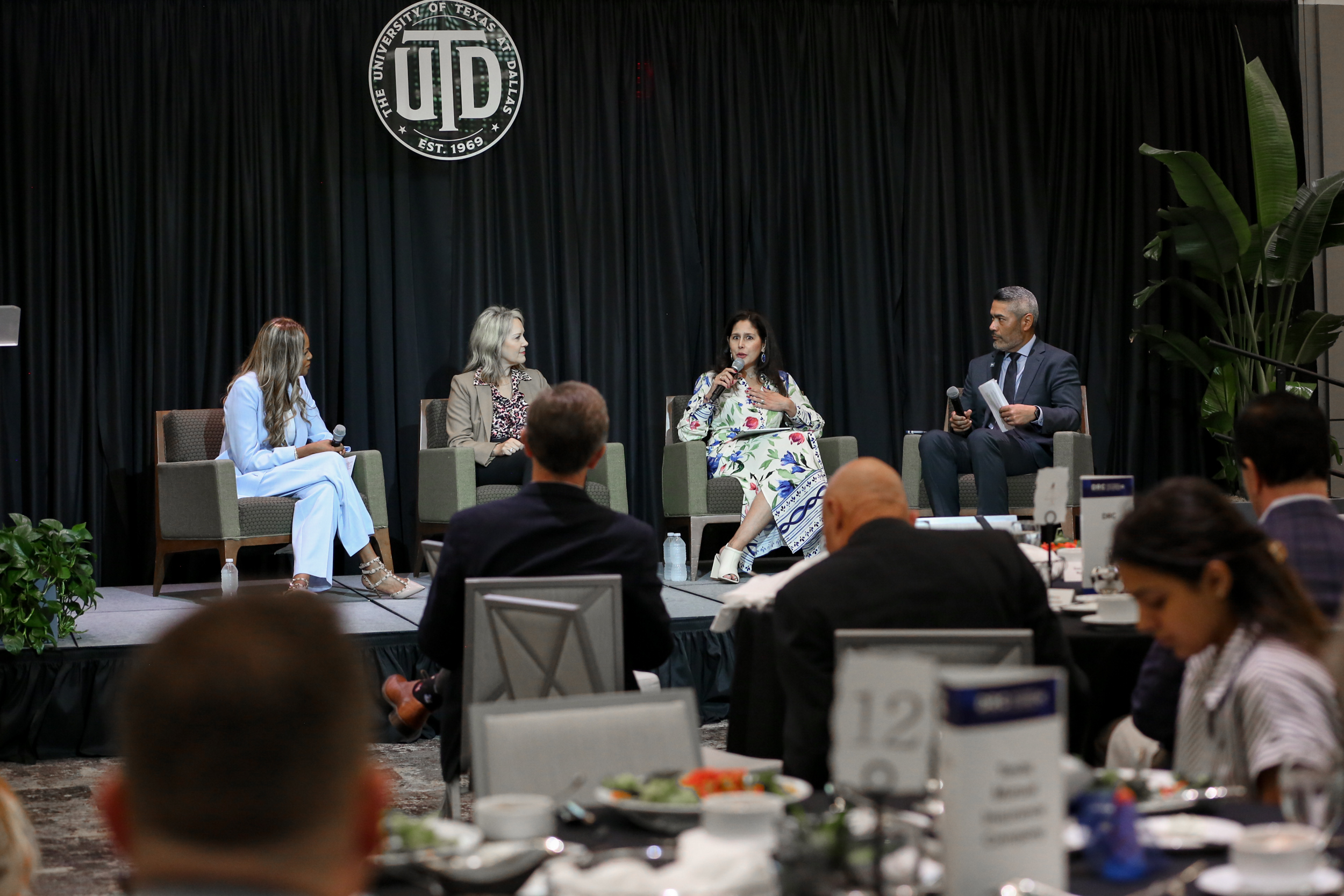
During the panel, Suzanne Myers, Chief Human Resources Officer at Arcosa, discussed how regional partnerships can help businesses meet workforce needs, as exemplified by Arcosa’s work with Dallas College.
“What’s nice about our partnership with Dallas College is that we are creating the opportunity to expose individuals to [trade skills],” said Myers. “Welding is the top skill that we need. … So, we sponsored the welding lab at Dallas College.”
Cole Brown, Chief People Officer at American Airlines, encouraged employers to broaden their talent pipelines, highlighting the company’s hiring of former doctors and retirees as flight attendants.
“What we’ve found is it’s not just the traditional places in which we are building [talent] relationships and connections,” said Brown. “People think of schools, they think of certain governmental regulatory agencies, but it’s also just about being really active in the communities in which we operate.”
Involving employees in AI application enables the workforce to scale with innovation
Maruchy Cantu, EVP and Chief Administrative Officer at Dallas Fort Worth International Airport, emphasized involving employees in AI-driven projects, citing her team’s solution for the parkway congestion during Thanksgiving in 2024 as a prime example.
“We brought a cross-functional group of people to brainstorm solving the problem of what happened [in 2024]. … AI has helped us implement a solution to that,” she said. “It’s not always perfect, but we can implement a solution while bringing our employees along because they’re seeing how the technology is actually solving a legitimate business problem and how they—at every level—can come together to create a solution with a consulting group.”
Regional collaboration is the key to a robust talent pipeline
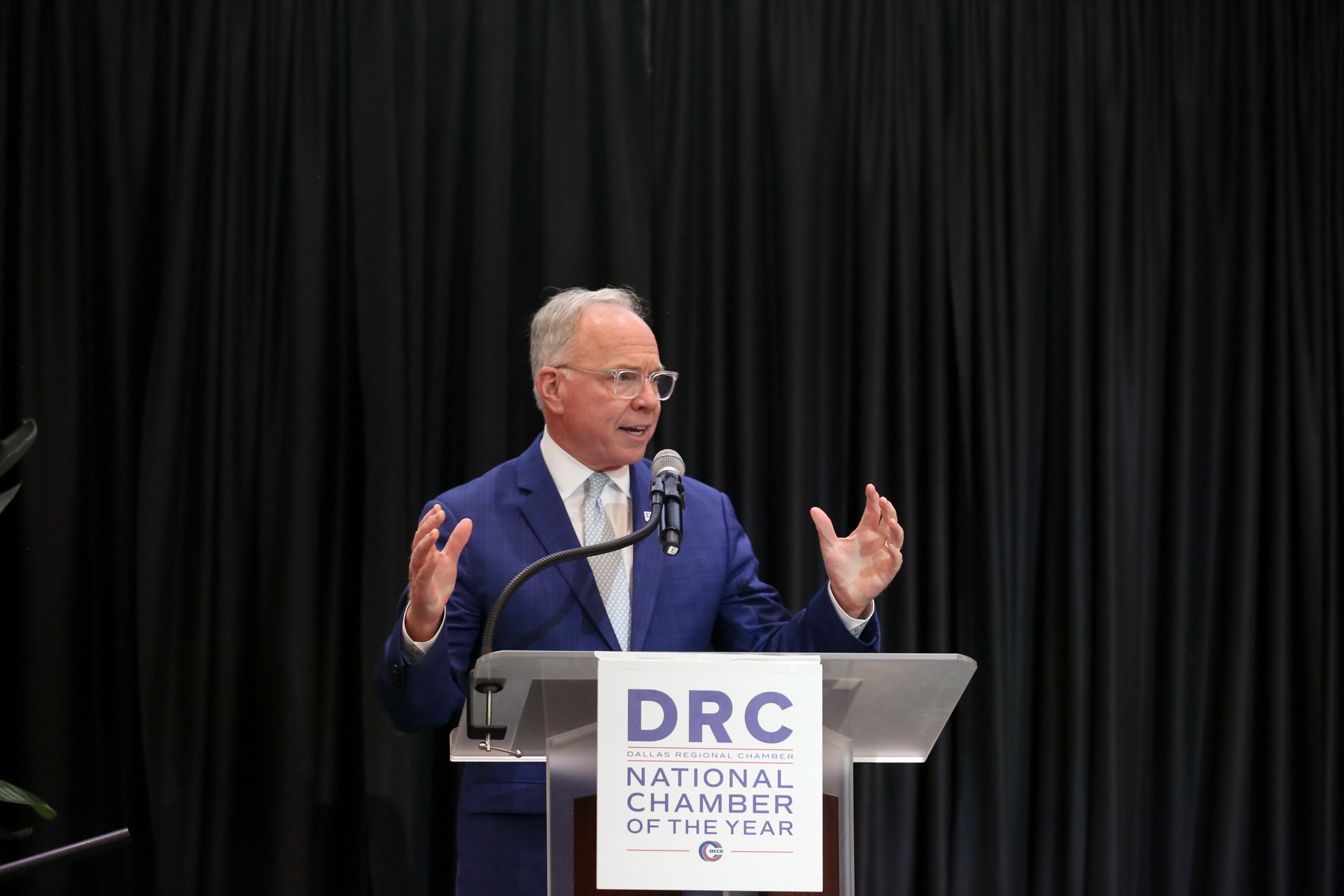
“Dallas-Fort Worth stands out as one of the most dynamic markets in the country, and if we want to continue standing out, we must reinforce the foundation that brought us here: our talent and workforce,” said Darcy Anderson, Vice Chairman of Hillwood and 2026 DRC Board Chair.
Cheves encouraged business and education leaders to work together to sustain the Dallas Region’s momentum by creating alignment between what employers need, what the region’s education and training systems produce and what opportunities are available to the workforce.
“We need to foster connections between the business community, educational institutions and jobseekers to identify proactive, innovative solutions that will enable our talent and workforce to scale with our growth,” said Cheves.
To learn more about the DRC’s Talent and Workforce efforts, visit our website. To get involved and see how your business can benefit from these efforts, join the DRC’s Talent Labs and attend the next DRC Talent Talk.