
By Ashlynn Bouldin, Coordinator, Communications & Marketing
Estimated reading time: 2.5 minutes
Takeaways
- Congressman Marc Veasey and Congresswoman Beth Van Duyne acknowledge community concerns surrounding data center development.
- Both members of Congress consider infrastructure and housing development as critical focus areas for supporting North Texas’ continued growth.
- Both members of Congress encourage business and policy leaders to raise awareness of middle-skill jobs and incentivize middle skills development.
On Thursday, Aug. 13, business and policy leaders gathered for the DRC’s 21st Congressional Forum, presented by Fidelity Investments, at the Renaissance Dallas at Plano Legacy West Hotel, where Congressman Marc Veasey and Congresswoman Beth Van Duyne shared their federal perspectives on the future of North Texas and its most pressing priorities.
Below are key insights from the conversation led by NBC Anchor Phil Prazan.
Balancing data centers and community input for North Texas’ future
The conversation kicked off with one of the hottest topics currently in Texas and national politics: AI and data centers. Both members of Congress agreed that data centers will have a long-lasting role in the region by supporting a wide range of innovative technologies and industries, but they validated voter concerns, as well.
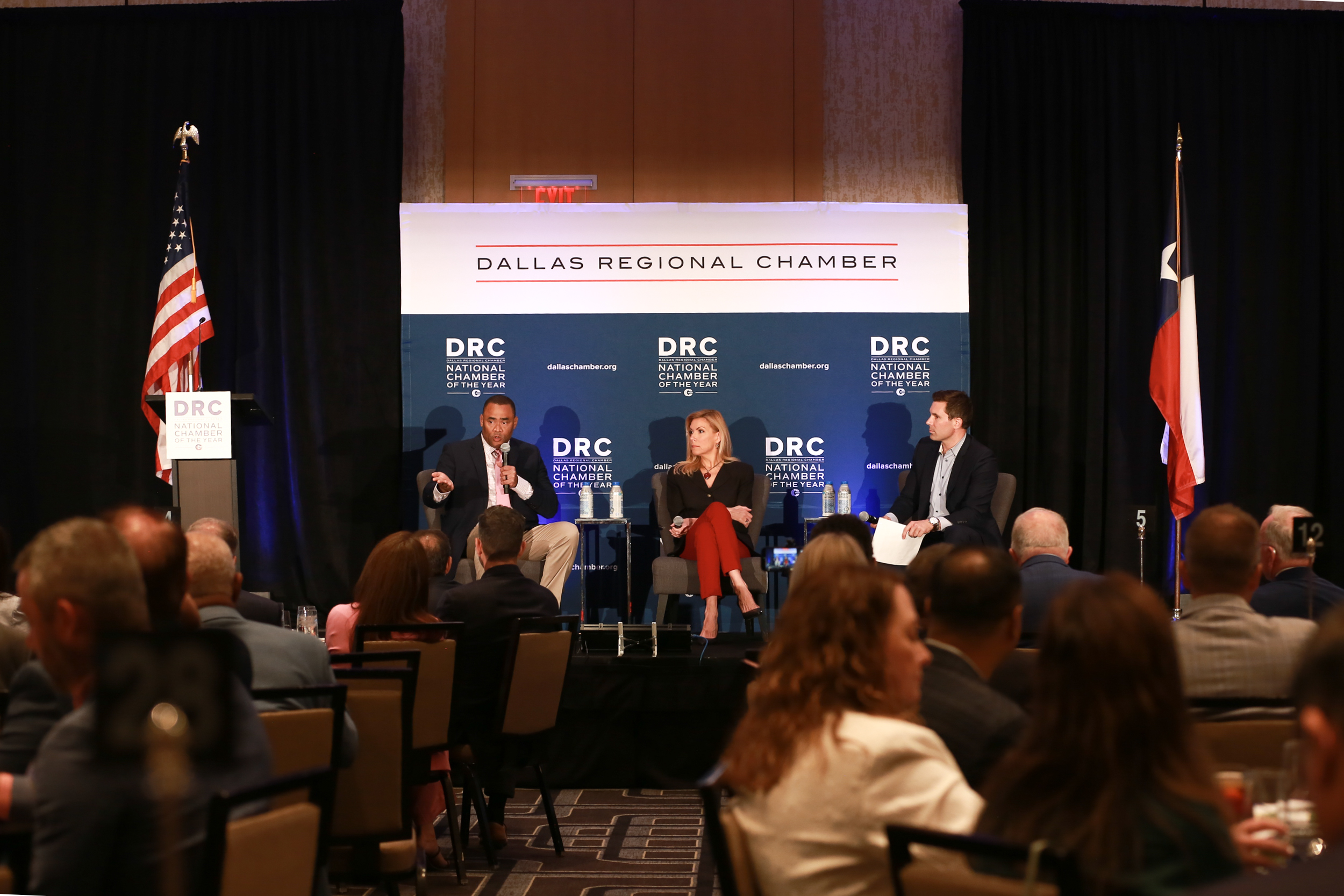
Congressman Veasey acknowledged the fear surrounding AI and noted its importance as a key—and potentially election-turning—issue for voters.
“It’s a very real issue. The anxiety that people are feeling is very real, and I think there are going to be political consequences for it. I think it’s really going to change how people get elected in primaries and in the general election.”
Congresswoman Van Duyne urged business leaders to listen to the local communities affected by data centers and explore ways of resolving their concerns about water, electricity and noise levels.
“Make sure that you are listening to the people who have invested by buying homes, who have kids. They’re investing in your communities, and they do have some concerns.”
Transportation infrastructure is critical to North Texas’ long-term success
As the Infrastructure Investment and Jobs Act (IIJA) approaches its September 30 expiration, Congress has devised new proposals for expanding and improving upon surface transportation infrastructure, including the BUILD America 250 Act. Both Congressman Veasey and Congresswoman Van Duyne expressed support for the proposal—and concerns for Texas’ ability to support its growing population should it not obtain approval in Congress.
“Not only will [the BUILD America 250 Act] help us be able to deal with the infrastructure we need for all the new people that have moved here, but it’s a great job creator,” said Congressman Veasey. “And with those dollars [from IIJA] set to expire soon, I think that it’s very important that Congress act on it.”
Revisiting the Affordable Care Act amidst rising health care costs
After Congress did not extend the enhanced federal subsidies for the Affordable Care Act (ACA) in December 2025, subsidy rules reverted to pre-2021 rules, causing insurance and health care costs to rise in 2026. Both Congressman Veasey and Congresswoman Van Duyne agreed that the ACA requires revisiting and restructuring to reduce costs and increase accessibility, but their perspectives on the law’s impact differed.
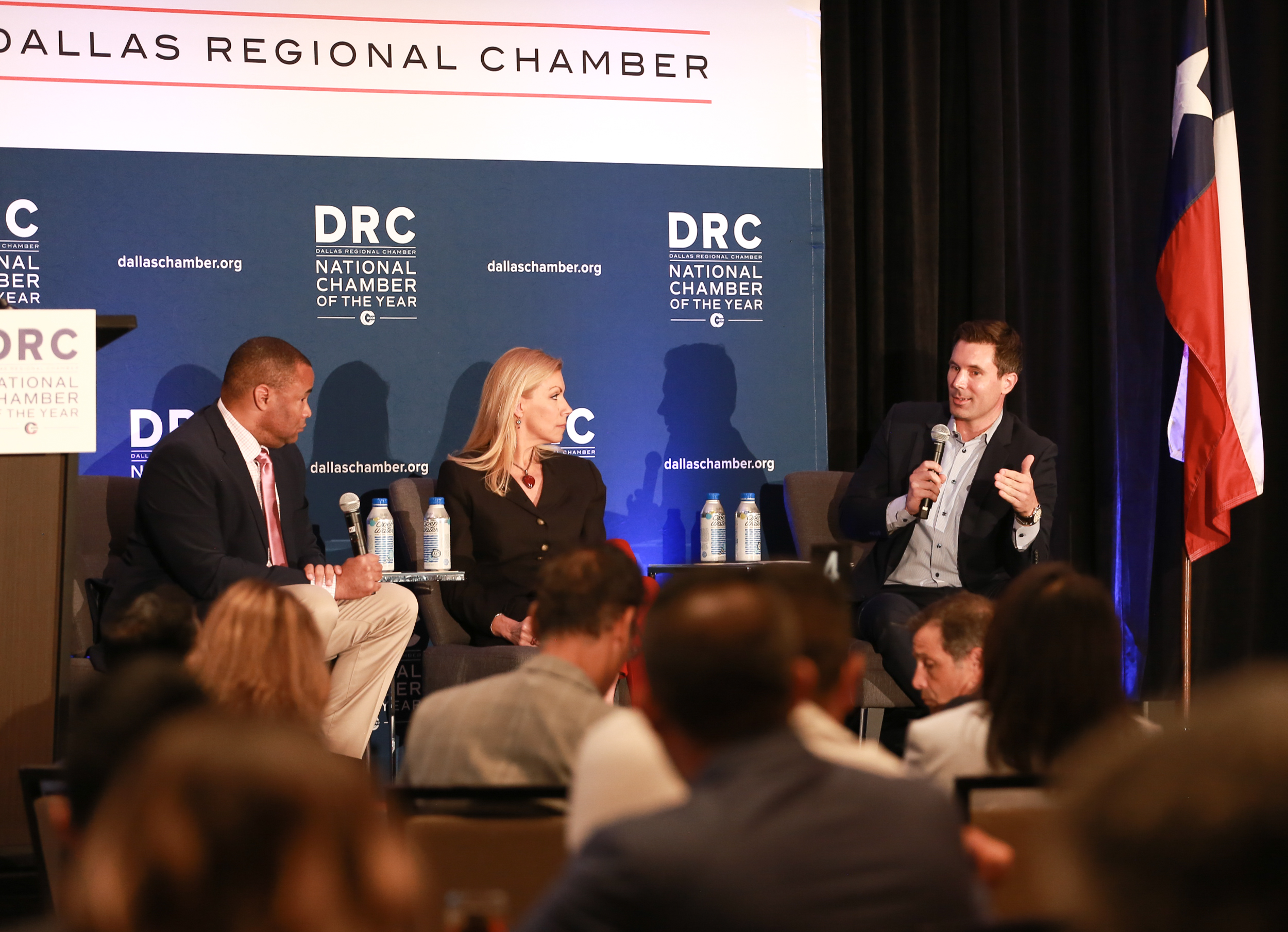 Congresswoman Van Duyne argued that the ACA failed in its attempt to make health insurance available and more affordable and, instead, required substantial federal funding to maintain it.
“The amount that we are having to pay on deductibles now, the amount that we’re having to pay just to keep our monthly premiums, is outrageous. So the idea that [the ACA is] going to be struck down—no. What’s going to happen is we are going to look at other solutions that people find a lot more affordable.”
Congressman Veasey agreed that the ACA needed improvements, but he noted that the number of individuals in his district with insurance increased with it and argued that many of its policies, like reducing discrimination against people with pre-existing conditions and allowing parents to keep their children on their insurance through age 26, benefit Americans.
“I think [the ACA has] made huge improvements. I’ve seen it in my own district, but no, the bill is definitely not perfect. And we need Democrats and Republicans to come together to try to come up with something that is going to be better for the American public when it comes to health care.”
Middle-skill jobs are integral to North Texas’ economic prosperity
Despite North Texas’ workforce growth in sectors like financial services, life science and advanced tech, concerns surrounding the region’s increasing demand for middle-skill jobs remain. Congressman Veasey noted that strengthening the middle-skilled workforce requires solutions for growing income disparities.
“We must start addressing the issue of pay because people feel like they just cannot get ahead. The people in those middle-skill jobs feel that housing is becoming more expensive, and we, as political leaders and business leaders, really need to tackle those issues when it comes to income inequality.”
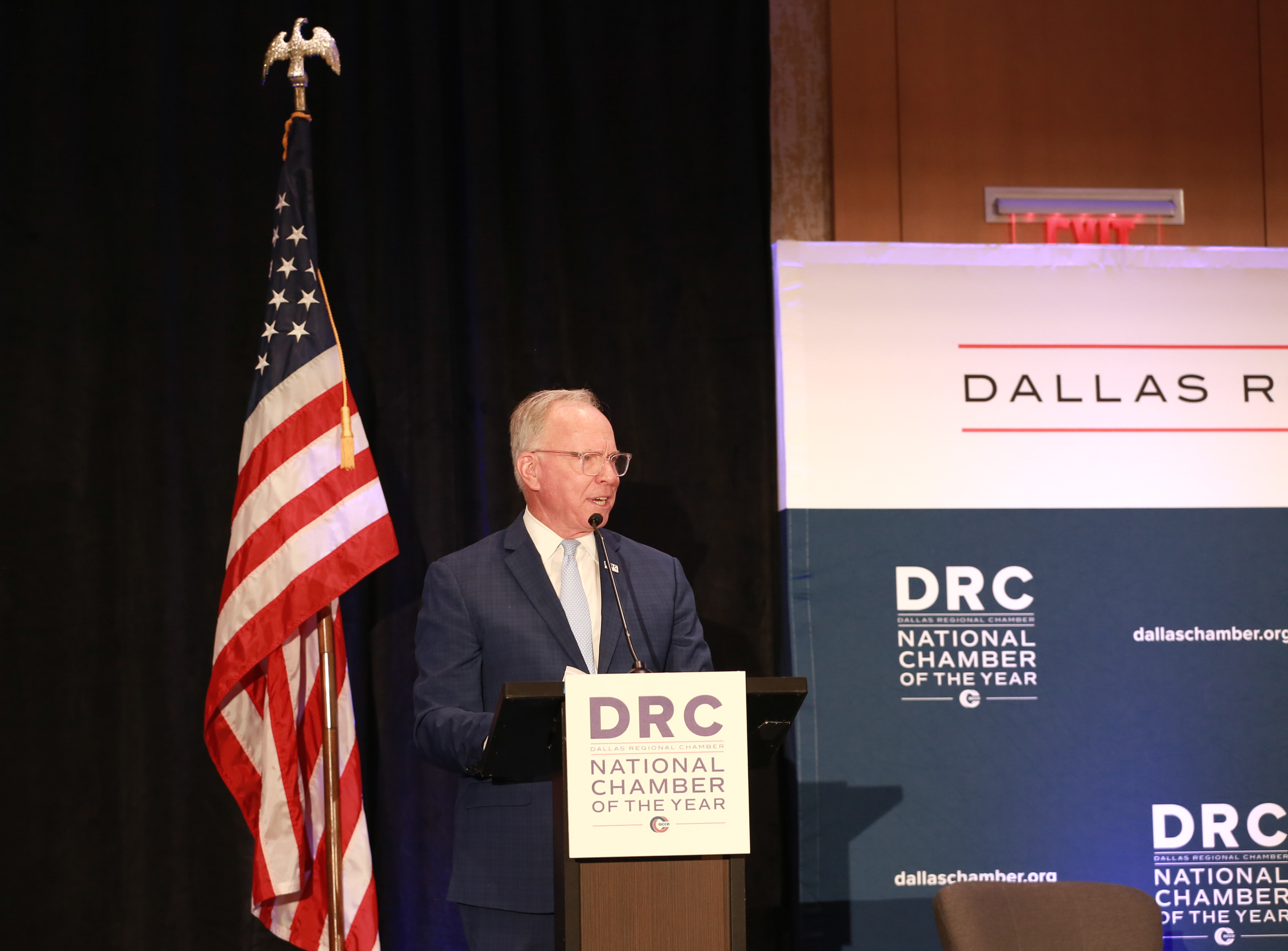
Both members of Congress agreed that the federal government should raise awareness of middle-skill jobs as career opportunities for young Americans. Congresswoman Van Duyne suggested providing schools that offer middle skills development with the same incentives given to four-year universities.
“[We can] take those middle skills and support them with grants just like we support four-year college degrees to make sure that there’s a value add.”
Positioning North Texas for the future
As North Texas evolves with industrial development, population growth and increasing workforce, infrastructure and housing demands, the DRC remains committed to working across districts and party lines to advocate for policies that will sustain both Texas and the region’s economic success.
“The Dallas Region is a sum of many parts—parts like economic development, infrastructure, workforce development and innovation,” said DRC President & CEO Brad Cheves. “And the parts that we prioritize today will shape our region’s tomorrow.”
Thank you to our Presenting Sponsor Fidelity Investments, our Media Partner NewsRadio 1080 KRLD and our Silver Sponsors, American Airlines, QTS, Southwest Airlines and Verizon.
What federal priorities are most important to your business? Connect with the DRC’s Public Policy team to share your thoughts and learn how to engage with elected officials.