By Ashlynn Bouldin, Coordinator, Communications & Marketing
Estimated reading time: 3.5 minutes
More than 1,000 business leaders gathered at the Dallas Regional Chamber’s third annual Convergence AI Dallas conference from March 30-31, presented by Accenture and the T.D. Jakes Foundation, to share insights on AI innovations and dissect AI’s ever-evolving impact.
The two-day event featured keynotes and panels from more than 80 AI experts and speakers, learning-driven sessions and workshops facilitated by Dallas-Fort Worth’s AI leaders and the Exhibit Hall and Robot Playground, a dynamic hub showcasing live demos of the latest AI technologies from DFW’s most innovative companies.
Below are key takeaways from some of the event’s speakers.
DFW is leading in applied AI
“The regions that win in [the era of AI] won’t simply be the ones with the most computing power,” said DRC President and CEO Brad Cheves. “They’ll be the ones with the strongest ecosystems of business leaders connecting with researchers, startups piloting enterprise partners and policymakers listening before they regulate.”

DFW is home to 21 Fortune 500 headquarters and 44 Fortune 1000 companies representing industries ranging from finance and health care to logistics, telecommunications, manufacturing, retail and more. With leaders like the AI75 Innovators, these companies are applying AI at scale, using it to optimize logistics, strengthen cybersecurity, tailor services and more.
“That focus on real-world implementation is what makes our ecosystem unique. We’re not just developing AI technology here. We’re putting it to work,” said Mike Noel, Dallas Office Managing Director at Accenture.
Companies applying AI with real-use cases are achieving unprecedented productivity and impact
Kristen DiCerbo, Chief Learning Officer at Khan Academy, detailed her team’s journey in creating Khanmigo, an AI-powered teaching assistant and personal tutor, in response to limited education support for both students and teachers.
“[Khanmigo offers] a simulation-based practice place—a place for people to think, ‘how can I apply this learning? How can I practice and get feedback?’” said DiCerbo.
Later, Doug Hamilton, Head of AI Research & Engineering at Nasdaq, highlighted Nasdaq’s Dynamic Midpoint Extended Life Order (Dynamic M-ELO), the first exchange AI-powered order type, which uses data to adjust execution holding periods every 30 seconds based on market trends.
“AI really does—when you do it well—allow you to apply control structures and make decisions that are far beyond human scale, ingesting far more data and, hopefully, making better decisions than you otherwise would,” said Hamilton.
Employers and employees share a responsibility to evolve and adapt with AI together
“In tech, we’re seeing a lot of growth in high-wage, senior-level jobs and a lot of decline in entry-level and mid-level jobs,” said Laura Ullrich, Director of Economic Research at Indeed. “But how will we have senior-level folks if we’re not training pre-level and mid-level people?”
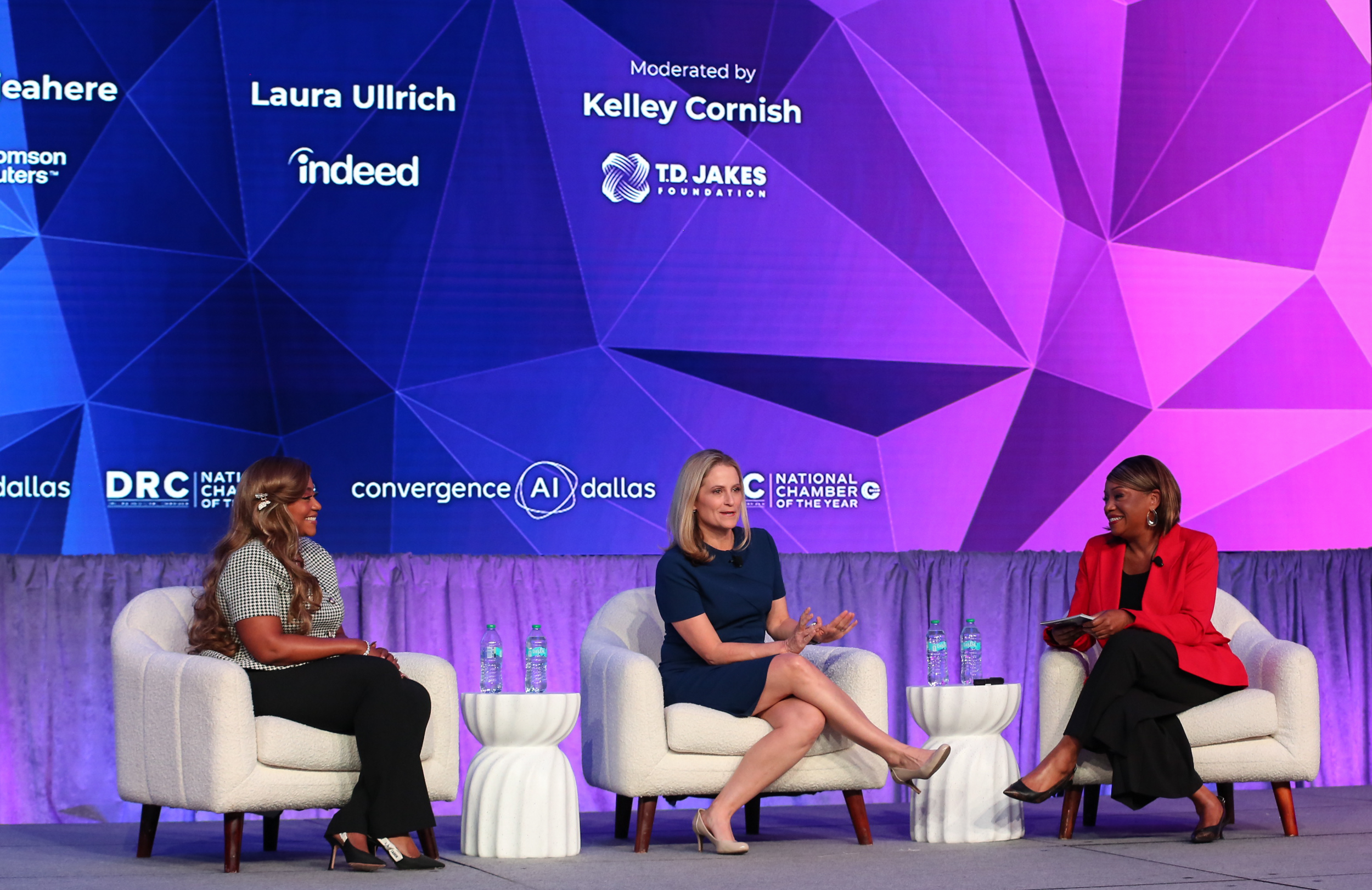
Tosan Ojeahere, Vice President Transformations Lead at Thomson Reuters, addressed this hiring disparity by emphasizing the importance of hiring and upskilling new talent in congruence with AI innovations.
Roles for “new talents and new graduates … are critical because the leaders you hire today are the leaders who are leading your organization in the next 10-15 years,” said Ojeahere. Businesses have a “critical responsibility to not just upskill their staff, but help them with job transitions, help them understand what new roles are emerging within the organization and train them for those roles.”
Kelley Cornish, President and CEO of the T.D. Jakes Foundation, encouraged businesses to evolve their hiring and upskilling practices with forward-looking intention.
“AI isn’t just changing how work gets done. It’s changing what skills matter, how people enter the workforce and who gets left behind if we’re not intentional,” said Cornish.
Effective AI application requires proactive governance
“Governance is no longer something you do once a month—it’s something that happens in the session,” said Chris Gustafson, Director, Americas Office of the Field CTO, at Okta.
Ensuring that AI is applied responsibly and accurately requires proactive monitoring and safety measures, “like fine-grained authentication or authorization and being able to shut things down when they’re operating outside the bounds of intention,” said Gustafson.
Alex Woodgate, Managing Director at J.P. Morgan, stressed the importance of human management and feedback in successfully governing AI.
“These AI models can take us a long way, can make us more efficient, can make us faster,” said Woodgate. “But the judgement that underlies whether the product works, whether the conclusion is great or fine or potentially problematic, is still something where we heavily involve end users.”
AI’s productivity capabilities are undeniable, but ensuring these models fulfill their purposes correctly requires responsible human oversight and accountability.
AI gives an edge to life-long learners
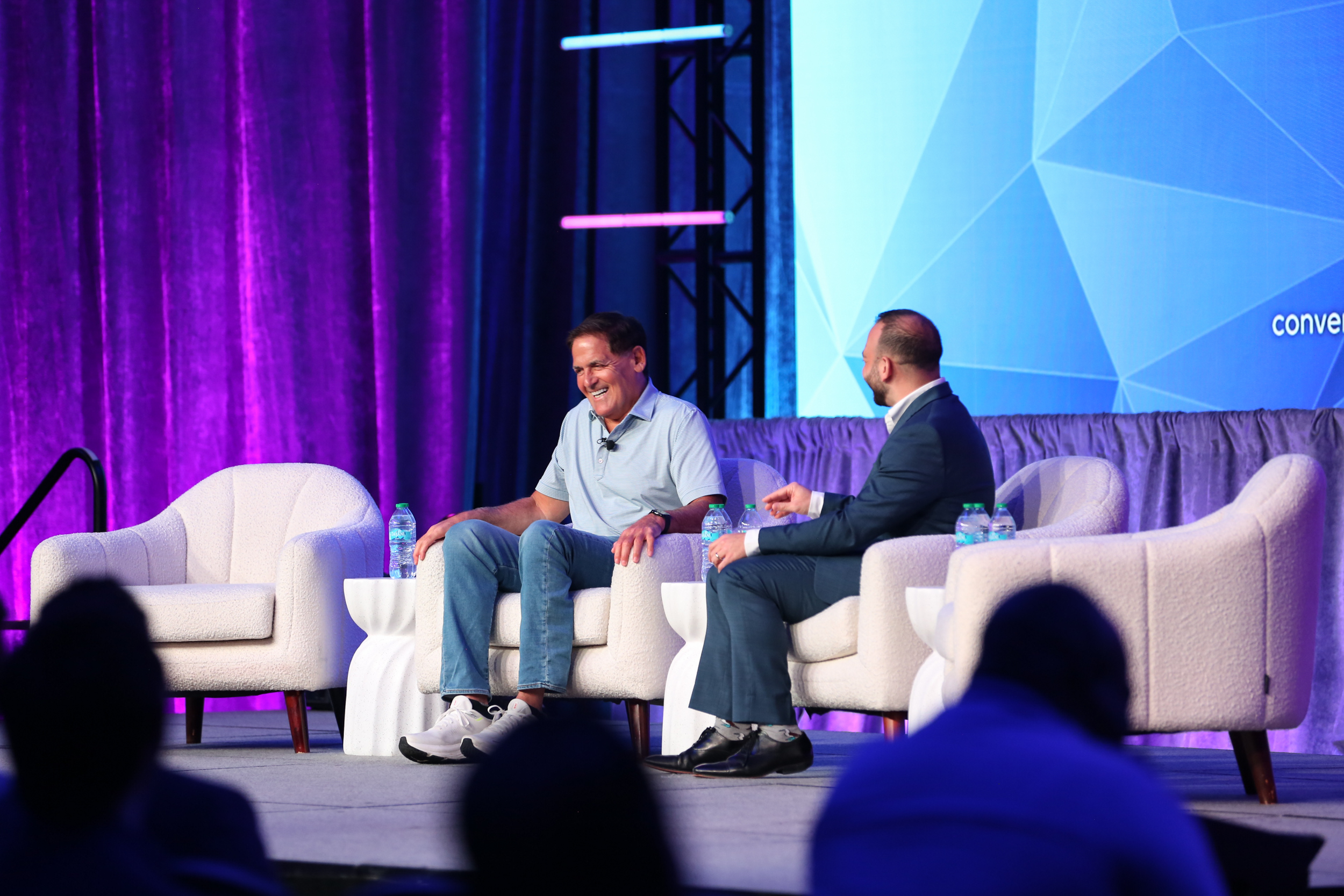
During his fireside chat, Mark Cuban, entrepreneur and Founder of the Mark Cuban Cost Plus Drugs Company, emphasized the advantage AI provides to those who pursue learning rather than answers.
“While AI can help as a business tool, it’s not the end-all, be-all where it’s going to make all decisions for you. We’re bifurcating into two types of people who use AI: people who use AI so they don’t have to learn anything and people who use AI so they can learn everything.”
When applying AI to business, Cuban advised against the former. “If you’re just using [AI] so you don’t have to do the work, … you’re going to struggle.”
But if you apply AI with intention, using it as a tool to learn and propel your capabilities forward, “you will always have an edge over everybody around you.”
Looking to learn with AI and unlock your business’ potential? Explore AI topics at your own pace through free, personalized video sessions with the DRC’s AI Office Hours experts.