
By Amber Dyer, Coordinator, Communications & Marketing
Average reading time: 3.5 minutes
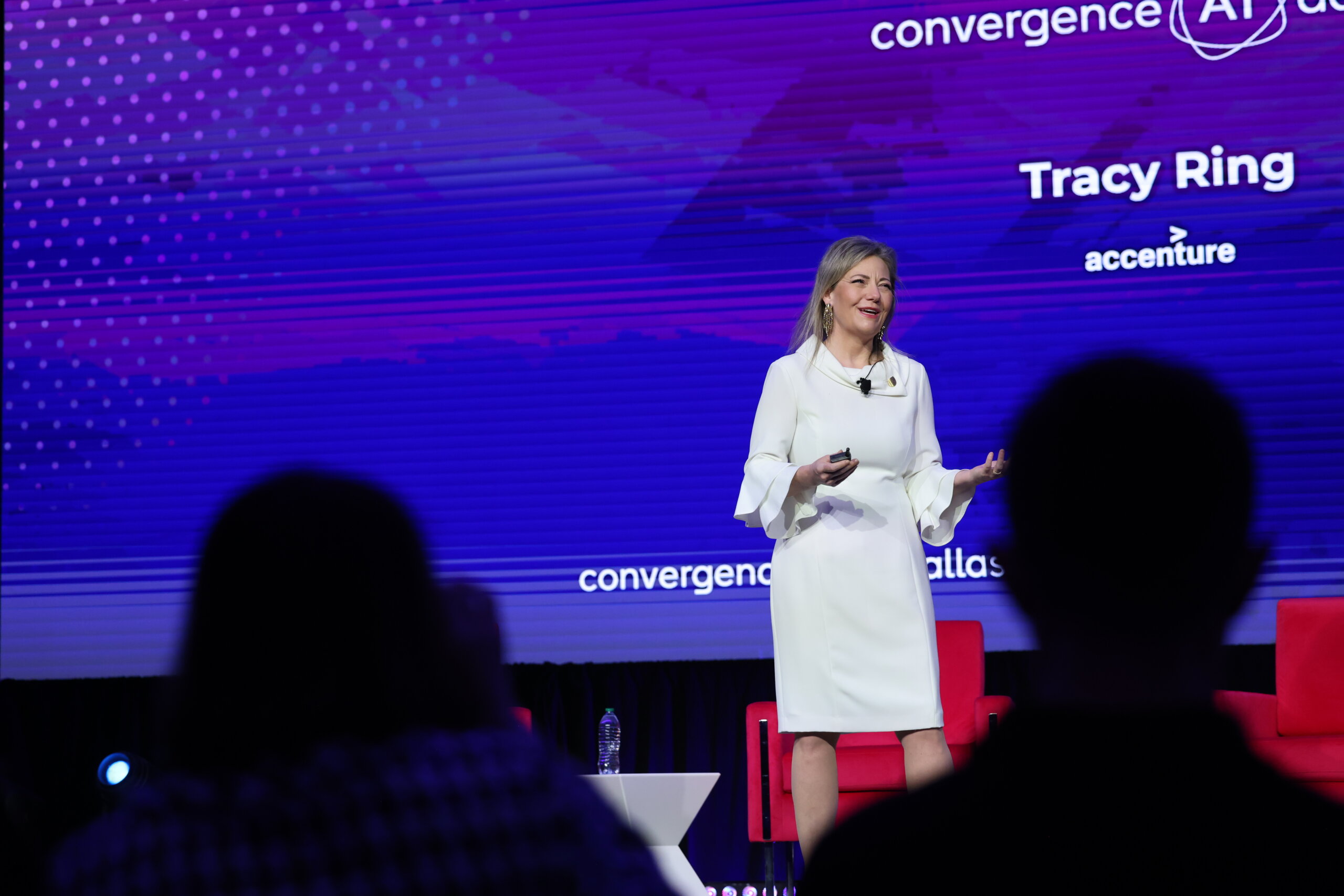
At the Dallas Regional Chamber’s Convergence AI Dallas conference, presented by Accenture and Google, Accenture’s Tracy Ring emphasized that successful generative AI integration depends on more than just technological capability; it requires organizational trust.
“We have research telling us that 77% of executives believe that unlocking the true benefits of AI are only possible when it’s built on a foundation of trust,” said Ring, who serves as Accenture’s Chief Data Officer and Global Generative AI Lead for Life Sciences.
This trust must evolve alongside the technology itself, requiring companies to approach AI integration with strategic transparency.
“Sharing your AI strategy, making it part of the board discussions, making it part of all your people discussions,” said Ring. “Embracing it wholly and truly across [the organization is essential]… Engendering trust is really one of the most critical success factors of driving adoption and change management.”
Ring outlined four key trends organizations should consider when developing their AI strategy:
1. Binary Big Bang: Transformative agentic systems
The Binary Big Bang is a transformative shift in AI where agentic systems redefine software development conventions.
“It’s this idea that the ways that we approach every technological implementation, whether it’s the way we gather requirements [or] the way we implement it, we have to think about what ways that these autonomous agents can help us at each stage,” said Ring. “But as we think about the limits of programming and the way that we implement all of these, we see these multiplying digital outputs vastly accelerating implementation timelines.” Organizations are deploying agentic systems to streamline processes, enhance decision-making, and foster innovation across various departments.
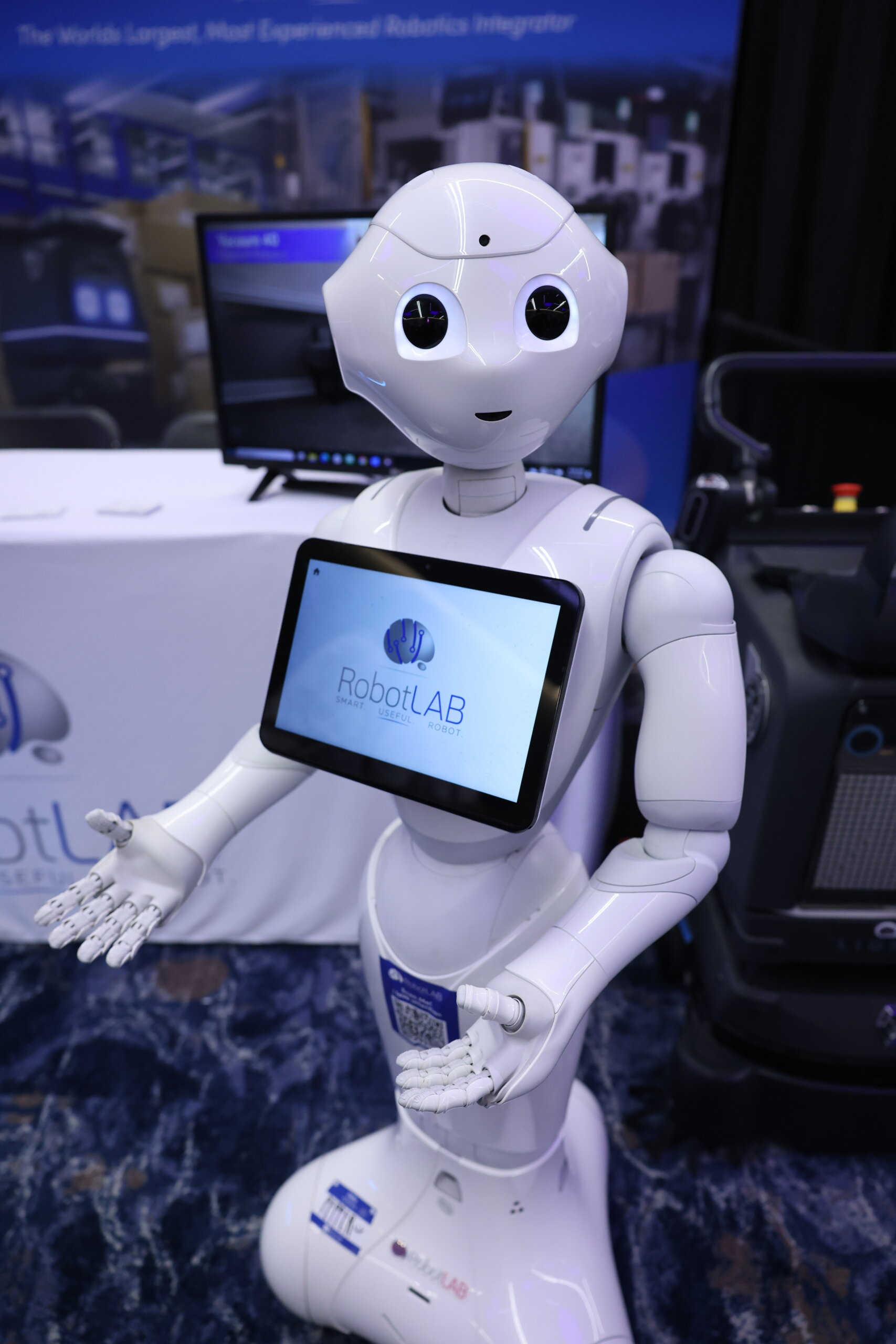
2. Face of the future: Personalized customer engagement
AI enables personalized customer experiences by analyzing individual preferences and behaviors to tailor interactions and recommendations.
“We think about AI having a personality. So, this personified AI can breathe life into these experiences [and] unlock customer relationships,” said Ring. “And for those of us that have B2C businesses, there’s just an incredible opportunity to engender trust and continue to grow that relationship.”
3. Large Language Models (LLMs) getting ‘bodies’: AI-powered robotics
LLMs are being integrated into robotics to enhance their functionality, enabling them to perform complex tasks with greater autonomy and decision-making capabilities.
“Robotics has always employed AI with this idea that when you move into the physical realm, [it’s] an opportunity for organizations to do something quite dramatic across the board in aspects of digital manufacturing, how we interact with customers, etc.,” said Ring.
These ‘bodies’ can revolutionize industries such as health care, manufacturing, and logistics by automating processes, improving efficiency, and reducing the need for human intervention in repetitive tasks.
4. Learning loop: Continuous AI improvement
This continuous improvement cycle uses AI feedback to drive ongoing development, with regular model updates based on real-time data and user interactions to meet evolving business needs.
“[It’s] similar to how large language models work, where everything we do is fed back in – the ideas that our people can continue to learn, grow, and lead is the most valuable reinvention we have,” said Ring.
Organizations that embrace these trends in their AI strategy can foster employee trust and drive effective AI adoption.
“It’s about creating a cohesive workforce. One that doesn’t feel disenchanted by the technology and that they feel happier by using it,” said Ring.
Ready to unlock AI’s potential for your organization? Book your free DRC AI Office Hours consultation today and join the growing community of Dallas Region leaders embracing the future of business innovation.