
By Catie George, Director, Communications & Storytelling
Average reading time: 4 minutes
During the Dallas Regional Chamber’s State of Talent and Workforce event, presented by BGSF and Texas Mutual Insurance Company, industry leaders shared insights on building stronger connections between talent and business while addressing the evolving needs of today’s workforce. Below are the key takeaways that emerged from discussions with regional business leaders and workforce development experts.
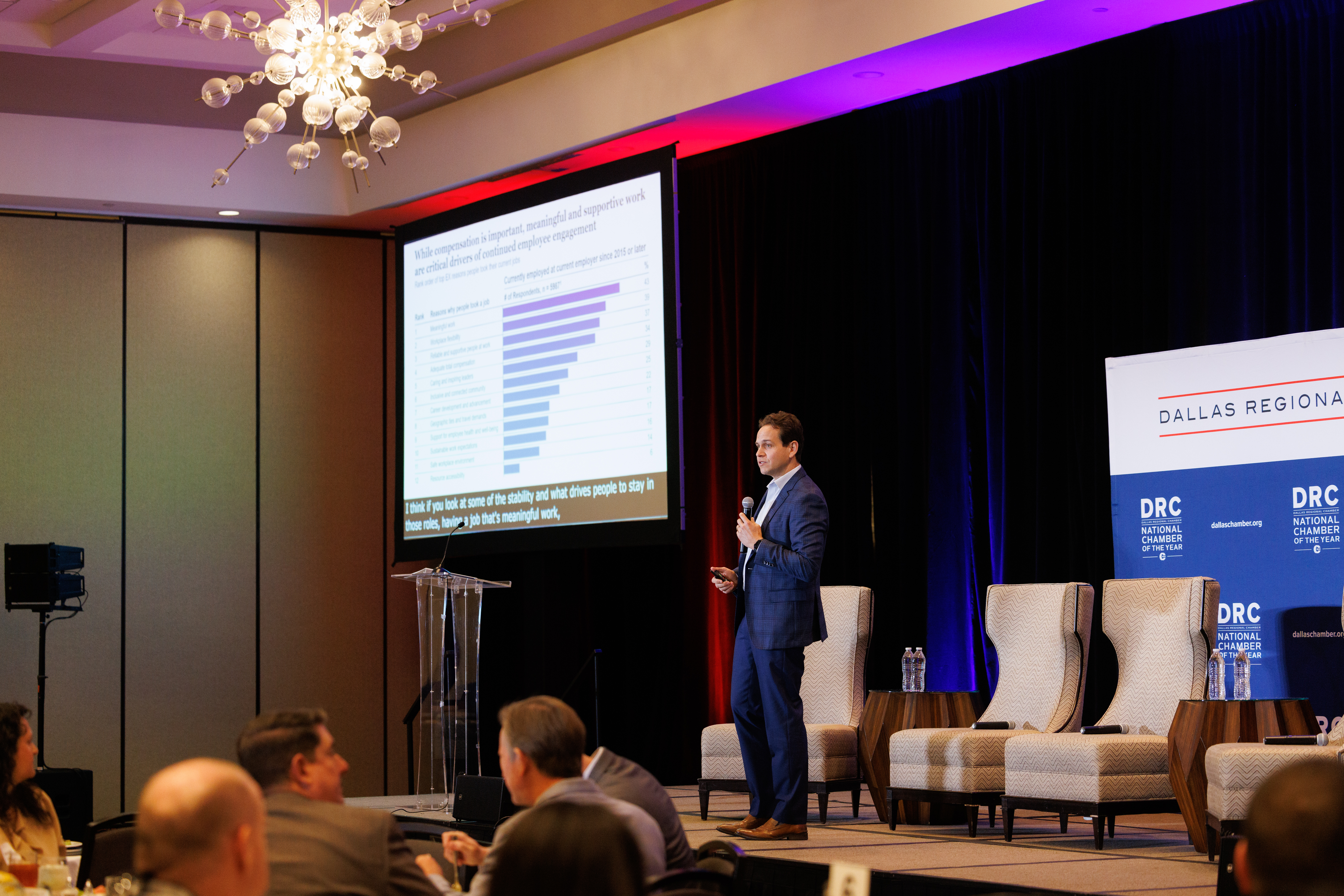
The Dallas Region has a competitive advantage.
The Dallas Region continues to lead the nation in job growth and economic opportunity, and DFW has established itself as the premier example for workforce development and job creation. According to DRC Senior Vice President of Talent Strategies Elizabeth Caudill McClain, the region’s success during the pandemic recovery was remarkable.
“The Dallas Region is a leader among metro areas across the country in job growth and continues to be the premier example for others to follow,” she said, citing a study by economist Wei Pyramid that shows one in five U.S. jobs post-pandemic were created in Texas, with 40% of them in Dallas-Fort Worth.
The continued expansion of the workforce in Dallas-Fort Worth is crucial for supporting local businesses because a growing labor pool creates a self-reinforcing cycle of economic vitality that benefits employers, workers, and the broader community. As more skilled professionals, service workers, and specialists move to the region, local businesses gain access to the talent they need to grow, innovate, and remain competitive in an increasingly dynamic marketplace.
Modern work goes beyond compensation.
While compensation remains important, it is not the primary driver of workforce satisfaction.
“Purpose and meaning are incredibly important, not just productivity. We all know that people who are more engaged tend to be more productive, not just for innovation,” said Taylor Cornwall, Partner at McKinsey & Co. “For a long time it was, ‘do I want stability, or do I want productivity?’ And I think one of the things that we often see is that the two actually work very closely together.”
In a survey of 6,000 people, McKinsey found that meaningful work, or work that a person perceives as personally significant and valuable, significantly contributes to employee retention and satisfaction, often outweighing financial incentives, workplace flexibility is a critical factor for employees, enhancing their work-life balance and overall job satisfaction, and organizations that prioritize purpose and flexibility are more likely to foster a committed and engaged workforce.
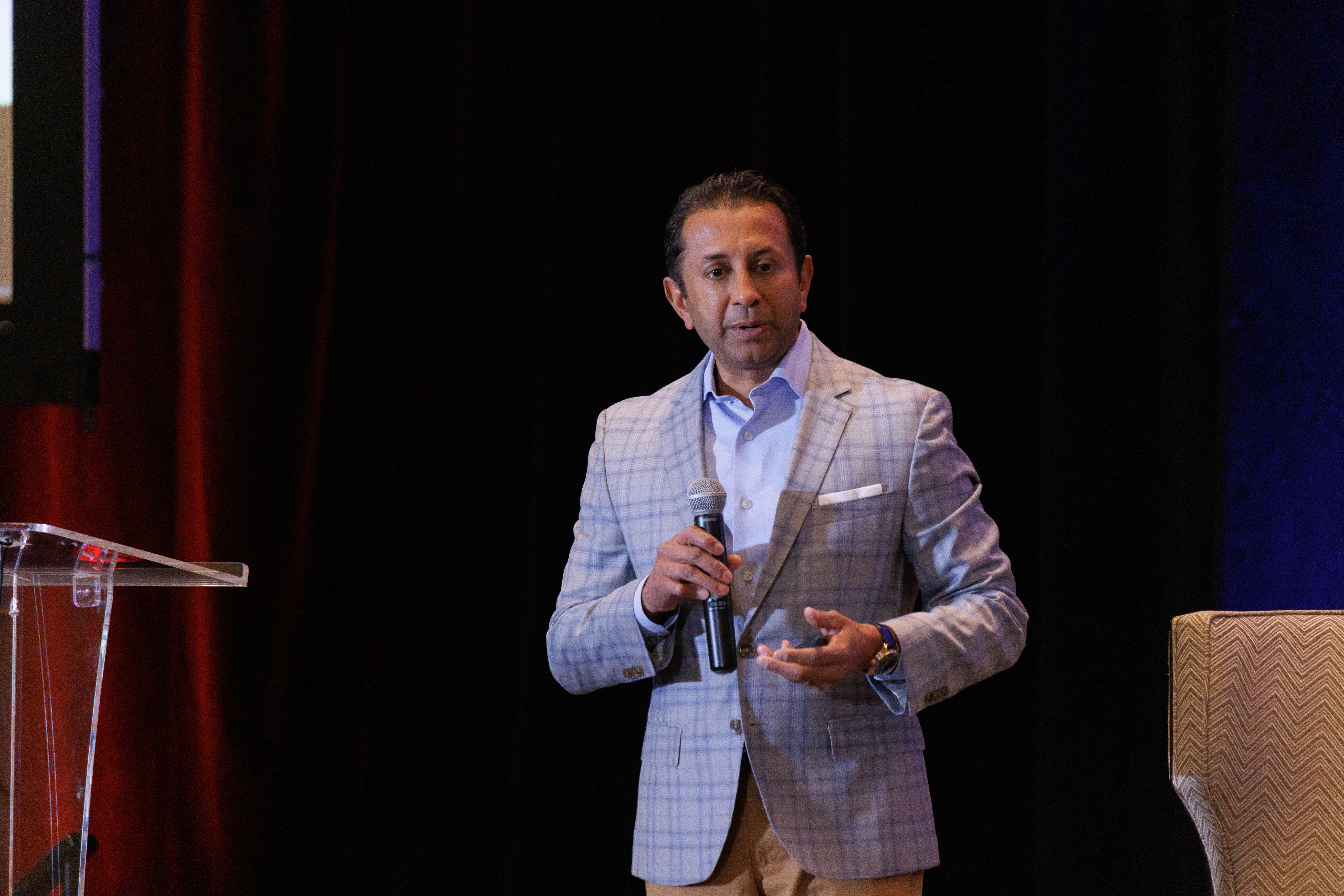
Employee-focused initiatives help define organizational identity.
Creating authentic employee experiences requires alignment between promises and reality.
“When we were talking to prospective employees, when they walked in the door, the experience that they had matched what we told them that they would get,” said Smith.
Having employees find value in their work is a process that begins with leadership. Ensuring that employees have support through Employee Resource Groups (ERGs), for example, is a demonstrated way to increase employee satisfaction.
“ERG members that are part of ERGs versus not being part of ERGs is their engagement is higher, between 3 to 4%, and their turnover is better,” said Nimesh Jhaveri, Executive Vice President and Chief Impact Officer at McKesson.
Additionally, the focus on storytelling helps employees understand their impact.
“We like to tell the stories that show our employees the impact that they are having on customers and patients,” shared McKesson’s Executive Vice President and Chief Human Resources Officer LeAnn Smith, and shared the story of Noah, a 9-year-old who received McKesson employees’ help to get from Spokane, Washington, to Boston.
This and other stories help McKesson demonstrate how their company’s purpose translates to real-world impact.
“It’s not about companies or products,” said Jhaveri. “It’s about changing people’s lives.”
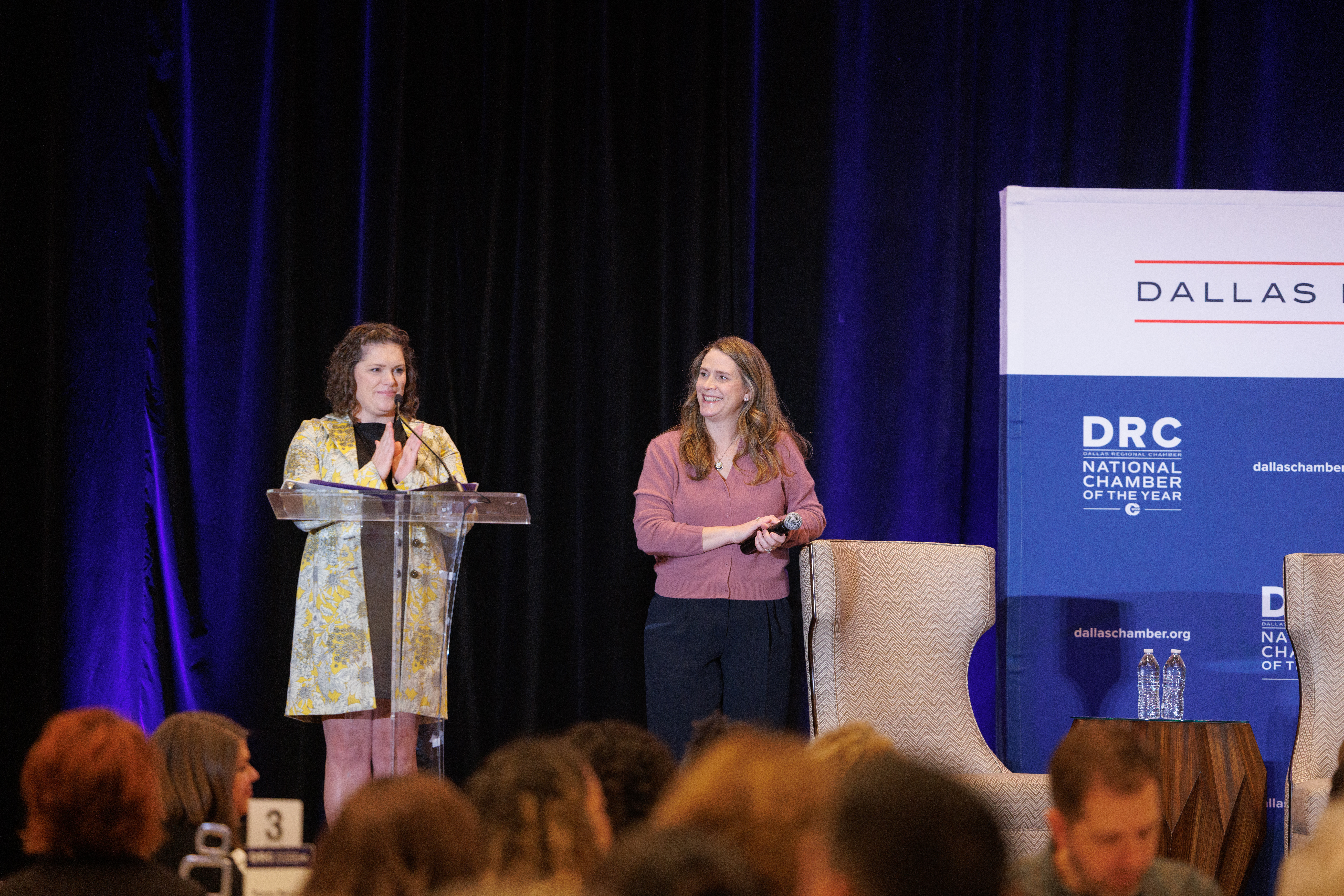
Purpose-driven employment increases more than just performance.
The connection between employee engagement and health outcomes has become increasingly clear. Organizations that measure engagement alongside health metrics find they develop “not only a better workforce on the job, but a better workforce outside of the job,” said Cornwall.
Organizations should examine their own workforce development strategies, implement measurement systems that track both engagement and outcomes, and actively participate in regional partnerships that amplify collective impact.
Smith shared that when positive sentiment exists in the key drivers of meaning—direction, impact, goodness, and value—their employees are 50% more engaged. Businesses that invest in purpose-driven workforce development create positive change not only within their organizations but throughout the communities they serve.
To transform your company’s talent strategies to increase worker satisfaction, inquire about the DRC’s Talent Labs, a six-month, accredited program designed for talent professionals to elevate their workforce strategies.
To learn more about the DRC’s work in talent and workforce, visit our website.