
|
Takeaways
|
By Ashlynn Bouldin, Coordinator, Communications & Marketing
Estimated reading time: 3 minutes
On Thursday, Sept. 3, the DRC’s Education & Workforce Council convened to hear insights from North Texas’s newest higher education leaders on key trends shaping postsecondary education. The event’s panel featured SMU President Dr. Jay Hartzell, University of North Texas President Dr. Harrison Keller, The University of Texas at Dallas President Dr. Prabhas Moghe and University of North Texas at Dallas President Dr. Warren Von Eschenbach—all of whom assumed their roles within the past three years.
DRC President & CEO Brad Cheves opened the council meeting with a call-to-action for business and education leaders, highlighting the crucial role education plays in regional prosperity.
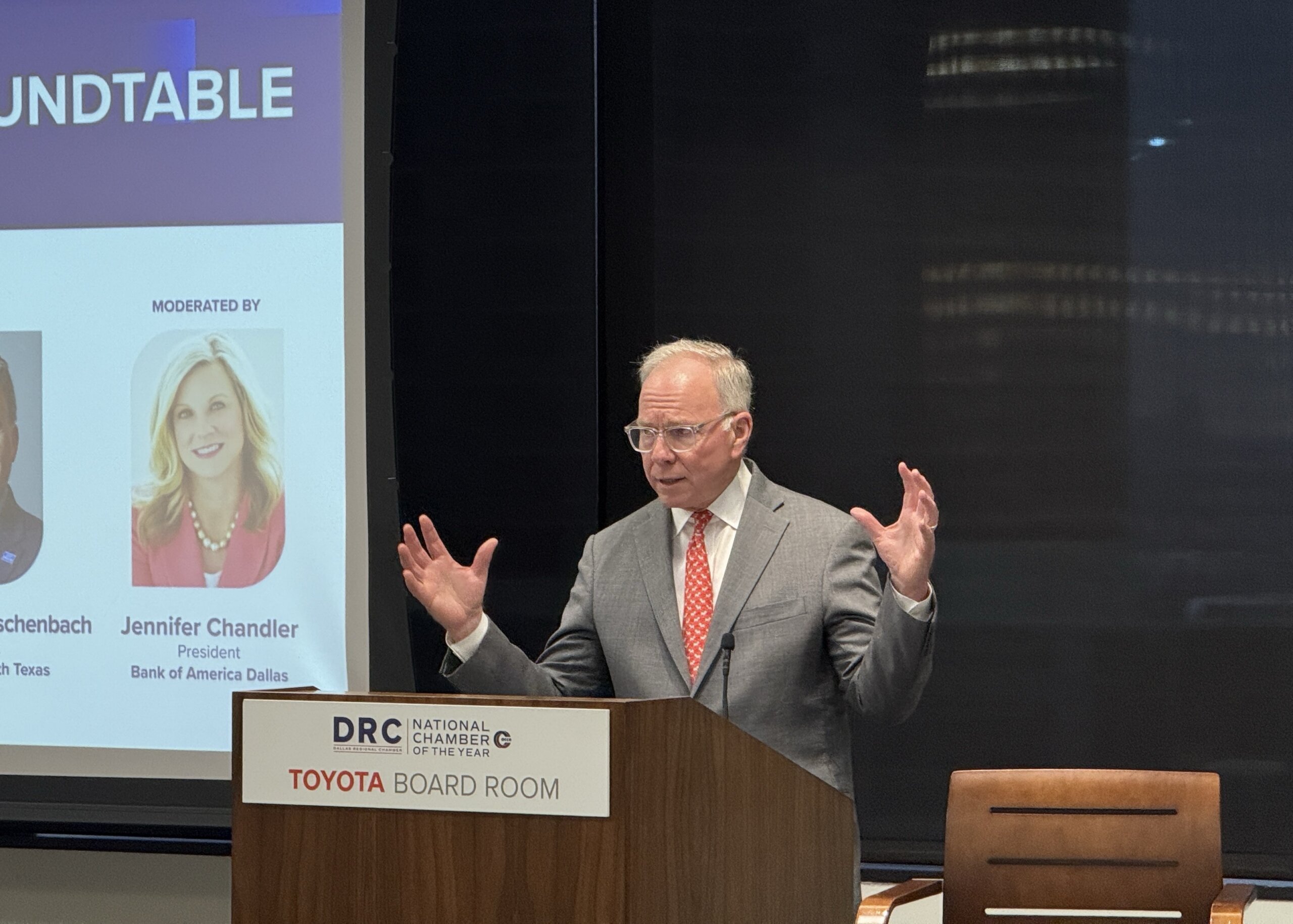
“If we continue to strengthen our institutions, expand opportunity, foster innovation and build meaningful connections across sectors, higher education can be one of our region’s greatest competitive advantages.”
Innovative learning pathways expand access to higher education
While introducing the panel, Texas Woman’s University Chancellor and President, Dr. Carine Feyten, discussed how higher education can help organizations address the growing demand for critical thinkers. To meet that need, Dr. Feyten urged leaders to expand innovative learning opportunities to reach more students.
“In Dallas, we have over 8,000 college-ready high school graduates that are missing from our colleges and universities. … The pathways we have do not fit their circumstances. … Online learning helps, but we also need experiential learning opportunities and new pathways designed around the lives that many of these potential students actually live.”
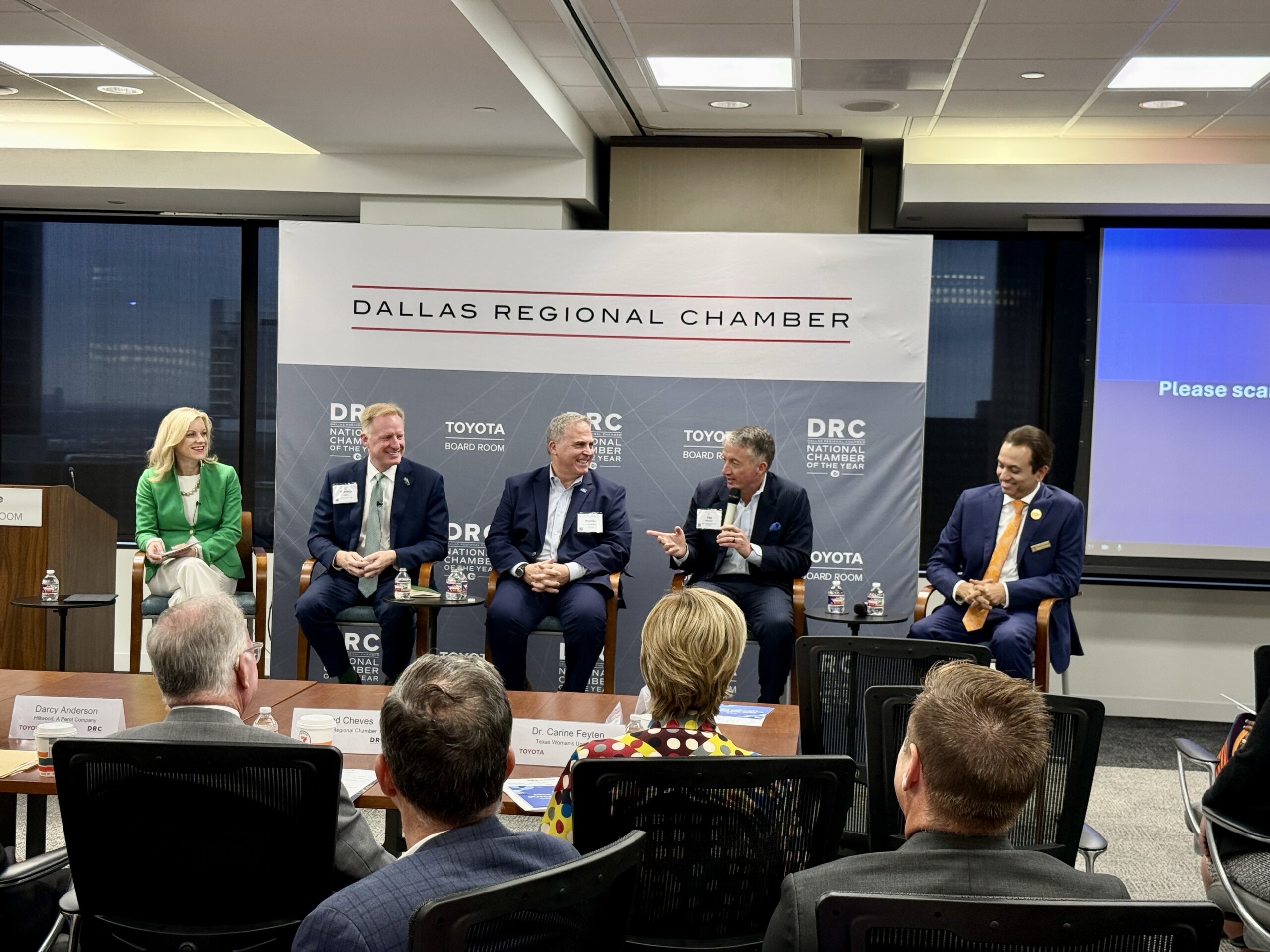
During the panel, Dr. von Eschenbach emphasized the impact affordability has on enrollment. While affordability concerns typically stem from tuition costs, he identified cost of living as a greater factor. Although UNT Dallas now offers free tuition for qualified students through its Trailblazer Tuition Trust, Dr. von Eschenbach noted that enrollment remains largely unchanged.
“[Free tuition] is not driving enrollment like you would think because, for many students, this is a trade-off. They’re not able to work to contribute to their home budget, and they’re expected by their families to work. Some of our students work two jobs because they have to help pay bills at home. As the cost of living goes up, this is really impactful, and it’s difficult to scholarship that.”
Much like Dr. Feyten encouraged, UNT Dallas is addressing this affordability issue by creating new learning opportunities and pathways through their Center for Experiential Learning and Career Success (CELCS), which supports student career development through coaching, hands-on experiential learning and industry connections.
Education institutions develop the talent needed in the age of AI
As the conversation shifted toward future-focused strategies, all presidents agreed that industry partnerships offer impactful opportunities for universities to effectively explore and apply AI. Dr. Keller discussed UNT’s AI strategy, which spans preparing students to use AI, applying it to improve university operations and advancing AI-driven research, and the role industry-education partnerships play in technological applications.
“What’s going to be important in our college and all the efforts around AI—because it’s going to be so fast—is working with industry on AI applications so that we can learn and tackle these issues together.”
Dr. Hartzell, echoed Dr. Keller’s sentiment and discussed how industry-education partnerships can help businesses develop talent. In partnership with AECOM, SMU established a doctoral fellowship program with the Lyle School of Engineering that supports Ph.D. and Doctor of Engineering candidates whose research focuses on applying AI to complex infrastructure challenges. Dr. Hartzell also emphasized that, with the rise of AI and programs focused on technical expertise, liberal arts-related skills are growing in importance for employers.
“I think it’s going to be a really great time to study liberal arts. Because people who can read, write, communicate and talk to humans that are empowered by technology are going to be in a really good spot.”
Higher education priorities in the upcoming legislative session
Higher education is one of many pressing topics legislators will examine during the upcoming 90th Texas Legislative session, and North Texas’ university presidents agreed on two primary priorities for lawmakers to consider: capital and research investments.
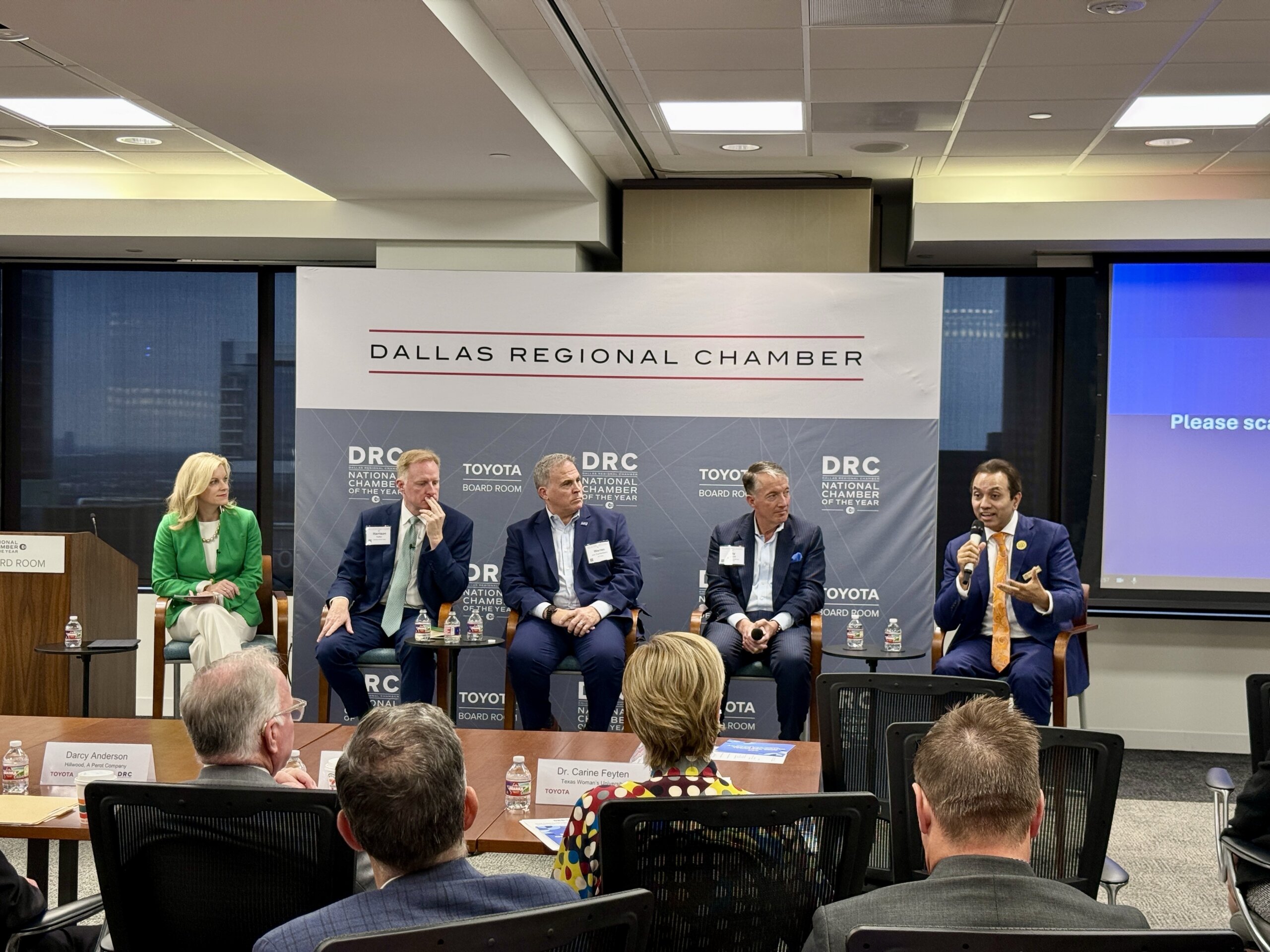 Both Dr. Moghe and Dr. Keller urged the business community to support capital investments in higher education. Dr. Keller noted that such investments are critical and are growing in necessity for infrastructure, maintenance, projects and more.
Dr. Moghe also emphasized the importance of research investments as North Texas’ higher education institutions emerge and compete as national research centers.
“I really hope that Texas comes through in terms of investing in research at a time when there’s less money coming here. Because the last thing you want to tell the world is that Texas is not open for business. That’s why research is so important. If research is happening, the good minds will come here, and they will educate the workforce that you need.”
Whether through expanded enrollment opportunities, innovation-focused programs or research and infrastructure investments, industry-education partnerships are vital to ensuring North Texas’ economic and population growth does not outpace the capacity and adaptability of its education institutions.
The Education & Workforce Council oversees the DRC’s efforts to ensure a regional workforce pipeline that meets ever-changing business needs. To learn more about the council and the DRC’s education, talent and workforce efforts, contact education@dallaschamber.org.