
By Amber Dyer, Manager, Communications & Marketing
Estimated reading time: 2 minutes
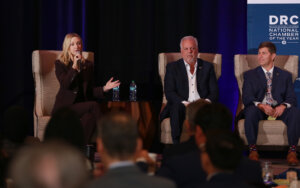
In December 2025, the Dallas Regional Chamber brought together six North Texas city mayors at the Renaissance Dallas Hotel in Richardson for its final public policy event of the year. The State of the Region, presented by Blue Cross Blue Shield of Texas and JPMorganChase, examined how regional collaboration is fueling prosperity, strengthening infrastructure and preparing our workforce for the future.
A regional powerhouse since 1990
The Dallas-Fort Worth region has long been a powerhouse for economic growth and regional prosperity.
“Since 1990, no metro area in modern American history and no state in modern American history have grown as much as we have today,” said DRC Senior Vice President of Economic Development Mike Rosa.
The establishment of Dallas-Fort Worth International Airport played a pivotal role in that success.
“Before DFW Airport opened, the cities of Dallas and Fort Worth combined were 53% of our region’s population, a majority before the airport opened,” said Rosa. “Today, [they represent just] 28%.”
Over time, that growth expanded beyond infrastructure to include corporate relocation and economic development. Since 2014, the Dallas Region has attracted over 800 corporate locations and expansions, including 300 headquarters.
Just in the past year, the region secured 184 major corporate announcements, with 61 headquarters spread across 36 cities throughout the area. This volume outpaces any other U.S. market, reflecting the region’s unmatched corporate appeal.
Unique economic drivers sustain corporate appeal
Sustaining this appeal requires strong regional collaboration paired with unique city contributions.
“What drives our success is our focus on the economic engine and powerhouse of each of our cities,” said Mattie Parker, Mayor of Fort Worth.
Each city’s growth strategy reflects its unique constraints and opportunities.
“Whether you’re landlocked or lake locked, growth can still happen through redevelopment,” said Dylan Hedrick, Mayor of Garland.
But local ambitions must align with regional considerations.
“We have to be players that are thoughtful of regional impact in a number of different elements,” said Amir Omar, Mayor of Richardson. “It’s a key factor in all of our growth.”
At the same time, cities must recognize they cannot serve every need.
“If you’re a city that tries to be all things to all people, you will be guaranteed to fail,” said Jeff Cheney, Mayor of Frisco. “And so, each city has to find what their unique offering is. … Having your own niche and brand really helps [the city] stand out. And I think all the cities in DFW have done that — and the reason was to become a powerhouse.”
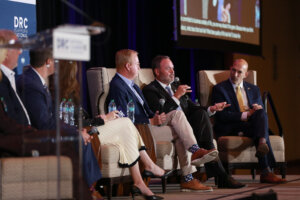
The region sustains its powerhouse status by preserving its distinct city identities while collaborating to avoid duplication and maximizing collective impact.
Regional collaboration helps drive economic success
“Our regional construct requires us to work together collaboratively on the big things that matter to us all: infrastructure, mobility, health, safety, the commons.” said Rosa.
Collaboration is also essential to maintaining a competitive edge over other regions.
“It’s critical that we work together because we are competing with other parts of the country,” said Bill Cox, Mayor of McKinney. “So, we must continue to have leadership that believes in business and collaborative efforts.”
Stable governance and regional cooperation underpin the region’s sustained economic success.
“There’s so much hinging upon our success, not just for Texas, but for the country,” said Parker. “Which is why you’re seeing so much interest from coast-to-coast investment here in DFW. Our responsibility as mayors is to shepherd that [growth] and pass it on to the next generation to make sure our cities are stronger into the future.”
This mindset requires cities to actively support one another’s success.
“The bottom line is that I know that the better Richardson does, the better we do. The better Frisco does, the better we do,” said Jim Ross, Mayor of Arlington. “The better everybody does, the better we do. And we’re blessed to have some of the best neighbors around. And I think that benefits us from an economic development perspective unlike any other place in the country.”
To learn more about the Public Policy team’s work, visit our website.