
By Catie George, Director, Communications & Storytelling
Average reading time: 4.5 minutes
Against the backdrop of the Dallas Arboretum’s fall blooms, over 300 business and education leaders gathered to explore a critical question: How do we build an education system that powers regional competitiveness and creates pathways to prosperity for all students?
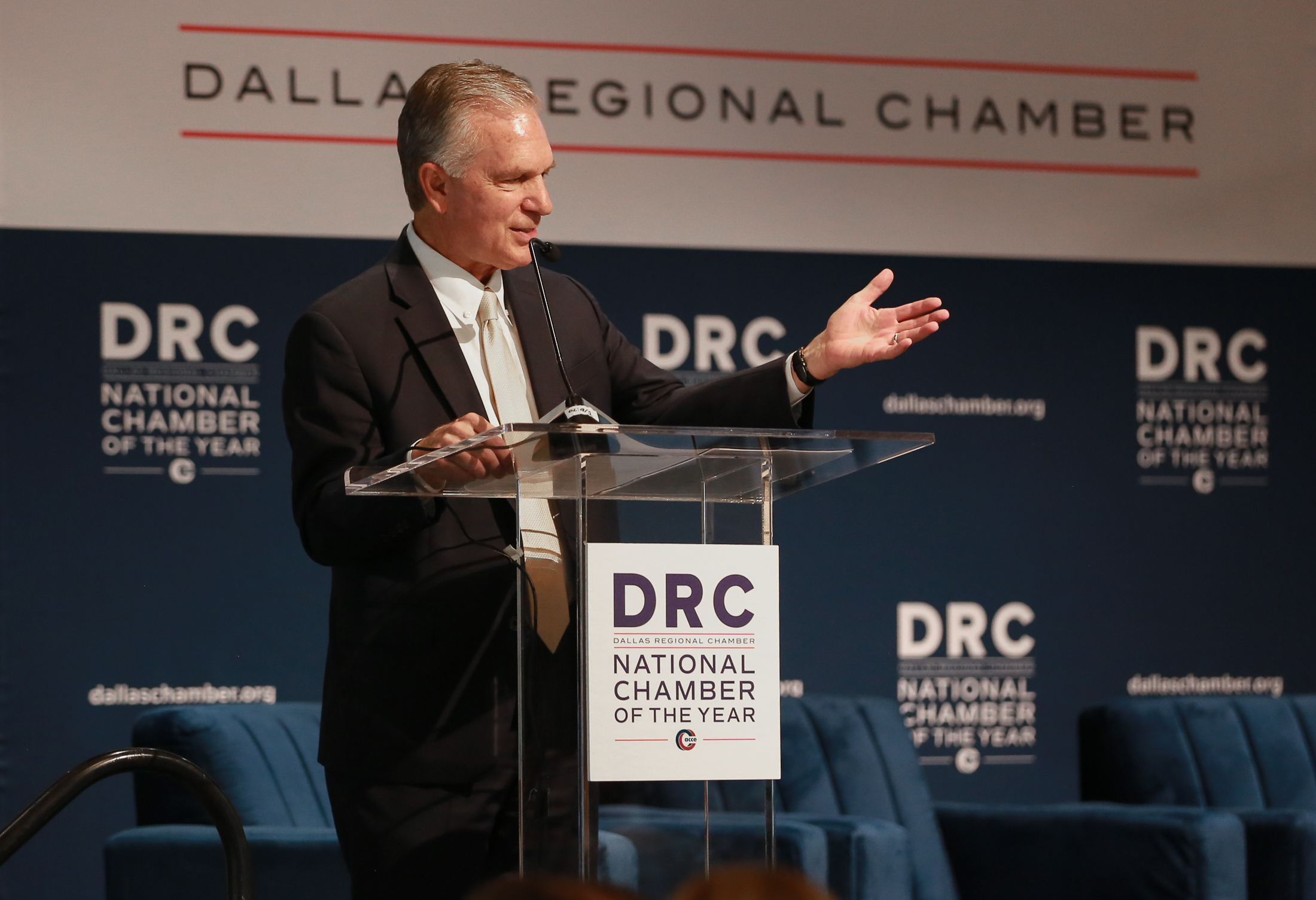
The Dallas Regional Chamber’s State of Public Education on Wednesday, Sept. 24, presented by Toyota Motor North America and The Commit Partnership, brought together a powerful coalition of voices united by a common mission: ensuring schools in the Dallas Region can supply the talent our region’s economy demands.
Education as economic strategy
Dale Petroskey, President and CEO of the DRC, set the stage by framing education not just as a social good, but as the cornerstone of regional competitiveness.
“When we talk to companies about coming here, one of the first things they ask is, what about your talent? Can the region supply the workers we need?” Petroskey explained. “And that answer mostly depends on the strength of our schools. And it’s not just about jobs. Families make decisions about where to live based on the school district. So, education drives both opportunities and quality of life.”
Petroskey praised the North Texas business community’s commitment to standing “shoulder to shoulder” with educators through mentoring, internships, and job opportunities. “Our region will only succeed if our schools succeed,” he emphasized.
Ana Meade, Vice President of Sustainable Development at Toyota Motor North America, reinforced this urgency from an industry perspective.
“With a rapid pace of change in every industry, preparing students for the future is not just a priority; it’s our responsibility,” she said. “We cannot afford to miss out on the creativity, ideas, and skills of the next generation.”
A bold vision for Texas
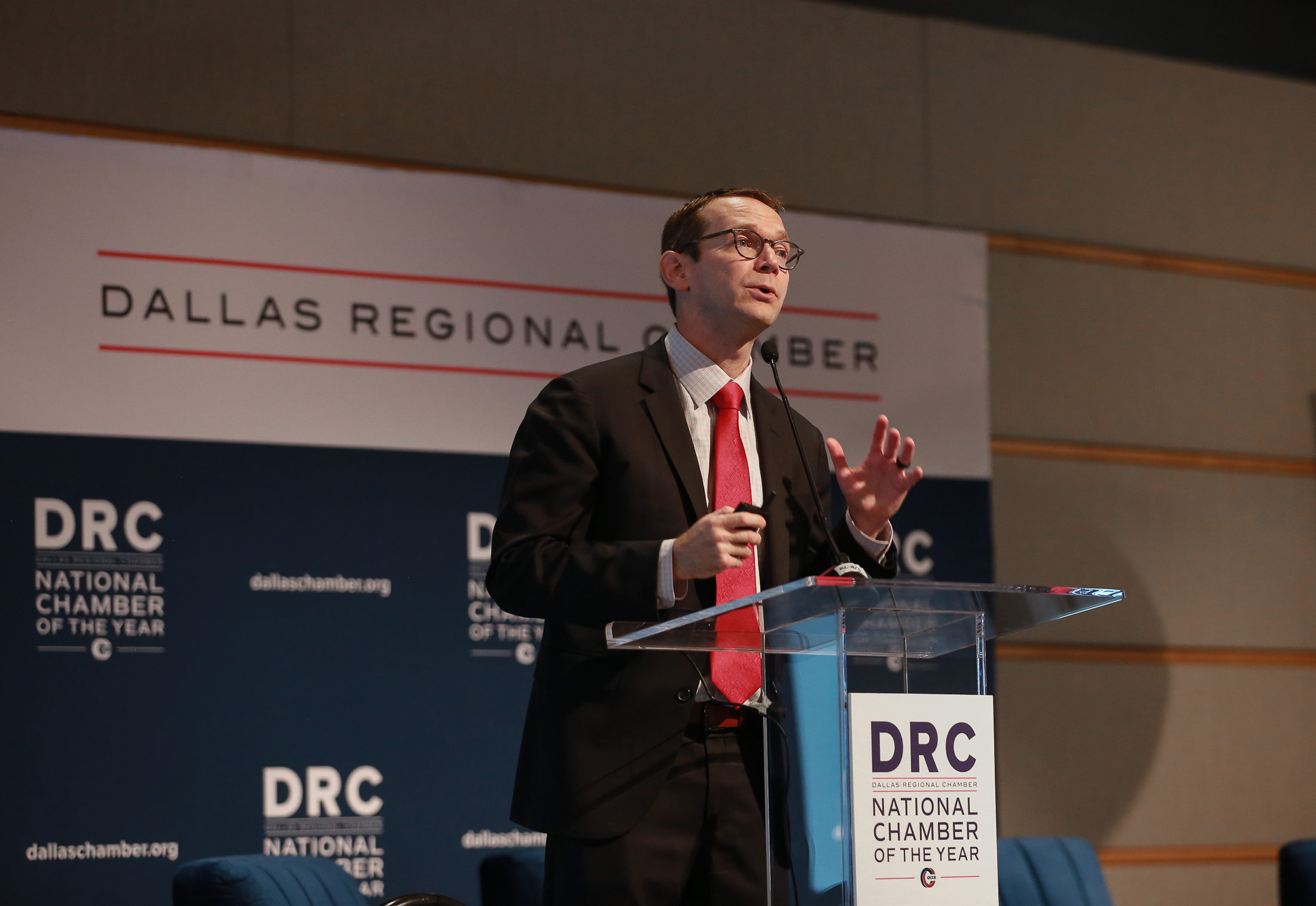
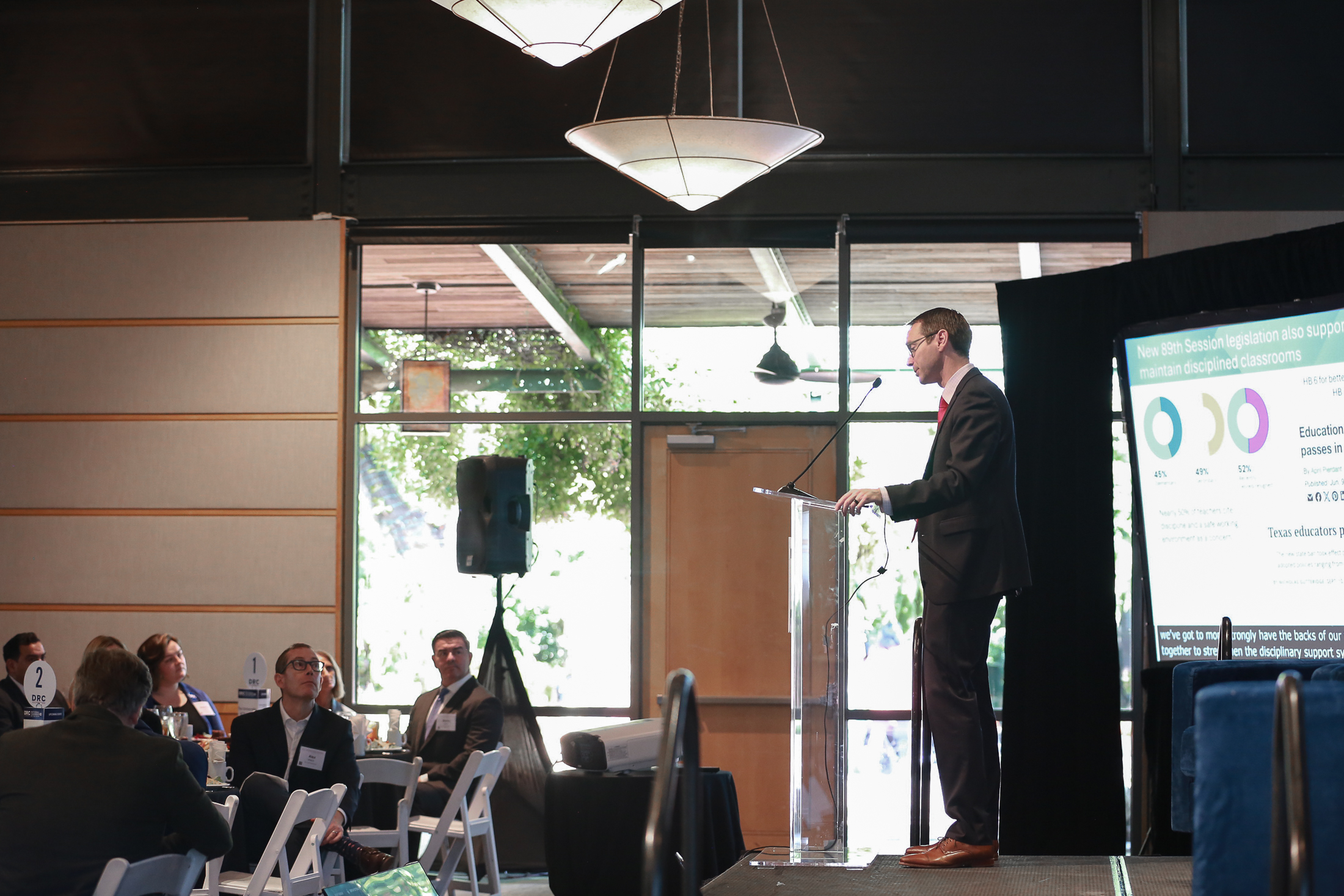
Texas Commissioner of Education Mike Morath delivered a keynote address that captured both the scale of the challenge and the momentum of recent reforms. Overseeing 5.5 million students across 9,000 campuses and 1,200 school systems, Morath articulated a unifying vision.
“We want every child, whether they live in this zip code right around White Rock, whether they live in a zip code around Fair Park, whether they live in a zip code that has almost as many cows as it does people… we want our schools to equip them for success.”
While Texas boasts a 90% on-time high school graduation rate, placing the state in the top five nationally, Morath highlighted a critical gap: only 36% of students earn a bachelor’s degree, associate’s degree, or trade credential within six years of graduation.
“We have to be very intentional in how we recruit, support, and retain teachers in the classroom,” he stressed, noting that the most important in-school factor for student outcomes is what happens “bell to bell, by that teacher in the classroom.”
Revolutionary compensation reforms
The centerpiece of Morath’s address was Texas’s transformative approach to teacher compensation. Inspired by Dallas ISD’s pioneering Teacher Excellence Initiative, the state has invested over $2 billion annually to reward effective teaching rather than simply tenure.
“We have been so wedded to seniority-based compensation in our industry for 100 years, we’ve almost forgotten what merit is,” Morath observed, describing traditional systems where starting teachers earn $61,000 and reach only $71,000 after decades in the profession. The new system provides performance-based raises of $3,000 to $5,000 at key career milestones, with districts like Dallas putting teachers on pathways to six-figure salaries.
The results speak for themselves: 809 school systems have adopted merit-based compensation, teacher retention has increased 8-9 percentage points, and students below grade level are 20% more likely to catch up when taught by teachers in these systems. Dallas ISD alone will receive $49 million this year through the incentive program.
Morath also detailed investments in teacher training, including $25,000-$40,000 for teaching residencies, $3,000 annually for paid mentorship programs, and $10,000 per paraprofessional to complete bachelor’s degrees and enter teaching.

Excellence in action: A superintendent panel
The afternoon panel, moderated by Matt Goodman of The Lab Report, showcased how three school systems are translating policy into practice.
Dr. Stephanie Elizalde, Superintendent of Dallas ISD, described how her district’s approach began with principals before extending to teachers and now high school counselors.
“The idea is to recruit, retain, and reward the best and brightest because our kids deserve the best and brightest,” Elizalde said. The district’s strategic staffing ensures students who need the most effective teachers receive them intentionally.
The impact is dramatic: Dallas ISD’s annual new teacher hires have dropped from 2,000-2,500 to just 800 out of 10,000 teachers, a testament to improved retention.
This improved teacher retention has far reaching effects in the classroom. “Every kid isn’t getting a first-year teacher, especially in the areas where they need teachers who have more experience,” Elizalde noted.
Yasmin Bhatia, CEO of Uplift Education, emphasized the importance of pairing accountability with support. Her charter network partners with families from graduation through college enrollment and beyond, with an alumni support team ensuring students reach living-wage attainment.
“We need to put our dollars in making sure that we can walk side by side with families as partners,” Bhatia said.
Dr. Ricardo López, Superintendent of Garland ISD, highlighted how data-driven collaboration transforms teaching precision.
“These three school systems operate on data. They look at children’s progress constantly. They rank teachers against each other because you may be good in one area, and another one may not be so good,” López explained, describing how teachers now collaborate and tutor students across classrooms based on specific strengths.
Building North Texas’s future
The event also included a recommitment to The Commit Partnership’s ambitious goals: by 2030, at least 60% of Texans will have a postsecondary degree or credential of value, and by 2040, at least half of young adults will earn a living wage.
As Petroskey emphasized in his opening remarks, this isn’t just about education policy. It’s about ensuring North Texas remains competitive in attracting businesses and talent. With business leaders, educators, and policymakers aligned on this mission, the region is positioned to turn that vision into reality.
The Dallas Regional Chamber’s Education, Talent & Workforce initiatives drive regional competitiveness by ensuring businesses have access to the skilled workforce they need to thrive. Learn more about our Education, Talent & Workforce efforts or contact education@dallaschamber.org to share your thoughts on the region’s educational progress.